Safran's Joint Venture Proposal for India's Advanced Fighter Engine
Akriti Precision Systems — High-Precision Desktop CNC Milling
Made-in-India desktop CNC machines with composite superstructures, 15–25 µm repeatability & lifetime frame warranty. Built for aerospace, carbon fiber & precision prototyping.
Explore CNC Systems →Safran's Joint Venture Proposal for India's Advanced Fighter Engine
The development of advanced fighter engines is a complex and challenging task, requiring significant technological expertise and resources. In this context, Safran's proposal for a 50-50 joint design model for India's Advanced Medium Combat Aircraft (AMCA) engine programme is a significant development.
Safran's CEO, Jetendra Gavankar, has suggested a collaborative approach to the development of the AMCA engine, similar to the IMRH helicopter engine programme. This approach involves sharing design and development work between Indian and French engineers, with integration and manufacturing taking place in India. This approach could be used for the AMCA engine, with specific sections carried out by both teams before final assembly in India, under a shared 50-50 model.
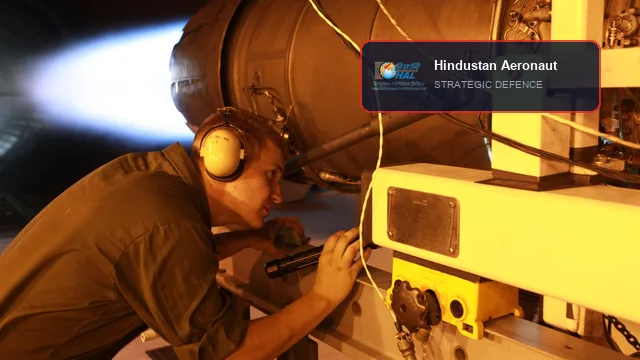
The 50-50 joint venture between Safran and HAL, SAFHAL Helicopter Engines, has been responsible for the development of the HAL-Safran Aravalli turboshaft engine for the IMRH and its naval version. The recently signed contract includes design, development, manufacturing, supply, and lifecycle support, with production taking place in India. Gavankar has stated that the same approach could be used in the case of the AMCA engine, with the Indian and Safran teams carrying out specific sections of the design and development work before the engine is integrated and manufactured in India.
Nanoweave Composites — Precision Engineered Carbon Fiber
Empowering aerospace, UAV defense & robotics with high-performance carbon fiber sheets, custom drone frames & precision CNC composite machining.
Explore Carbon Fiber →The requirement for India's AMCA engine is for a new high-thrust engine to be developed for the future AMCA Mk2, with the engine falling within the 110-120kN range. The first aircraft to be developed as part of the AMCA programme are expected to be equipped with the GE F414 engine, while the more powerful indigenous programme will be intended for the later Mk2 version.
Safran has been linked to a proposal for the co-development of a new 120kN-class engine with India's Gas Turbine Research Establishment (GTRE). The proposed programme would include a great deal of technology transfer and Indian ownership of intellectual property, although the exact contractual arrangement and approval by the government have not yet been made public.
Gavankar has also warned that there are difficulties involved in developing advanced fighter engines. Engine technologies are in fact very complex, and a relatively small number of countries are capable of designing and manufacturing advanced aircraft engines. The challenge involves all parts of the engine, including the compressor and combustor, the high-pressure turbine, the cooling systems, the materials, the controls, and the afterburner.
Safran's remarks follow on from the company and HAL having signed the contract for the Aravalli engine in August 2026. The programme is expected to give Indian engineers direct experience in the joint development and production of a modern military turboshaft engine. The AMCA engine would be a considerably more difficult task since it involves the performance requirements of a high-thrust fighter turbofan.
The proposed joint venture between Safran and HAL for the AMCA engine programme could be a significant step forward in the development of India's advanced fighter engine capabilities. The collaboration between Indian and French engineers could bring together the best of both worlds, with the Indian team bringing its expertise in the development of indigenous engines and the French team bringing its advanced technology and expertise in the design and development of fighter engines.
The success of the proposed joint venture would depend on several factors, including the level of technology transfer, the extent of Indian ownership of intellectual property, and the ability of the Indian team to absorb and integrate the advanced technology and expertise brought by the French team. However, if successful, the proposed joint venture could be a significant step forward in the development of India's advanced fighter engine capabilities and could potentially lead to the development of a world-class fighter engine that could be used by the Indian Air Force.
In conclusion, Safran's proposal for a 50-50 joint design model for India's AMCA engine programme is a significant development that could potentially lead to the development of a world-class fighter engine. The collaboration between Indian and French engineers could bring together the best of both worlds, with the Indian team bringing its expertise in the development of indigenous engines and the French team bringing its advanced technology and expertise in the design and development of fighter engines.
Takshak CAM — Feature-Recognition CAM You Own Outright
Import STEP solids, automatically detect machinable features & post collision-checked 3-axis and 4-axis G-code. Perpetual license with zero recurring subscriptions.
Based on reporting from the original source. See our Copyright Policy for details.