Japan's 6th Gen Fighter Program: India's Emerging Role
Akriti Precision Systems — High-Precision Desktop CNC Milling
Made-in-India desktop CNC machines with composite superstructures, 15–25 µm repeatability & lifetime frame warranty. Built for aerospace, carbon fiber & precision prototyping.
Explore CNC Systems →Japan's 6th Gen Fighter Program: India's Emerging Role
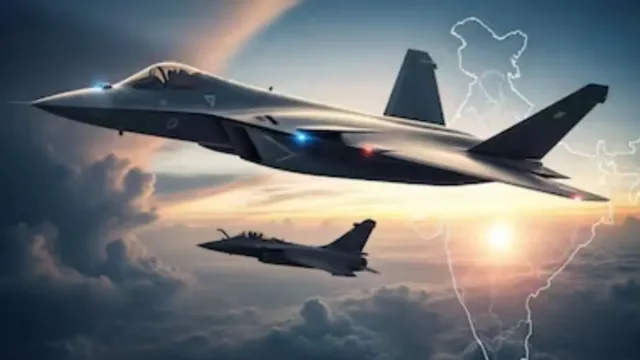
The GCAP program, a joint venture between BAE Systems, Leonardo, and JAIEC, has gained significant momentum with the formation of the Edgewing Joint Venture in Japan. As a Dialogue Partner, India has secured a seat in major meetings and will receive detailed program information. However, India will not have a major role in the development of the platform.
According to Japanese defense analyst Haruto Kobayashi, Japan has an equal 33.3% stake in the program across government governance and industrial execution. While India's role is limited to procurement agreements, Indian companies can contribute to the production of systems and sub-systems as part of the global supply chain.
Mitsubishi Heavy Industries (MHI) of Japan will play a leading role as an Airframe & Integration partner. Indian companies can play a role in the production of systems and sub-systems of the aircraft as part of the global supply chain for the program. However, the door for new partner countries joining the program is closing fast, as Japan is keen to see that the work on the program is fast-tracked and not delayed.
Nanoweave Composites — Precision Engineered Carbon Fiber
Empowering aerospace, UAV defense & robotics with high-performance carbon fiber sheets, custom drone frames & precision CNC composite machining.
Explore Carbon Fiber →The aggressive timeline for the program can only be met if the program meets its internal timelines. Japan is not keen on India joining as a full partner in the program, even though it wants to tap India for local production and as a global supply chain partner. If India joins the program at a later stage, then India will have a role in its production, but it is not clear if India will get to manufacture them in the country.
The three partners will be manufacturing jets, with shares of work divided among them. Countries might have a Final Assembly Line (FAL), but they won't be manufacturing each and every system in only one country. Even if India procures these 6th-gen jets in numbers, it will still be tied up to the global supply chain among these countries.
The GCAP program is expected to be ready for production by mid-next year. Japan is keen to see that the work on the program is fast-tracked and not delayed. India's role in the program is limited, but it can still contribute to the production of systems and sub-systems as part of the global supply chain.
In conclusion, India's emerging role in the GCAP program is significant, but its limitations are clear. India will have to wait for procurement agreements to be signed before it can contribute to the production of systems and sub-systems. However, the program's aggressive timeline and Japan's reluctance to delay it mean that India's role will be limited to the global supply chain. Nevertheless, India's participation in the program is a step in the right direction, and it can still contribute to the production of systems and sub-systems as part of the global supply chain.
Takshak CAM — Feature-Recognition CAM You Own Outright
Import STEP solids, automatically detect machinable features & post collision-checked 3-axis and 4-axis G-code. Perpetual license with zero recurring subscriptions.
Based on reporting from the original source. See our Copyright Policy for details.