India's Trainer Aircraft Turbulence: A Complex Web of Accountability
India's Trainer Aircraft Turbulence: A Complex Web of Accountability
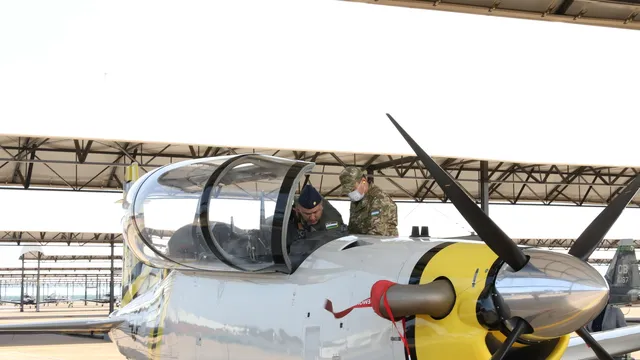
The Indian Air Force's (IAF) experience with the HPT-32 Deepak trainer aircraft has raised difficult questions about accountability in the development and procurement of military aircraft. The controversy surrounding the HPT-32 has reignited debates over who should be held responsible for its engine failures and fatal accidents: the manufacturer, Hindustan Aeronautics Limited (HAL), programme management, or the military that specified and operated it.
The human cost of India's trainer-aircraft problems has been significant. Former IAF Chief Air Chief Marshal B.S. Dhanoa has highlighted the loss of pilots in HPT-32 accidents, which has sparked arguments over HAL's management of the programme. However, attributing the entire problem to HAL's management risks ignoring the wider historical context.
The HPT-32 was designed for the technological environment of the early 1980s, using an American Lycoming AE-450 engine that became the central safety issue. The Comptroller and Auditor General (CAG) found that HAL's technical investigation into the causes was inconclusive, while the subsequent study concluded that the aircraft did not meet then-current standards.
The historical record also raises questions about the standards being applied to later trainer programmes. The HPT-32 did not have an ejection-seat solution comparable to modern military trainers, but that was not unusual for its generation. Comparing an early-1980s basic trainer directly with contemporary aircraft without accounting for the safety philosophy of the period can be misleading.
The subsequent PC-7 Mk II procurement provides an especially interesting counterpoint. During the 2009 basic-trainer competition, the IAF's original Preliminary Staff Qualitative Requirements reportedly included a zero-zero ejection seat. The later Air Staff Qualitative Requirements removed that requirement. A Centre for Air Power Studies analysis of the procurement said the IAF considered zero-zero capability unnecessary for a basic trainer because of its relatively low take-off and landing speeds and also wanted to avoid restricting the competition to only two aircraft.
The HTT-40 episode adds another layer to the story. After the HPT-32 was grounded, HAL proposed the indigenous HTT-40 to meet the basic-training requirement. The IAF initially opposed the programme, arguing that it did not want to pay the development cost for another aircraft when the proven Pilatus PC-7 Mk II was available. Air Chief Marshal N.A.K. Browne publicly questioned why the IAF should fund development of the aircraft from scratch.
The Ministry subsequently rejected HAL's original proposal on cost grounds, with contemporary reporting stating that the projected HAL aircraft was substantially more expensive than the imported PC-7. The programme was eventually revived, with HAL developing the HTT-40 using internal funding, and the aircraft subsequently moved into flight testing and certification.
This history complicates the argument that HAL alone should carry the blame for India's trainer-aircraft problems. The HPT-32's technical shortcomings were real, and its engine reliability problems were unacceptable for a basic trainer. But procurement decisions, changing requirements, development funding, programme oversight, and operational decisions also played major roles.
There is, however, a legitimate management question. If an aircraft repeatedly suffers engine-related failures over many years, the manufacturer and programme-management structure must be held accountable for finding a permanent engineering solution rather than allowing incremental fixes to continue indefinitely.
The larger lesson is that the IAF pays the price in blood when trainer programmes fail, but accountability cannot stop with the service or the manufacturer alone. Requirements must be realistic, development programmes must be properly funded and monitored, manufacturers must be held responsible for engineering reliability, and the user must have the authority and technical expertise to reject unsafe equipment.
The HPT-32 story should not become a simple HAL-versus-IAF argument. It was a failure involving technology, engine reliability, programme management, procurement decisions, and institutional learning. India has since moved considerably further, from the HPT-32 and Kiran to the HTT-40, Tejas, and increasingly sophisticated indigenous aircraft.
The real test is whether those lessons are remembered when India develops its next generation of trainers. A training aircraft may be less glamorous than a fighter, but it is the platform on which future fighter pilots first learn to trust an Indian-made aircraft. That makes reliability and safety non-negotiable, and India's military must ensure that its next-generation trainers meet the highest standards of safety and performance.
Based on reporting from the original source. See our Copyright Policy for details.