India's Su-30MKI Engine Upgrade: A Leap Towards Indigenisation
Akriti Precision Systems — High-Precision Desktop CNC Milling
Made-in-India desktop CNC machines with composite superstructures, 15–25 µm repeatability & lifetime frame warranty. Built for aerospace, carbon fiber & precision prototyping.
Explore CNC Systems →India's Su-30MKI Engine Upgrade: A Leap Towards Indigenisation
The Indian Air Force (IAF) operates the largest fleet of Su-30MKI fighter jets, with a total of 270 aircraft in service. The Su-30MKI is powered by the AL-31FP engine, which has been a critical component of the aircraft's operational availability. However, the reliance on foreign-made engines has been a concern for the Indian government, which has been working to indigenise the production of these engines.
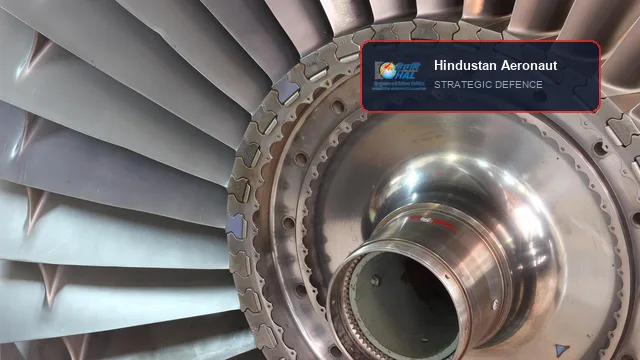
Hindustan Aeronautics Limited (HAL) has been at the forefront of this effort, with its Koraput facility manufacturing AL-31FP engines for the Su-30MKI. The facility has been producing 30 engines annually, with a plan to increase production to 30 engines per year over the next eight years. The indigenous content of the engines is set to increase to 63%, with a 500-hour life extension, significantly impacting the fleet's operational availability.
The life extension study was conducted by the IAF, Defence Research and Development Organisation's Defence Metallurgical Research Laboratory (DMRL), Center for Military Airworthiness and Certification (CEMILAC), and HAL Koraput. The study aimed to increase the rated engine life by 500 flying hours, which can mean substantial change for the fleet. This effort to move towards greater control over the AL-31FP engine is not a novel development. In 2019, the Ministry of Defence had stated that HAL had prepared a proposal to enhance the ROH capability for AL-31FP engine-powered Su-30MKI aircraft.
Nanoweave Composites — Precision Engineered Carbon Fiber
Empowering aerospace, UAV defense & robotics with high-performance carbon fiber sheets, custom drone frames & precision CNC composite machining.
Explore Carbon Fiber →The AL-31FP programme goes beyond simply a licensed production deal with hundreds of engines being built while simultaneously increasing indigenous content to 63 percent through life extension work by Indian agencies. The programme is a significant step towards indigenisation, with the Indian government aiming to reduce its reliance on foreign-made engines. The success of this programme will have a significant impact on the operational availability of the Su-30MKI fleet and will enhance India's control over its critical Su-30MKI engine.
The Cabinet Committee on Security had approved the procurement of 240 AL-31FP engines worth over Rs 26,000 crore in September. The emphasis is now on a phased indigenous content enhancement of more than 54% with gradual introduction of components at Koraput. The significance of this programme lies in the fact that a solid indigenous production base is present for the critical Su-30MKI engine, which guarantees and ensures operational availability.
The Sukhoi Engine Division of HAL, operating from the company's Koraput facility, manufactures AL-31FP engines for the Su-30MKI from 2004 in Russian licence. The HAL lists the Russian licence as responsible for AL-31FP engine production. However, the nature of operation with progressively higher indigenous content and in-depth involvement in engine life-extension work is increasingly expanding.
The importance of this programme lies in the fact that the Su-30MKI is the largest fighter fleet in the Indian Air Force and is expected to remain in service for a long time span covering decades. The programme is a significant step towards indigenisation, with the Indian government aiming to reduce its reliance on foreign-made engines. The success of this programme will have a significant impact on the operational availability of the Su-30MKI fleet and will enhance India's control over its critical Su-30MKI engine.
The Ministry of Defence is clear in saying that the life extension study was conducted by IAF, DMRL, CEMILAC, and HAL Koraput. The impact of which will increase rated engine life by 500 flying hours. This extra 500 hours per engine of a fleet as large as 270 aircraft can mean substantial change.
The effort to move towards greater control over the AL-31FP engine is not a novel development of this present large procurement. In 2019, the Ministry of Defence had stated HAL had prepared a proposal to enhance ROH capability for AL-31FP engine-powered Su-30MKI aircraft, with additional enhancement in Su-30MKI Aircraft ROH at Nashik already completed, and proposing additional AL-31FP Engine ROH at Koraput.
The AL-31FP programme goes beyond simply a licensed production deal with hundreds of engines being built while simultaneously increasing indigenous content to 63 percent through life extension work by Indian agencies. The programme is a significant step towards indigenisation, with the Indian government aiming to reduce its reliance on foreign-made engines. The success of this programme will have a significant impact on the operational availability of the Su-30MKI fleet and will enhance India's control over its critical Su-30MKI engine.
The programme is a testament to India's growing capabilities in the field of aerospace engineering and its commitment to indigenisation. The success of this programme will have far-reaching implications for the Indian Air Force and the country's defence sector as a whole. The programme is a significant step towards achieving self-reliance in defence production and will enhance India's ability to design, develop, and manufacture advanced defence systems.
The programme is a significant achievement for HAL, which has been at the forefront of this effort. The company has demonstrated its capabilities in manufacturing, overhaul, and life extension work for the AL-31FP engine. The success of this programme will have a significant impact on the operational availability of the Su-30MKI fleet and will enhance India's control over its critical Su-30MKI engine.
The programme is a significant step towards indigenisation, with the Indian government aiming to reduce its reliance on foreign-made engines. The success of this programme will have a significant impact on the operational availability of the Su-30MKI fleet and will enhance India's control over its critical Su-30MKI engine. The programme is a testament to India's growing capabilities in the field of aerospace engineering and its commitment to indigenisation.
Takshak CAM — Feature-Recognition CAM You Own Outright
Import STEP solids, automatically detect machinable features & post collision-checked 3-axis and 4-axis G-code. Perpetual license with zero recurring subscriptions.
Based on reporting from the original source. See our Copyright Policy for details.