India's Stealth Dilemma: Balancing Foreign Temptation and Indigenous Ambition
The Indian Air Force's Dilemma
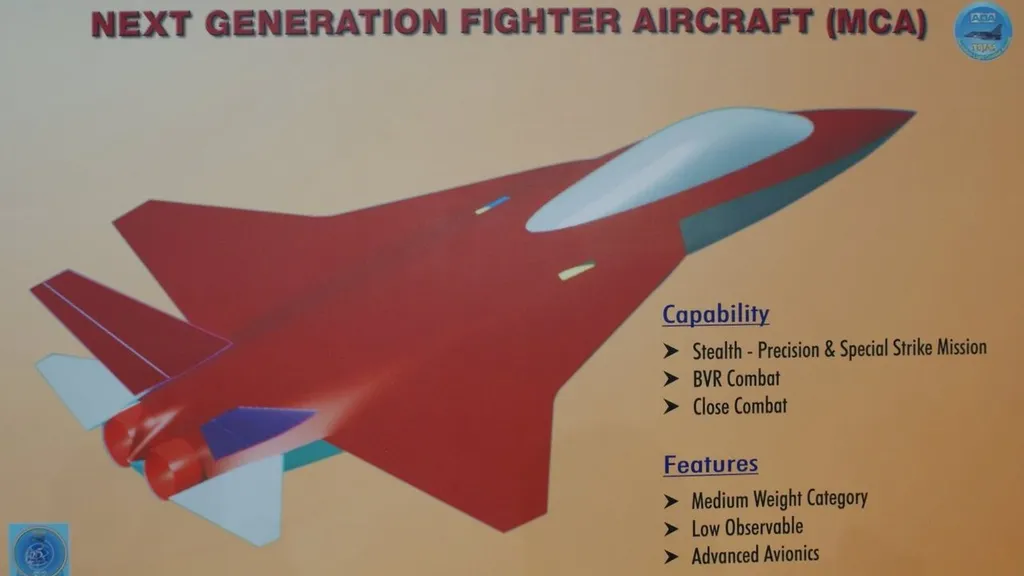
India's military is at a critical juncture, with the Indian Air Force (IAF) facing a fundamental dilemma. On one hand, the IAF requires an immediate fifth-generation combat capability to counter emerging threats. On the other hand, the country has invested heavily in developing an indigenous stealth fighter, the Advanced Medium Combat Aircraft (AMCA). Former IAF Chief Air Chief Marshal RKS Bhadauria has sounded the alarm on India's potential Su-57 deal, warning that it risks undermining the country's AMCA programme.
The Su-57: A Stopgap Solution?
Bhadauria's argument centres on the potential for an initial purchase of the Su-57 to gradually expand into a much larger fleet. This could create a situation in which an interim solution begins competing directly with AMCA for funding, infrastructure, and manpower. The concern is not necessarily about the capability of the Su-57 itself, but about procurement momentum. Once an imported fifth-generation fighter enters IAF service, additional aircraft could become attractive because of existing training, maintenance, weapons, infrastructure, and pilot familiarity.
The AMCA Programme: A Strategic National Project
Bhadauria has consistently emphasized the importance of AMCA as a strategic national project. The programme represents a complex engineering challenge that requires urgency, firm milestones, and adequate funding to succeed. India needs to prioritize AMCA and avoid delays that have plagued earlier indigenous fighter programmes. The stakes are high, with AMCA incorporating low-observable design, internal weapons carriage, advanced sensors, electronic warfare systems, high-end mission computing, and a new high-thrust propulsion system.
The Risk of Delays
India's experience with the Tejas Mk2 programme serves as a cautionary tale. Delays in the development of successive indigenous fighter programmes have repeatedly pushed operational timelines to the right. Bhadauria's warning is that AMCA cannot afford to repeat the same cycle. The concern is particularly serious because AMCA represents a substantially more complex engineering challenge than the Tejas family.
Sequencing and Resource Allocation
The Su-57 debate is ultimately about sequencing rather than simply choosing between a Russian aircraft and an Indian aircraft. India could potentially use a limited foreign acquisition to address an immediate capability gap, but Bhadauria's concern is that such a purchase must have clearly defined limits so that it does not gradually consume the resources intended for AMCA. The strategic risk becomes greater if an interim purchase expands because of delays in AMCA itself.
Urgency and Firm Milestones
For Bhadauria, the solution is therefore urgency. AMCA needs firm milestones, rapid decision-making, adequate funding, and close oversight from the government, IAF, DRDO, ADA, and industry. The programme must avoid the prolonged development cycles that have affected earlier Indian combat-aircraft projects. India's challenge is consequently not merely to build a fifth-generation fighter, but to build it on time.
Key Takeaways
- India's AMCA programme is at risk of being undermined by an initial purchase of the Su-57.
- The Su-57 debate is ultimately about sequencing and resource allocation rather than simply choosing between a Russian aircraft and an Indian aircraft.
- India needs to prioritize AMCA and avoid delays that have plagued earlier indigenous fighter programmes.
- AMCA requires urgency, firm milestones, and adequate funding to succeed.
- India's challenge is not merely to build a fifth-generation fighter, but to build it on time.
Based on reporting from the original source. See our Copyright Policy for details.