India's Next-Gen Fighter: The Tejas Mk2's Price Tag Revealed
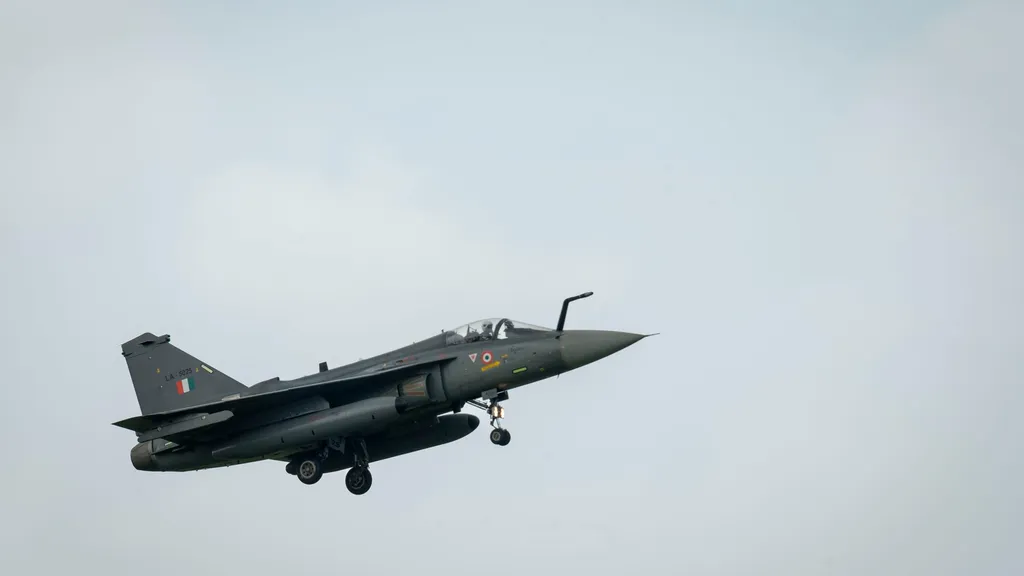
The Tejas Mk2, India's next-generation single-engine fighter, has been making waves in the defense industry with its impressive upgrades and capabilities. But will it come at a steep price tag? According to sources close to idrw.org, the estimated unit cost of the Mk2 could be a relatively modest 23% higher than the current Tejas Mk1A price, around $95-96 million per fighter.
This estimate is based on the comparison between the Ministry of Defence's recent contract with Hindustan Aeronautics Limited (HAL) for 97 Tejas Mk1A aircraft and the expected costs of the Mk2. The contract value works out to an average unit cost of roughly ₹640-650 crore per aircraft, or approximately $76-78 million at prevailing exchange rates. This represents a substantial jump over the Indian Air Force's earlier 2021 order for 83 Mk1A jets, which averaged around ₹578 crore per unit.
The significant upgrades the Mk2 will bring, including a larger airframe, a more powerful GE F414 engine in place of the F404, an internal fuel capacity increase, additional weapons stations, and a broader sensor and avionics suite, are expected to justify the modest premium. The Mk2's development is being led by the Aeronautical Development Agency (ADA), with HAL and the Defence Research and Development Organisation (DRDO) playing key roles. The project has secured Cabinet Committee on Security clearance for prototype development, with five flying airframes planned and a first aircraft targeted by the end of 2028.
The broader 210-aircraft acquisition roadmap for the Mk2, spanning eventual serial production beyond the initial prototype batch, has been estimated in the $15.5-17.5 billion range in industry estimates. This translates to an average package cost of roughly $74-83 million per jet when spread across the full programme, though that figure typically bundles in lifecycle support, spares, and associated infrastructure rather than reflecting a pure flyaway unit price.
A 23 percent premium over the Mk1A's current unit cost would sit comfortably within that broader programme-cost range, reinforcing the idea that the Mk2's per-unit price, once production matures, may not diverge as sharply from the Mk1A as the scale of its technical upgrades might otherwise suggest. This would also be consistent with the pattern already visible in the Mk1A programme itself, where indigenous content, shared subsystems, and an established production line at HAL's Nashik and Bengaluru facilities have been credited with helping contain costs even as capability has risen substantially between successive contracts.
However, much will still depend on how engine costs evolve, since the Mk2 is expected to rely on the GE F414-INS6 powerplant under a technology transfer arrangement that remains under negotiation. Additionally, the expanded production capacity of HAL's facilities will need to absorb non-recurring engineering and tooling costs across a larger production run. For now, the 23 percent estimate offers an early marker of where the Mk2's pricing may land once formal costing is completed ahead of any production sanction.
As the Tejas Mk2 takes shape, it's clear that India is making significant strides in the development of its next-generation fighter. With its impressive upgrades and capabilities, the Mk2 is poised to become a game-changer in the skies. Whether it will come at a price tag that's within the country's means remains to be seen. One thing is certain, however – the Tejas Mk2 is a testament to India's growing capabilities in the aerospace sector, and its potential to shape the future of air power.
Based on reporting from the original source. See our Copyright Policy for details.