India's Ambitious Saras Mk2 Civilian Aircraft Faces Fresh Delays and Regulatory Hurdles
Akriti Precision Systems — High-Precision Desktop CNC Milling
Made-in-India desktop CNC machines with composite superstructures, 15–25 µm repeatability & lifetime frame warranty. Built for aerospace, carbon fiber & precision prototyping.
Explore CNC Systems →India's Ambitious Saras Mk2 Civilian Aircraft Faces Fresh Delays and Regulatory Hurdles
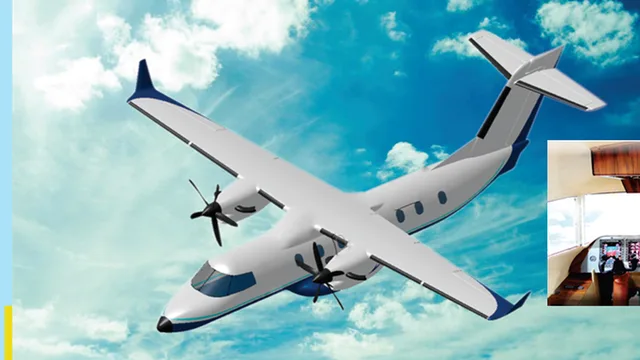
The Saras Mk2, a 19-seater civil transport aircraft developed by the CSIR-National Aerospace Laboratories (NAL), has suffered yet another delay in its schedule. Initially, the first flight was slated for 2025, but it was later pushed to 2027. Now, officials closely involved in the programme have revealed that the first flight is expected to take place in early 2028.
The delay is attributed to the complex process of integrating various systems, carrying out ground tests, and obtaining necessary regulatory approvals. Officials have stated that the earlier deadlines were overly optimistic, and speeding up the first flight would endanger safety and quality. The new design features a longer fuselage, a greater payload, a pressurised cabin, and modern avionics, meeting certification requirements.
The Saras programme originated with India's first civilian aircraft to be independently designed, the 14-seater Saras (PT1), which first flew in 2004 but was subsequently grounded following a fatal accident in 2009. The new Saras Mk2 is a completely new design, featuring a longer fuselage, a greater payload, a pressurised cabin, and a modern glass cockpit. The aircraft will be used for a number of purposes, including regional passenger transport as part of the government's UDAN scheme, for air ambulance work, for carrying executives, for coastal surveillance, and for light cargo operations.
Nanoweave Composites — Precision Engineered Carbon Fiber
Empowering aerospace, UAV defense & robotics with high-performance carbon fiber sheets, custom drone frames & precision CNC composite machining.
Explore Carbon Fiber →The aircraft will be equipped with two Pratt & Whitney Canada PT6A-67A turboprop engines and will have the Garmin G3000 avionics suite. Both of these systems are off-the-shelf, which is expected to reduce development risk and certification time. Advances in the area of structural and systems integration have been steady, with the Iron Bird, a full-scale ground test facility designed to simulate all the flight control systems, hydraulics, and electrical architecture, now working at NAL's Bengaluru site.
Several subsystems have already been subjected to intensive testing on the rig. Even though there has been technical progress, commercial acceptance is still very limited. The only customer so far that has been confirmed is the Indian Air Force, having entered into a Letter of Intent for 15 aircraft to be used for transport and training purposes. Neither civil operators nor state governments have placed any definite orders, which brings into doubt the programme's long-term viability in the absence of more solid market support.
The Saras Mk2, in contrast to military projects, has to comply with the strict Type Certification requirements of the DGCA (Directorate General of Civil Aviation) as set out in CAR-23, which results in a great deal of both time and money. Furthermore, NAL is aiming at eventual recognition by EASA and the FAA in order to secure export possibilities. In 2023, the project was given a significant injection of funds when the Ministry of Civil Aviation approved ₹450 crore for the construction of two flying prototypes and one static test airframe.
Yet, according to sources, further financing will be needed for flight testing, certification, and for the limited series of production. The initial flight is now being postponed until early 2028, so the Saras Mk2 joins a long list of Indian aerospace projects which have suffered repeated delays such as the Tejas LCA and the HTT-40 trainer. Nevertheless, the officials are still optimistic that the additional time will result in a mature, safe, and market-ready product.
The NAL official stated that "if we get it right, the Saras Mk2 will be India's first indigenous aircraft to obtain commercial certification since independence" and that "it's not just a matter of flying in 2028 but of establishing a sustainable ecosystem for the design, production, and maintenance of small civil aircraft in India." The success of the Saras Mk2 programme will not only boost India's aerospace industry but also pave the way for the development of more indigenous aircraft in the future.
Takshak CAM — Feature-Recognition CAM You Own Outright
Import STEP solids, automatically detect machinable features & post collision-checked 3-axis and 4-axis G-code. Perpetual license with zero recurring subscriptions.
Based on reporting from the original source. See our Copyright Policy for details.