India's Airborne Early Warning Capabilities to Expand with Heavy-Class AWACS Mk3 Programme Launch
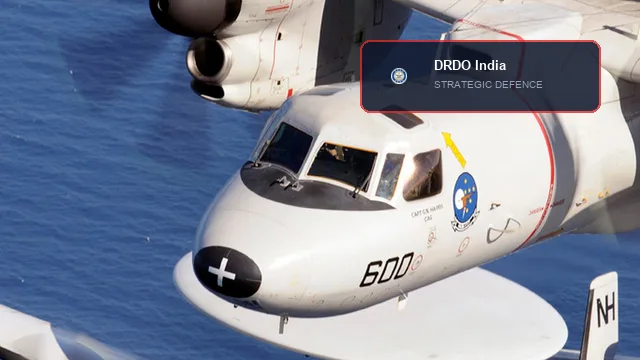
India's Future Airborne Surveillance Capabilities Take Shape
The Defence Research and Development Organisation (DRDO) and the Indian Air Force (IAF) are already looking beyond the ongoing Netra Mk2 programme, a medium-class airborne early warning and control (AEW&C) platform currently under development. As part of long-term capability planning, the DRDO and IAF have conceptualised a future AWACS Mk3, a heavy-class airborne warning platform envisioned for development in the 2030s.
The proposed AWACS Mk3 represents the next logical evolution of India's indigenous airborne surveillance architecture. It is expected to offer significantly greater endurance, sensor coverage, and airborne battle-management capacity compared to its predecessors. The platform will be a heavy widebody airborne warning system, capable of delivering uninterrupted 360-degree surveillance through either a large rotating rotodome or an advanced fixed dorsal radar architecture.
Previous concept studies have evaluated widebody aircraft such as the Airbus A330 as a potential host platform due to its substantial payload capacity, electrical power generation, and internal mission space. This would provide sufficient room for a larger mission crew, additional operator consoles, expanded communications suites, and more powerful onboard processing systems required for next-generation airborne command-and-control missions.
One of the defining characteristics of the AWACS Mk3 concept is its full 360-degree surveillance capability, making it a flying command centre capable of coordinating large-scale air operations, managing multiple fighter packages, integrating surface-based air defence networks, and supporting maritime strike missions across extended distances. This platform would occupy a capability class comparable to established heavy AWACS aircraft operated by major air forces worldwide.
However, the DRDO's Centre for Airborne Systems (CABS) currently remains fully committed to executing the recently contracted Netra Mk2 programme. The organisation's engineering resources are presently focused on integrating indigenous mission systems into six Airbus A321 aircraft, following the award of the Development-cum-Production Partner (DcPP) contract to Adani Defence Systems & Technologies Limited and the structural aircraft conversion work being undertaken by AI Engineering Services Limited (AIESL).
The complexity of the Netra Mk2 programme, which includes indigenous AESA radar integration, electronic intelligence systems, communications intelligence suites, mission computers, and long-term certification, necessitates a phased approach. CABS is expected to prioritise the successful execution of the Netra Mk2 programme before formally launching development of the heavier AWACS Mk3.
This phased approach reflects DRDO's broader strategy of building progressively more capable airborne surveillance platforms. The Netra Mk1 established India's indigenous AEW&C capability on a regional scale, the Netra Mk2 aims to provide significantly enhanced endurance and sensor performance using the Airbus A321 platform, while the proposed Mk3 would represent India's first domestically developed heavy strategic AWACS capable of sustained theatre-wide airborne command and control.
A heavy AWACS platform would complement, rather than replace, the Netra Mk2 fleet. Medium AEW&C aircraft are generally more economical to operate and well suited for routine surveillance missions, whereas heavy AWACS aircraft offer longer endurance, greater radar power, larger mission crews, and superior battle-management capabilities for high-intensity operations.
Although the AWACS Mk3 remains in the conceptual planning stage, its inclusion in long-term discussions underscores the Indian Air Force's intention to develop a layered airborne surveillance force comprising multiple classes of AEW&C and AWACS aircraft tailored to different operational requirements.
Key Takeaways
- The DRDO and IAF are conceptualising a future AWACS Mk3, a heavy-class airborne warning platform envisioned for development in the 2030s.
- The proposed AWACS Mk3 would offer significantly greater endurance, sensor coverage, and airborne battle-management capacity compared to its predecessors.
- The platform would be a heavy widebody airborne warning system, capable of delivering uninterrupted 360-degree surveillance through either a large rotating rotodome or an advanced fixed dorsal radar architecture.
- The DRDO's Centre for Airborne Systems (CABS) is currently committed to executing the Netra Mk2 programme before formally launching development of the heavier AWACS Mk3.
Based on reporting from the original source. See our Copyright Policy for details.