India's Aerospace Ambitions Take Flight: A Milestone in Tejas Indigenization
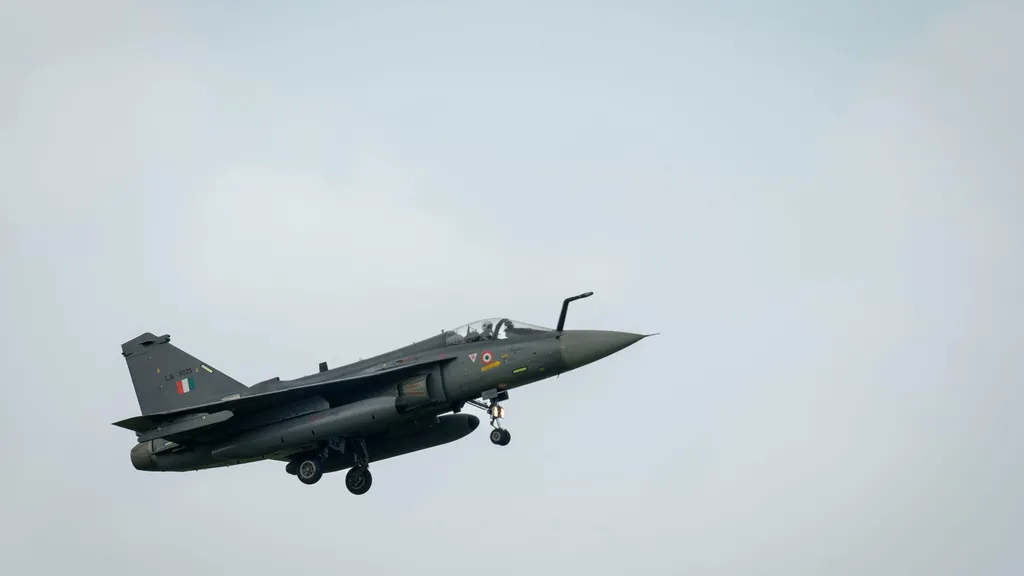
The Tejas Light Combat Aircraft, India's flagship fighter, has long been touted as a symbol of the country's aerospace self-reliance. However, when it first entered service, the aircraft relied on five critical imported systems from four different foreign countries. This was a notable list of dependencies, representing potential supply-chain vulnerabilities, cost pressures, and diplomatic complications.
But in recent years, significant strides have been made in reducing this foreign dependency. One of the most recent breakthroughs concerns the Tejas Mk1A's radome, the protective dome that shields the aircraft's radar while remaining transparent to its signals. DRDO's Research and Development Establishment has successfully developed a homegrown replacement, which has already cleared structural, mechanical, and electromagnetic performance testing.
The new radome boasts impressive engineering credentials, utilizing a monolithic composite structure reinforced with quartz fibre and bound in a cyanate ester resin matrix. This material combination is manufactured through the Resin Film Infusion (RFI) process, a technique chosen for its high structural quality and dimensional precision. The design also incorporates a conical composite structure with variable thickness, an outer coating that's electromagnetically transparent while resisting rain erosion and static buildup, and diverter strips for lightning protection compliant with military standards.
In addition to the radome breakthrough, HAL has placed a substantial order to strengthen the domestic supply chain behind the Tejas's indigenous Uttam AESA radar. This order, worth over ₹2,205 crore, will supply 122 Active Antenna Array Units (AAAU) and 121 Interface Frames for the Uttam Radar programme, to be executed over five years. This significant investment in private industry will cement Astra Microwave Products' role as the primary supplier of core RF and active antenna array modules for India's indigenous airborne radars.
While these developments are significant, there are still two items on the original foreign-five list that remain works in progress. The indigenous Self-Protection Jammer, intended to replace the Israeli-sourced ASPJ system, has been under long-term development. Continued progress in this area would close out the electronic warfare gap alongside the radar and radome advances.
However, the bigger challenge lies in replacing the American GE F404 turbofan engine. The original Kaveri programme, which was initially linked to the Tejas, failed to generate sufficient thrust and was subsequently repurposed for unmanned combat aircraft applications. The revival of engine development under the new banner of Kaveri 2.0 is targeting a 90 kN thrust class specifically intended to eventually replace the F404 on Tejas Mk1A during a future mid-life upgrade.
The engine remains the hardest problem on the list, with a long history of setbacks. However, renewed investment and a clear strategic rationale suggest DRDO isn't giving up on eventually closing out that final, most stubborn dependency. Each of these developments, the radome nearing production readiness, the Uttam radar supply chain scaling up, and continued work on an indigenous jamming system, chips away at exactly the kind of foreign dependency that has repeatedly complicated Tejas production timelines.
The F404 supply delays offer a live case study in why this matters: even a single foreign-sourced critical component can bottleneck an entire production line, regardless of how indigenous the rest of the airframe has become. Tejas began life leaning on five major imported systems across four foreign countries. With the radome now in final flight trials, the Uttam radar's domestic supply chain rapidly scaling up, and both an indigenous jamming system and a genuinely viable engine replacement in active development, India's flagship fighter is edging closer to the kind of comprehensive self-reliance it was originally meant to represent.
The path to complete indigenization is far from over, but these developments mark significant milestones in India's aerospace ambitions. As the country continues to chip away at its foreign dependencies, the Tejas Light Combat Aircraft is poised to become a true symbol of Indian self-reliance in the skies.
Based on reporting from the original source. See our Copyright Policy for details.