Hindustan Aeronautics Achieves Breakthrough in Indigenous Technologies for LCA Mk2 Fighter Aircraft Systems.
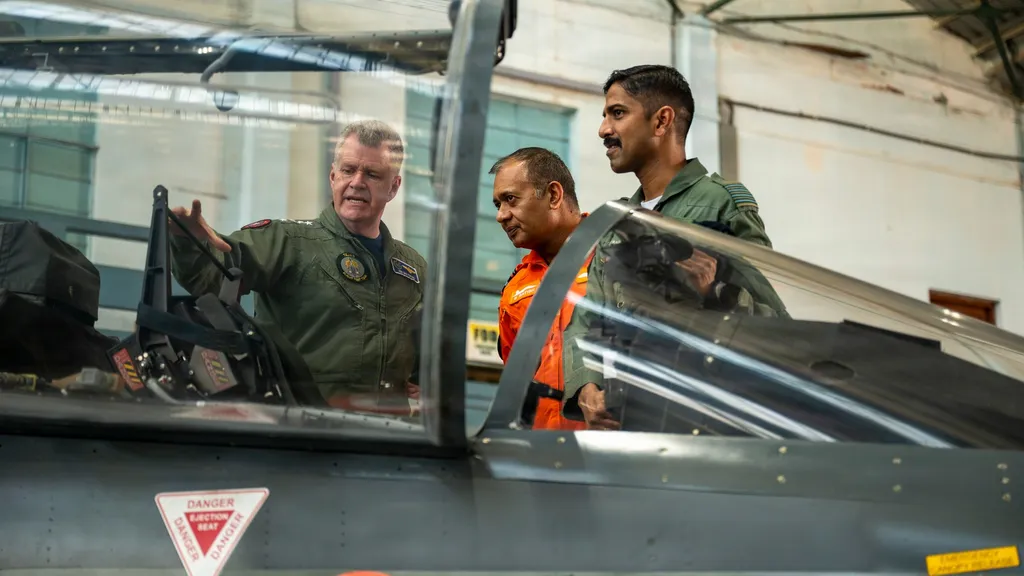
HAL Unveils Indigenous Fuel Sensing and Data Acquisition Technologies for LCA Mk2 Medium Weight Fighter
In a significant development, Hindustan Aeronautics Limited (HAL) has successfully developed a suite of indigenous technologies for the LCA Mk2 medium weight fighter programme. These cutting-edge technologies, including optical level sensing systems for fuel tanks and advanced RS422-based data acquisition systems, are a testament to HAL's growing role in the design and development of core onboard systems that determine an aircraft's combat effectiveness, safety, and maintainability.
The LCA Mk2, also known as the Medium Weight Fighter, is a four-and-a-half generation multirole combat aircraft being jointly developed by HAL and the Aeronautical Development Agency (ADA) under the oversight of the Defence Research and Development Organisation (DRDO). The programme aims to bridge the capability gap between the lighter Tejas Mk1A and India's future fifth-generation Advanced Medium Combat Aircraft (AMCA). With a maximum takeoff weight of 17.5 tonnes, a payload capacity of 6.5 tonnes across eleven hardpoints, and internal fuel capacity exceeding 3,400 kilograms, the aircraft is powered by the GE F414-INS6 engine producing 98 kilonewtons of thrust.
One of the significant indigenous developments is the optical level sensing technology for the aircraft's fuel tanks. Unlike traditional fuel gauging methods that rely on capacitance-type probes susceptible to electromagnetic interference and calibration drift, optical level sensing uses light-based detection to determine fuel quantity with greater precision and reliability. This provides the mission computer with accurate real-time fuel data critical for range calculations, mission planning, and pilot decision-making during combat operations. The indigenous development means HAL owns the complete design, source code, and maintenance pipeline, allowing future upgrades and troubleshooting without dependence on foreign original equipment manufacturers whose supply chains and pricing structures can introduce operational vulnerabilities.
Another significant indigenous contribution is the advanced RS422 data acquisition system developed for the aircraft's electrical line-replaceable units (LRUs) and health monitoring. The RS422 standard is a serial communication protocol widely used in aerospace for transmitting digital data between avionics subsystems with high noise immunity over moderate distances. HAL's implementation provides a robust data acquisition backbone that continuously collects and transmits performance parameters from the aircraft's electrical LRUs to the central health monitoring system, enabling real-time assessment of component status and predictive maintenance. This allows ground crews to identify degrading components before they fail, reducing unscheduled maintenance events and improving aircraft availability, a critical metric for operational readiness in a fighter fleet the Indian Air Force relies upon for combat sorties at short notice.
These indigenous developments are part of a broader systems indigenisation effort across the LCA Mk2 programme. HAL has also been entrusted with developing the integrated Environment Control and Fuel Monitoring System Electronic Unit, which manages pilot life support systems including cabin pressurisation and cockpit air-conditioning, while overseeing the complex fuel system. The company is developing a new Radio Altimeter for precise low-level altitude measurement, a VHF Omni-Range and Instrument Landing System for poor-weather approach guidance, and a Tactical Air Navigation System for military-grade directional and distance data. The LCA Mk2 will also feature the indigenous Uttam active electronically scanned array radar, a Unified Electronic Warfare Suite, an Infrared Search and Track system, and a triple-layer computing architecture comprising a Digital Flight Control Computer, Mission Management and Display Computer, and an indigenous Auxiliary Computer that provides failover redundancy and computational offloading for tasks such as terrain mapping and electronic warfare threat classification.
The LCA Mk2 programme, sanctioned at approximately ten thousand crore rupees by the Cabinet Committee on Security in 2022, is expected to see a prototype rollout in March 2027, with a first flight targeted between March and July 2027. HAL CMD Ravi confirmed at the 2026 Farnborough Airshow that structural assembly of the first prototype is progressing, and the aircraft will replace the Mirage 2000, Jaguar, and MiG-29 fleets in the 2035 to 2040 timeframe. The indigenous fuel sensing and data acquisition technologies developed for this platform represent not merely component-level substitutions, but the creation of sovereign design capabilities that will feed forward into the AMCA programme, reducing lifecycle costs by up to thirty per cent through shared module architectures.
Key Takeaways
- HAL has developed indigenous fuel sensing and data acquisition technologies for the LCA Mk2 medium weight fighter programme.
- The optical level sensing technology uses light-based detection to determine fuel quantity with greater precision and reliability.
- The advanced RS422 data acquisition system provides a robust data acquisition backbone for the aircraft's electrical LRUs and health monitoring.
- The LCA Mk2 programme aims to bridge the capability gap between the lighter Tejas Mk1A and India's future fifth-generation AMCA.
- The programme is expected to see a prototype rollout in March 2027, with a first flight targeted between March and July 2027.
Based on reporting from the original source. See our Copyright Policy for details.