Domestic Option Beckons: Can India Deliver a Cutting-Edge Jet Trainer?
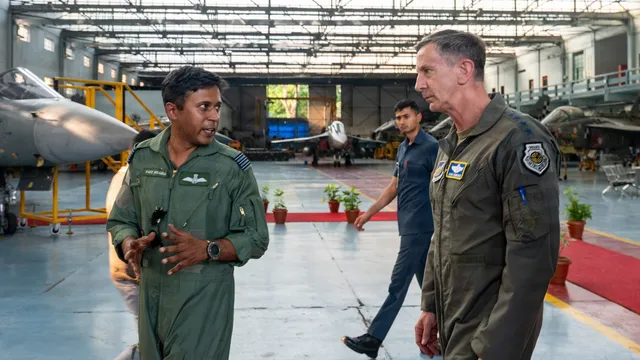
A Call to Arms: India's Aerospace Industry at the Crossroads
As the Indian Air Force embarks on a major procurement drive for its next-generation jet trainers, a call to arms has been sounded by a former Air Chief Marshal. RKS Bhadauria, a stalwart of India's aerospace industry, is urging the nation to look inwards for a solution, citing the country's growing capabilities to design and manufacture advanced aircraft.
The Case for a Domestic Solution
The stakes are high, with the Indian Air Force seeking to replace its ageing Hawk fleet with a new Stage-III (F) jet trainer. The scope of the project is substantial, with a potential requirement of around 150 new trainers. The new aircraft will form the final stage of fighter-pilot training before pilots transition to frontline combat aircraft. Bhadauria's argument is simple: after successfully designing and manufacturing the Tejas Light Combat Aircraft, India should have the capability to develop an advanced jet trainer domestically.
HAL's Expertise in Jet Trainers
India's Hindustan Aeronautics Limited (HAL) has already demonstrated expertise in jet trainers, with the HJT-36 (now renamed Yashas) and HLFT-42 projects showcasing the company's capabilities. The HLFT-42, in particular, is a supersonic Lead-In Fighter Trainer with a stated mission that goes beyond conventional training. It is a potential candidate for the IAF's new Stage-III requirement, although its development schedule, cost, and final configuration will be critical factors.
Strategic Advantages of a Domestically Designed Trainer
A domestically designed trainer could offer strategic advantages, including common avionics and digital cockpits that align with India's future fighter ecosystem. It could also reduce the need to expose expensive frontline fighters to large numbers of routine training sorties. The timing, however, is crucial, with the IAF's Request for Information (RFI) indicating that the formal procurement process is still at an early stage. The current plan reportedly envisages a Request for Proposal (RFP) around December 2027, followed by evaluation and a delivery schedule extending into the 2030s.
The Challenge Ahead
Developing a completely new trainer after the RFP would risk repeating the lengthy development cycles that have affected several Indian aerospace programmes. If India decides that the aircraft must be indigenous, development needs to begin early enough to ensure that the replacement arrives before the Hawk fleet becomes a serious training bottleneck. The strongest case for an Indian solution is therefore not simply national pride or import substitution. It is the combination of fleet size, existing design expertise, commonality with future fighters, and long-term operating economics.
Can India Deliver?
India has already demonstrated that it can design a modern fly-by-wire combat aircraft. The next challenge is to translate that experience into a reliable, affordable, and rapidly producible advanced jet trainer. The clock is ticking, and the stakes are high. Can India deliver a cutting-edge jet trainer that meets the IAF's requirements and sets a new standard for the nation's aerospace industry?
Key Takeaways
- India's aerospace industry is at a crossroads, with a major procurement drive for its next-generation jet trainers.
- Former Air Chief Marshal RKS Bhadauria is urging the nation to look inwards for a solution, citing the country's growing capabilities to design and manufacture advanced aircraft.
- HAL has already demonstrated expertise in jet trainers, with the HJT-36 (now renamed Yashas) and HLFT-42 projects showcasing the company's capabilities.
- A domestically designed trainer could offer strategic advantages, including common avionics and digital cockpits that align with India's future fighter ecosystem.
- The timing is crucial, with the IAF's Request for Information (RFI) indicating that the formal procurement process is still at an early stage.
- Developing a completely new trainer after the RFP would risk repeating the lengthy development cycles that have affected several Indian aerospace programmes.
Based on reporting from the original source. See our Copyright Policy for details.