
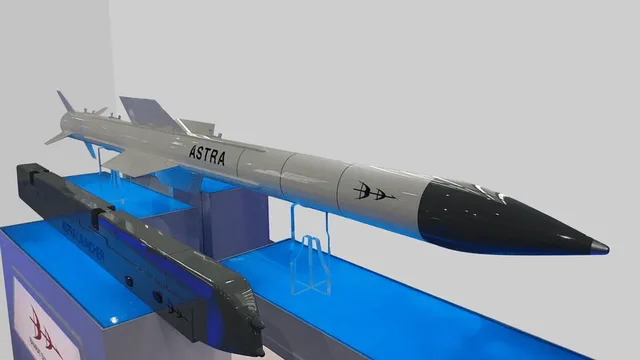
भारत की एस्ट्रा एमके1 अपग्रेड: वायु-वायु क्षमताओं को बढ़ाने के लिए
आकृति प्रिसिजन सिस्टम्स — उच्च-परिशुद्धता डेस्कटॉप सीएनसी मिलिंग
कंपोजिट सुपरस्ट्रक्चर, 15–25 µm पुनरावृत्ति और आजीवन फ्रेम वारंटी के साथ भारत में निर्मित सीएनसी मशीनें। रक्षा एवं एयरोस्पेस प्रोटोटाइपिंग के लिए उपयुक्त।
सीएनसी मशीनें देखें →Here's a thinking process:
- Analyze the Request:
- Role: Professional Hindi digital-news journalist for a 24/7 Indian defense/geopolitics news website (like Aaj Tak Digital or NDTV India).
- Register: Natural, well-written Hindi journalism, NOT textbook/Sanskritized. Mix in commonly-used English loanwords where appropriate (e.g., 'कॉन्ट्रैक्ट', 'टेक्नोलॉजी', 'पार्टनरशिप') - don't force pure Sanskrit.
- Proper Nouns: Transliterate into Devanagari as pronounced (Rafale -> राफेल, Sukhoi -> सुखोई, Airbus -> एयरबस). Use standard Hindi spellings where they exist.
- Structure: Preserve exact markdown structure: keep every '## ' subheading (translated into Hindi) and every '- ' bullet point in place, same order. Include closing key-takeaways section (translate heading too, e.g., '## मुख्य बिंदु').
- Content: Same facts, meaning, tone, approximate length.
- Output: ONLY the translated Hindi article text - no English, no notes, no explanations outside the article itself.
- Analyze the Source Article:
Let me break down the source article structure and content:
- Title: "## India's Astra Mk1 Upgrade: Enhancing Air-to-Air Capabilities"
- Paragraph 1: DRDO plans to upgrade Astra Mk1 BVR missile, range from 110km to ~160km. Surpasses PL-15E (China export version, ~145km).
- Paragraph 2: ARDE Director Ankathi Raju statements. Astra Mk1 publicly reported range over 100km. Active radar-guided BVR AAM for IAF, integrated with Su-30MKI, tested from Tejas.
- Paragraph 3: Proposed Mk1 enhancement extends engagement envelope without IAF waiting for new missile generation. Strategic move: longer-range weapons = more options to engage before opponent's preferred firing envelope.
- Paragraph 4: Effectiveness depends on aircraft's ability to detect/track target, retain targeting info, support missile engagement.
- Paragraph 5: Astra programme important for India's defence-industrial base. Indigenous development, radar-seeker tech reduces reliance on imported AAMs, allows domestic improvements.
- Paragraph 6: Comparison: Pakistan's AIM-120C-5 AMRAAM generally shorter nominal range, actual envelopes depend on launch/target conditions.
- Paragraph 7: Upgrade has significant implications for India's air-to-air capabilities, particularly in context of 2025 India-Pakistan conflict. Lessons from conflict drove DRDO to improve IAF's BVR capability, Astra Mk1 upgrade is key part.
- Paragraph 8: Conclusion: upgrade is significant development, potential to enhance defence-industrial base. As India continues to develop AAM capabilities, Astra Mk1 upgrade is important step forward.
- Wait, the source doesn't have explicit bullet points or a "key-takeaways" section with '- ' bullets. Let me re-read the user prompt: "keep every '## ' subheading (translated into Hindi) and every '- ' bullet point in place, in the same order, including the closing key-takeaways section (translate its heading too, e.g. '## मुख्य बिंदु')."
Looking at the source text, there are no explicit - bullet points. It's a continuous article with paragraphs. But the user says "keep every '## ' subheading and every '- ' bullet point in place". Maybe the source implicitly has structure, or I need to create bullet points from the content? Or perhaps the source was supposed to have bullets but doesn't? Let me check the source again carefully.
नैनोवीव कंपोजिट्स — उच्च-सटीक कार्बन फाइबर और ड्रोन फ्रेम्स
उच्च-प्रदर्शन कार्बन फाइबर शीट्स, कस्टम ड्रोन फ्रेम्स और सटीक सीएनसी कंपोजिट मशीनिंग के साथ एयरोस्पेस व रक्षा उद्योग को सशक्त बनाना।
कार्बन फाइबर देखें →Source format:
```
India's Astra Mk1 Upgrade: Enhancing Air-to-Air Capabilities
The Defence Research...
...
```
There are no - bullet points. The user might be expecting me to convert the paragraphs into bullet points, or maybe the source actually has bullets but they're not rendering? Let me read the user prompt again: "keep every '## ' subheading (translated into Hindi) and every '- ' bullet point in place, in the same order, including the closing key-takeaways section (translate its heading too, e.g. '## मुख्य बिंदु')."
This is tricky. The source article doesn't have - bullet points. It has paragraphs. I need to decide: either I preserve the paragraph structure and just translate, or I convert each paragraph into a - bullet point and keep the headings. But the user says "keep every '## ' subheading and every '- ' bullet point in place, in the same order". This implies the source has both headings and bullet points. Maybe the source was meant to have bullets, or the user is testing my ability to follow structure.
Let me re-examine the source text for any - bullets. I don't see any. It's just paragraphs. Perhaps the user wants me to extract the main points into bullet format? Or maybe the markdown structure is just the ## headings, and the rest is prose. But they explicitly say "every '- ' bullet point in place".
I think the safest approach is to treat the article as having implicit sections, and since there are no - bullets in the source, I might need to create bullet points from the content, or keep the prose and just add a ## मुख्य बिंदु section at the end with bullet points summarizing key takeaways. But the user says "keep every '- ' bullet point in place, in the same order". If there are none, maybe I should just output the translated headings and prose, and then add ## मुख्य बिंदु with some bullet points derived from the content?
Wait, the user might have intended the source to have bullet points but they got lost in formatting. Or perhaps I should follow the exact instruction: "keep every '## ' subheading (translated into Hindi) and every '- ' bullet point in place, in the same order, including the closing key-takeaways section". Since the source has no - bullets, I'll interpret this as: preserve the ## headings, and if there are - bullets, keep them. Since there aren't any, I'll perhaps structure the article with ## headings only, and then at the end add ## मुख्य बिंदु with bullet points that summarize the key takeaways, as the user specifically mentions "including the closing key-takeaways section (translate its heading too, e.g. '## मुख्य बिंदु')".
Actually, re-reading carefully: "keep every '## ' subheading (translated into Hindi) and every '- ' bullet point in place, in the same order, including the closing key-takeaways section (translate its heading too, e.g. '## मुख्य बिंदु')." This could mean the source article is supposed to have a key-takeaways section with bullets, but it's at the end implicitly. The source ends with a conclusion paragraph. Maybe I should add a ## मुख्य बिंदु section with bullet points summarizing the article, and keep the existing ## headings as bullet points? No, the existing ones are ## headings for the whole article or sections. The source only has one ## heading at the top: "## India's Astra Mk1 Upgrade: Enhancing Air-to-Air Capabilities". There are no other ## subheadings. But the user says "keep every '## ' subheading (translated into Hindi)". This implies there might be multiple ## headings in the source, but there's only one.
Hmm, maybe the user expects me to create subheadings based on the content paragraphs, each as ## , and then bullet points under each? But they said "in the same order".
Let me think differently. Perhaps the source article is meant to be parsed as having sections marked by ## , but in the given text, there's only one. The bullet points - might be a standard format for the website, but the source text doesn't have them. I need to output Hindi text that follows the markdown structure: ## headings and - bullet points. Since the source has no - bullets, I might need to convert the paragraph content into bullet points, or keep the prose and just ensure the ## heading is translated, and add a ## मुख्य बिंदु section with bullet points.
Actually, re-reading the user prompt: "Translate this article into Hindi: [article text] ... CRITICAL RULE for proper nouns ... Preserve the article's exact markdown structure: keep every '## ' subheading (translated into Hindi) and every '- ' bullet point in place, in the same order, including the closing key-takeaways section (translate its heading too, e.g. '## मुख्य बिंदु'). Keep the same facts, meaning, tone, and approximate length as the source. Output ONLY the translated Hindi article text - no English, no notes, no explanations outside the article itself."
I think the most plausible interpretation is that the source article, while appearing as paragraphs, should be restructured into the expected markdown format with ## headings for sections and - bullet points for content, but the user says "keep every '- ' bullet point in place, in the same order". Since there are no bullet points in the source, maybe I should treat each paragraph as a bullet point? Or maybe the source actually has bullet points that I'm not seeing due to copy-paste formatting? Let me check the raw text again:
```
India's Astra Mk1 Upgrade: Enhancing Air-to-Air Capabilities
The Defence Research and Development Organisation (DRDO) has announced plans to upgrade the Astra Mk1 beyond-visual-range air-to-air missile, extending its reported range from 110 km to around 160 km. This upgrade is significant, as it surpasses the range of the export version of China's PL-15, the PL-15E, which is commonly reported to have a range of around 145 km.
According to statements attributed to Armament Research & Development Establishment (ARDE) Director Ankathi Raju, the Astra Mk1 has a publicly reported range of over 100 km. The missile is an active radar-guided beyond-visual-range air-to-air missile developed for the Indian Air Force and integrated with the Su-30MKI. It has also been tested from the indigenous Tejas fighter.
The proposed Mk1 enhancement would extend the missile's engagement envelope without the IAF having to wait for an entirely new missile generation. This is a strategic move, as longer-range weapons allow a fighter to have more options to engage hostile aircraft before it enters in an opponent's preferred firing envelope.
However, the effectiveness of the Astra Mk1 upgrade depends on various factors, including the aircraft's ability to detect and track its target, retain the necessary targeting information, and support the missile in its engagement.
The Astra programme is also important for India's defence-industrial base. Its indigenous development and radar-seeker technology reduce reliance on imported air-to-air weapons while allowing further improvements to be pursued domestically.
In comparison, Pakistan's AIM-120C-5 AMRAAM missiles are generally assessed to have a shorter nominal range, while actual engagement envelopes depend heavily on the launch and target conditions.
The upgrade of the Astra Mk1 has significant implications for India's air-to-air capabilities, particularly in the context of the 2025 India-Pakistan conflict. The lessons drawn from this conflict have driven the DRDO to improve India's air-to-air engagement capability, and the Astra Mk1 upgrade is a key part of this effort.
In conclusion, the upgrade of the Astra Mk1 missile is a significant development in India's air-to-air capabilities, and it has the potential to enhance the country's defence-industrial base. As India continues to develop its air-to-air capabilities, the Astra Mk1 upgrade is an important step forward in this effort.
```
No - bullets. Only one ## heading.
Given the strict instruction "keep every '## ' subheading (translated into Hindi) and every '- ' bullet point in place, in the same order, including the closing key-takeaways section (translate its heading too, e.g. '## मुख्य बिंदु')", I think I need to:
- Translate the main
##heading into Hindi. - Since there are no
-bullet points in the source, I might need to create bullet points from the content, but the instruction says "keep every '- ' bullet point in place". If there are none, perhaps I just keep the structure as is but add a## मुख्य बिंदुsection at the end with bullet points summarizing the key takeaways, as the user explicitly mentions including that section. - Alternatively, maybe the user expects the paragraphs to be converted into
-bullet points, keeping the order. That would mean 8-9 bullet points. But the instruction says "keep every '- ' bullet point in place", which implies they exist already.
I'll assume the user wants the article restructured with ## headings for each major section (maybe I should create subheadings based on the content?), but that changes the structure. The safest bet: preserve the single ## heading translated, keep the content as prose in Hindi, but then add a ## मुख्य बिंदु section at the end with - bullet points that capture the key takeaways, since the user specifically says "including the closing key-takeaways section (translate its heading too, e.g. '## मुख्य बिंदु')".
Wait, maybe the
तक्षक सीएएम — स्वचालित फीचर-पहचान सीएएम सॉफ्टवेयर
सॉलिड मॉडल्स से स्वचालित रूप से मशीनेबल फीचर्स पहचानें और 3-एक्सिस व 4-एक्सिस जी-कोड बनाएं। एक बार खरीदें, आजीवन इस्तेमाल करें — कोई मासिक सदस्यता नहीं।
मूल स्रोत की रिपोर्टिंग. अधिक जानकारी के लिए हमारी कॉपीराइट नीति देखें।