Turkish and Chinese Drone Supplies Expose Pakistan's Unmanned Warfare Ambitions
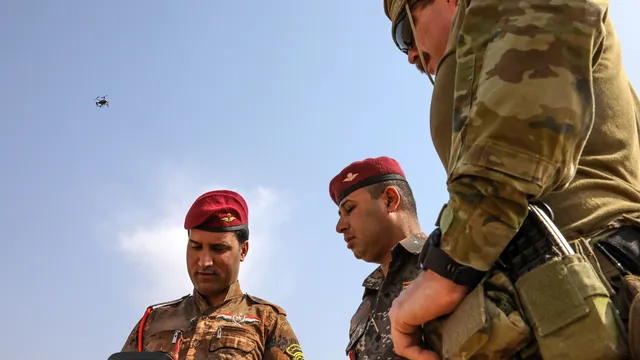
In the wake of Operation Sindoor, India's military intelligence has shed new light on the rapidly evolving drone warfare dimension of the 2025 India-Pakistan confrontation. A recent revelation has exposed the shocking truth behind Pakistan's unmanned warfare capabilities, revealing that China and Türkiye secretly supplied Pakistan with advanced drone technology.
According to Indian intelligence assessments, Pakistan acquired large quantities of unmanned combat aerial systems, loitering munitions, and kamikaze drones from China and Türkiye after Operation Sindoor. This foreign-supplied drone component was a crucial factor in Pakistan's major drone and missile campaign against Indian military targets.
The significance of the reported Chinese and Turkish resupply lies in its potential impact on Pakistan's unmanned warfare capability. By acquiring systems from two major defence partners, Pakistan has been able to rapidly supplement its existing drone inventory, thereby enhancing its strike capabilities.
The experience has also influenced India's own procurement priorities. In response to Pakistan's employment of Turkish and Chinese drones against Indian military facilities, the Defence Ministry has signed a ₹1,577 crore contract with Tata Advanced Systems Limited and NIBE for loitering munition systems. This significant step marks a major milestone in India's indigenous drone development.
The broader lesson is that drone warfare is increasingly becoming an area where speed of resupply can directly influence battlefield capability. Relatively inexpensive unmanned systems can be acquired, transported, and deployed far faster than conventional manned combat aircraft, allowing a country to rapidly expand its strike inventory during a crisis.
For India, the challenge is twofold. Firstly, it must maintain effective counter-UAS systems capable of defeating large numbers of incoming drones. Secondly, it must develop its own long-range reconnaissance, strike, and loitering-munition ecosystem to counter the growing threat posed by Pakistan's unmanned warfare capabilities.
Operation Sindoor demonstrated the importance of the first requirement. Indian air-defence and counter-drone networks intercepted large numbers of Pakistani drones and missiles, while India's own loitering munitions were used during offensive operations against Pakistani military infrastructure.
The reported Chinese-Turkish resupply also highlights how rapidly regional military balances can change once external suppliers become involved. Pakistan's access to multiple foreign sources gives it the ability to replenish and diversify its unmanned arsenal, while India's response is increasingly focused on building a much larger indigenous drone and counter-drone industrial base.
As the future of warfare becomes increasingly unmanned, the speed of resupply will be the key to success. India must continue to develop its indigenous drone capabilities, while also maintaining effective counter-UAS systems to counter the growing threat posed by Pakistan's unmanned warfare capabilities. The stakes are high, and the challenge is clear: India must rise to the occasion and assert its dominance in the rapidly evolving world of drone warfare.
Key Takeaways
- The reported Chinese and Turkish resupply highlights the growing importance of speed of resupply in drone warfare.
- Pakistan's access to multiple foreign sources gives it the ability to replenish and diversify its unmanned arsenal.
- India must continue to develop its indigenous drone capabilities and maintain effective counter-UAS systems to counter the growing threat posed by Pakistan's unmanned warfare capabilities.
- The future of warfare is increasingly becoming unmanned, and the speed of resupply will be the key to success.
- India must assert its dominance in the rapidly evolving world of drone warfare to maintain its strategic advantage in the region.
Based on reporting from the original source. See our Copyright Policy for details.