TKMS Builds Indian Partner Network as Germany’s Submarine Bid Moves Toward Long-Term Underwater Warfare Cooperation
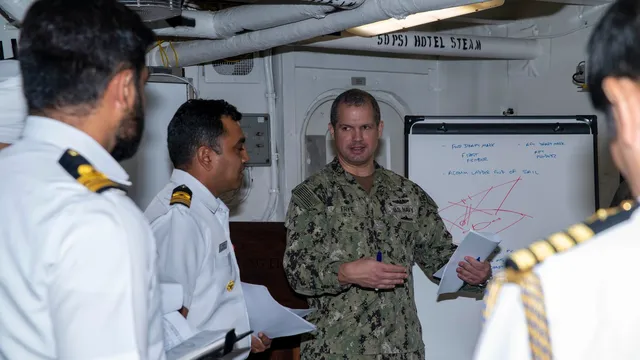
German Submarine Manufacturer Expands Indian Partner Network
ThyssenKrupp Marine Systems (TKMS), a leading German submarine manufacturer, has been quietly building a network of Indian industrial partners as it positions itself for a deeper role in India's underwater warfare ecosystem. This strategic move suggests that TKMS is looking beyond a single submarine contract and is attempting to establish a broader industrial and technology footprint in India.
One of the key elements of this strategy is the involvement of TKMS subsidiary ATLAS ELEKTRONIK, which has been cooperating with Indian companies for naval systems. The company has been working closely with VEM Technologies, an Indian firm that has played a crucial role in integration and testing activities on the Indian side. This partnership has since evolved into a broader teaming arrangement involving technology transfer and a potential Make-in-India torpedo programme.
This development is significant because torpedoes and underwater combat systems are among the most sensitive technologies associated with conventional submarines. By building domestic capability in these areas, India can gain greater control over weapons integration, maintenance, upgrades, and future development, reducing its dependence on overseas suppliers throughout a submarine's service life.
TKMS has also established a partnership with CFF Fluid Control, a Mumbai-based company specialising in anti-submarine warfare-related systems. This collaboration adds another Indian industrial capability to TKMS's emerging network and indicates that the German company is attempting to build a broader domestic ecosystem covering underwater warfare technologies.
The company is reportedly exploring additional partnerships with Indian organisations, including the Defence Research and Development Organisation. Such cooperation could potentially extend into sensors, weapons, electronic systems, and other technologies relevant to submarine and anti-submarine warfare.
This industrial strategy becomes particularly relevant in the context of India's Project-75 (India) submarine programme, which envisages the construction of six advanced conventional submarines in India. The requirement places considerable emphasis on domestic construction, technology transfer, and the development of Indian industrial capabilities.
For TKMS, demonstrating an established network of Indian partners could strengthen its proposition beyond the submarine platform itself. A bid that incorporates Indian companies into systems integration, weapons, testing, maintenance, and future upgrades could potentially offer greater long-term industrial value.
The involvement of ATLAS ELEKTRONIK is particularly important because the company has extensive expertise in naval electronics, sonar, and underwater combat systems. Combining TKMS's submarine design and construction expertise with ATLAS ELEKTRONIK's systems capabilities could provide a broader package for the Indian Navy.
The potential Make-in-India torpedo initiative could become one of the more strategically significant elements of this cooperation. Domestic production would not only support the initial submarine fleet but could eventually create an Indian industrial base capable of maintaining and upgrading underwater weapons without complete dependence on foreign supply chains.
The partnership with CFF Fluid Control similarly highlights the potential for Indian companies to become part of a wider underwater-warfare supply chain. Anti-submarine warfare systems are becoming increasingly important as navies invest in submarines, maritime patrol aircraft, helicopters, unmanned underwater vehicles, and distributed underwater sensors.
For India, the attraction of such partnerships is clear. The Navy requires not only new submarines but also a sustainable ecosystem for weapons, sensors, combat-management systems, maintenance, and upgrades. Technology transfer and domestic production can reduce lifecycle dependence while strengthening India's ability to support its fleet during periods of geopolitical tension.
The next major milestone will be the Indian government's decision on the submarine programme. If the Cabinet Committee on Security approves the deal, the process would move toward contract signing and implementation, bringing the industrial proposals into the execution phase.
That would provide a clearer indication of how much of TKMS's proposed Indian partner network can be translated into actual production and technology-transfer commitments.
Key Takeaways
- TKMS is expanding its network of Indian industrial partners as it positions itself for a deeper role in India's underwater warfare ecosystem.
- The company is exploring partnerships with Indian organisations, including the Defence Research and Development Organisation, to extend into sensors, weapons, electronic systems, and other technologies relevant to submarine and anti-submarine warfare.
- The potential Make-in-India torpedo initiative could become one of the more strategically significant elements of this cooperation, creating an Indian industrial base capable of maintaining and upgrading underwater weapons without complete dependence on foreign supply chains.
- TKMS's industrial strategy is relevant in the context of India's Project-75 (India) submarine programme, which requires domestic construction, technology transfer, and the development of Indian industrial capabilities.
- The company's partnerships with Indian companies could strengthen its proposition beyond the submarine platform itself, offering greater long-term industrial value.
Based on reporting from the original source. See our Copyright Policy for details.