The Unseen Backbone of India's Submarine Fleet: A Shift Towards Sustainable Readiness
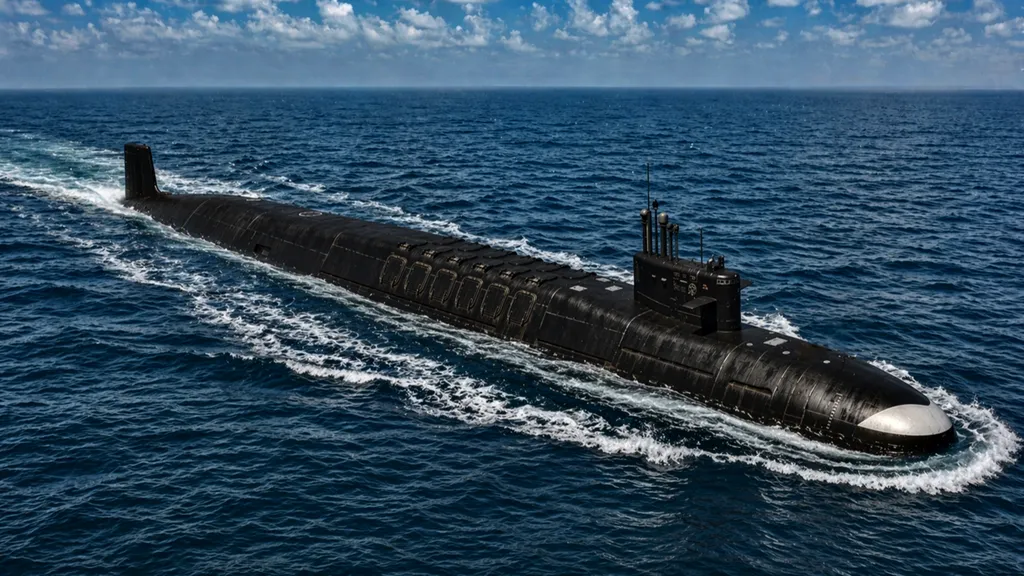
The Unseen Backbone of India's Submarine Fleet
The Indian Navy's Project 75 submarine fleet has entered a critical phase, where the focus has shifted from construction milestones to sustained lifecycle support. With all six Kalvari-class boats commissioned, the Navy is tendering for critical spares, including static frequency converters and steering gear consoles. These components are the backbone of a submarine's electrical grid, ensuring that sensitive systems function correctly and safely.
A submarine is an isolated electrical grid that has to function reliably without any external power source for weeks at a time. The Kalvari class, built to the French Scorpene design, draws its electrical power from diesel generators while surfaced or snorkelling and from its battery banks, and increasingly its DRDO-developed fuel cell air-independent propulsion module, while submerged. The power arrives at varying voltage and frequency characteristics depending on which source is active, yet many of the sensitive systems aboard, from navigation suites to weapon-control electronics to internal monitoring and alarm systems, require stable, tightly regulated power inputs to function correctly and safely.
Static frequency converters perform exactly that regulation function, taking variable-output power from generators or shore supply and converting it into the clean, standardised AC or DC feeds these systems are engineered around. There is no mechanical redundancy to fall back on if a converter fails mid-patrol; a fault in this part of the electrical chain can cascade into degraded sensor performance or loss of critical monitoring capability at exactly the depth and distance from support infrastructure where a submarine crew can least afford it.
Securing a reliable domestic supply chain for these units, rather than depending on ad hoc procurement each time a unit needs replacement, is a straightforward readiness issue rather than a bureaucratic one. The second procurement thread, covering steering gear consoles and associated sub-assemblies, addresses an even more fundamental safety system. A submarine's rudder and hydroplanes are what allow it to hold depth, manage pitch and execute the manoeuvring that both combat operations and routine transit demand, and the console hardware that translates a helmsman's or autopilot's commands into hydraulic and electro-mechanical control surface movement sits squarely in the category of equipment where failure is not an acceptable option.
Depth-keeping errors at speed, or a loss of steering authority during a tight manoeuvre, carry consequences on a submarine that a surface vessel would never face in the same way. Because these consoles integrate hydraulic actuation with electronic control logic, they age and wear in ways that demand OEM-grade replacement parts rather than generic substitutes, and any gap in the availability of qualified spares translates directly into single-point-of-failure risk for a boat operating far from a repair yard.
Tendering for a steady, localised pipeline of these components is the Navy's way of closing that risk before it becomes an operational problem rather than after. This shift towards sustainable readiness is a broader pattern in how India manages its submarine fleet as it matures. The original P-75 programme, worth roughly ₹23,652 crore across six boats, was fundamentally a construction effort, focused on getting hulls built, tested and commissioned under technology transfer from Naval Group. With that phase complete and the fleet now several years into active service, some boats already approaching a decade in commission, the Navy's procurement emphasis has necessarily moved toward Engineering Support Packages: structured, long-term arrangements that guarantee spares availability, technical documentation and overhaul support across a boat's operational life rather than treating sustainment as a series of one-off purchases.
This shift also reduces India's reliance on foreign repair loops, a dependency that has historically added both cost and unacceptable turnaround delays whenever critical components needed servicing abroad. Recent moves to integrate a domestically developed AIP module and additional torpedo systems into the Kalvari class reflect the same underlying logic of building indigenous sustainment and upgrade capability around a fleet rather than treating it as a static, foreign-supported asset. Static frequency converters and steering gear consoles are a less visible part of that same push, but they matter just as much to whether the fleet can actually generate the patrol days the Navy needs from it.
None of this makes for the kind of headline a new submarine commissioning or a weapons integration deal generates, but it is arguably a more accurate measure of how seriously a navy is thinking about its fleet's long-term combat readiness. A submarine fleet is only as reliable as its slowest-moving spare part, and for a service that depends on stealth and endurance as its core operational advantages, ensuring that power conversion and steering systems never become the reason a boat can't deploy is exactly the kind of nuts-and-bolts logistics work that determines whether the Kalvari class remains a credible deterrent through the remainder of its service life.
A Shift Towards Sustainable Readiness
The Indian Navy's focus on sustainable readiness is a testament to its commitment to long-term combat effectiveness. By tendering for critical spares and shifting towards Engineering Support Packages, the Navy is reducing its reliance on foreign repair loops and building indigenous sustainment and upgrade capability around its fleet. This shift is a broader pattern in how India manages its submarine fleet as it matures, and it is a crucial step towards ensuring that the Kalvari class remains a credible deterrent through the remainder of its service life.
Key Takeaways
- The Indian Navy's Project 75 submarine fleet has entered a critical phase, where the focus has shifted from construction milestones to sustained lifecycle support.
- The Navy is tendering for critical spares, including static frequency converters and steering gear consoles, to ensure that sensitive systems function correctly and safely.
- The shift towards sustainable readiness is a broader pattern in how India manages its submarine fleet as it matures, and it is a crucial step towards ensuring that the Kalvari class remains a credible deterrent through the remainder of its service life.
- By tendering for critical spares and shifting towards Engineering Support Packages, the Navy is reducing its reliance on foreign repair loops and building indigenous sustainment and upgrade capability around its fleet.
- The Indian Navy's focus on sustainable readiness is a testament to its commitment to long-term combat effectiveness.
Based on reporting from the original source. See our Copyright Policy for details.