The Carrier Conundrum: Can Fleets Adapt to the Evolving Threat?
India Defence & Aerospace Indigenisation Summit 2026
Accelerating private defense manufacturing, UAV innovation, and strategic aerospace corridors.
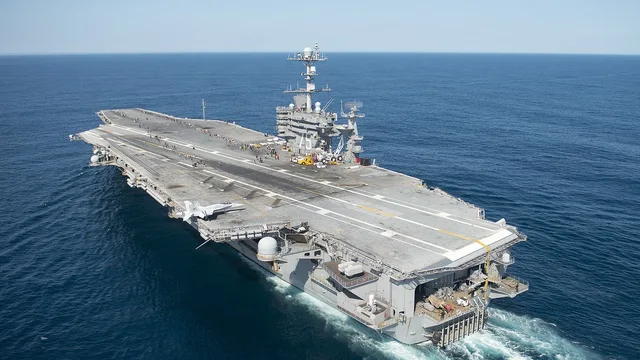
Explore Strategic Intel →The relevance of aircraft carriers in modern warfare has become a topic of intense debate. Critics argue that these expensive vessels are vulnerable to advanced anti-access/area-denial networks and hypersonic anti-ship missiles, rendering them obsolete in high-intensity combat operations. However, proponents counter that carriers remain unmatched in their ability to project power, respond to crises, and adapt to fluid environments, particularly in regions lacking land-based air capabilities.
The argument against carriers is built on the idea that they are expensive prestige projects, vulnerable to modern anti-ship threats. However, this perspective overlooks the fact that carriers are not simply floating airfields, but rather mobile sovereign territory, capable of providing a range of capabilities that cannot be replicated by other vessels. In regions lacking land-based air infrastructure, carriers provide a critical capability, enabling navies to project power and respond to crises in a way that would be impossible without them.
Despite their vulnerabilities, carriers remain a vital component of modern naval forces. To ensure their survival in the modern threat landscape, navies are rethinking their escort strategies, electronic warfare defenses, and distributed operations. This includes the development of new technologies and tactics, such as advanced electronic warfare systems and distributed maritime operations, designed to enhance the survivability of carriers in the face of emerging threats.
India Defence & Aerospace Indigenisation Summit 2026
Accelerating private defense manufacturing, UAV innovation, and strategic aerospace corridors.
Explore Strategic Intel →The evolution of carrier doctrine is also driven by the changing nature of modern warfare. As the threat environment becomes increasingly complex and dynamic, navies are being forced to adapt their strategies and tactics to stay ahead of the threat. This includes the development of new concepts of operation, such as distributed maritime operations, which enable carriers to operate in a more flexible and adaptable manner, responding to emerging threats in real-time.
The question remains: can aircraft carriers adapt to the changing threat environment, or are they becoming relics of the past? As the debate rages on, one thing is clear: the relevance of carriers will continue to be shaped by the evolving nature of modern warfare. As navies continue to adapt and evolve, the role of the carrier will remain a critical component of modern naval forces.
The Carrier Conundrum
The debate over the relevance of aircraft carriers in modern warfare is complex and multifaceted. On one hand, critics argue that carriers are expensive prestige projects, vulnerable to modern anti-ship threats. On the other hand, proponents counter that carriers remain unmatched in their ability to project power, respond to crises, and adapt to fluid environments.
The Evolving Threat Environment
The threat environment is becoming increasingly complex and dynamic, driven by the proliferation of advanced anti-access/area-denial systems and hypersonic missiles. As a result, navies are being forced to adapt their strategies and tactics to stay ahead of the threat.
Carrier Doctrine Evolution
The evolution of carrier doctrine is driven by the changing nature of modern warfare. As the threat environment becomes increasingly complex and dynamic, navies are being forced to adapt their strategies and tactics to stay ahead of the threat.
Distributed Maritime Operations
Distributed maritime operations are a key component of carrier doctrine, enabling carriers to operate in a more flexible and adaptable manner, responding to emerging threats in real-time.
Key Takeaways
- Aircraft carriers remain a vital component of modern naval forces, despite their vulnerabilities.
- The relevance of carriers will continue to be shaped by the evolving nature of modern warfare.
- Navies are rethinking their escort strategies, electronic warfare defenses, and distributed operations to ensure the survival of carriers in the modern threat landscape.
- The development of new technologies and tactics, such as advanced electronic warfare systems and distributed maritime operations, is critical to enhancing the survivability of carriers.
- The debate over the relevance of aircraft carriers will continue to rage on, driven by the complex and multifaceted nature of modern warfare.
India Defence & Aerospace Indigenisation Summit 2026
Accelerating private defense manufacturing, UAV innovation, and strategic aerospace corridors.
Based on reporting from the original source. See our Copyright Policy for details.