Super Sukhoi Upgrade Cost Pegged at $8 Billion for First 84 Su-30MKI Jets, Second Batch Could Cost $11 Billion
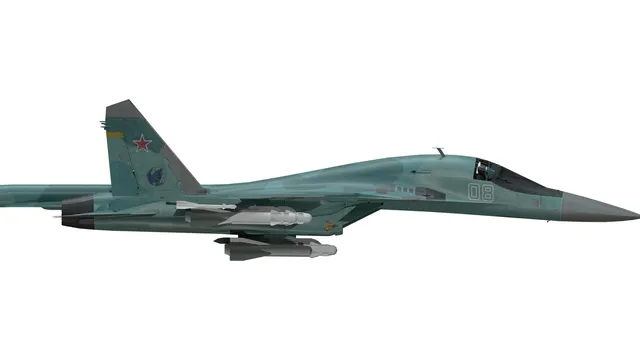
The Indian Air Force's Su-30MKI fleet has long been its backbone, providing air power and strategic depth to the country's military. However, with the rise of new threats and technologies, the need for a modernization upgrade has become increasingly pressing. The Super Sukhoi upgrade aims to address this need, bringing the Su-30MKI into the 21st century with cutting-edge radar systems, advanced avionics, and a suite of new missiles.
The estimated cost of the upgrade, at around $8 billion for the first 84 jets, is a staggering sum. However, it reflects the scale and complexity of the modifications involved. The upgrade will feature a new indigenous Virupaksha Gallium Nitride-based AESA radar system, developed by DRDO's LRDE, alongside a broad suite of avionics changes. The radar system, with its 2,600 transmit/receive-module system, is a significant improvement over the Su-30MKI's older Russian passive array.
Beyond the initial 84-jet batch, a second phase covering close to 120 additional Su-30MKI airframes is under consideration, at an estimated cost of around $11 billion. This figure, if it holds, would represent the IAF's broader ambition to extend the Super Sukhoi standard to a much larger share of its roughly 260-strong Su-30MKI fleet. The upgrade will keep the Su-30MKI fleet credible against evolving regional threats, while newer indigenous platforms like the Tejas Mk2 and AMCA mature.
The Su-30MKI upgrade is not without its challenges, however. The validation and trials process, expected to take around three years, will be a critical phase in determining the success of the upgrade. HAL's chairman and managing director, D.K. Sunil, has confirmed that the technical configuration for the 84-jet upgrade has been frozen, and CCS clearance is expected within a matter of months.
As the Indian Air Force embarks on this ambitious upgrade, it remains to be seen whether the $8 billion price tag will be justified. However, one thing is certain: the Super Sukhoi upgrade will be a significant step towards maintaining India's air power and strategic depth in the face of evolving regional threats.
The Su-30MKI: A Backbone of Indian Air Power
The Su-30MKI has long been the Indian Air Force's workhorse, providing air power and strategic depth to the country's military. With its advanced avionics and radar systems, the Su-30MKI has been a key player in India's military operations.
The Super Sukhoi Upgrade: A Multi-Billion Dollar Gamble
The estimated cost of the upgrade, at around $8 billion for the first 84 jets, is a staggering sum. However, it reflects the scale and complexity of the modifications involved. The upgrade will feature a new indigenous Virupaksha Gallium Nitride-based AESA radar system, developed by DRDO's LRDE, alongside a broad suite of avionics changes.
The Validation and Trials Process: A Critical Phase
The validation and trials process, expected to take around three years, will be a critical phase in determining the success of the upgrade. HAL's chairman and managing director, D.K. Sunil, has confirmed that the technical configuration for the 84-jet upgrade has been frozen, and CCS clearance is expected within a matter of months.
The Future of Indian Air Power
The Super Sukhoi upgrade will be a significant step towards maintaining India's air power and strategic depth in the face of evolving regional threats. However, the success of the upgrade will depend on the validation and trials process, as well as the scalability of the Virupaksha radar system and other major subsystems.
Key Takeaways
- The estimated cost of the Su-30MKI upgrade, at around $8 billion for the first 84 jets, is a significant sum.
- The upgrade will feature a new indigenous Virupaksha Gallium Nitride-based AESA radar system, developed by DRDO's LRDE, alongside a broad suite of avionics changes.
- The validation and trials process, expected to take around three years, will be a critical phase in determining the success of the upgrade.
- The Super Sukhoi upgrade will be a significant step towards maintaining India's air power and strategic depth in the face of evolving regional threats.
Based on reporting from the original source. See our Copyright Policy for details.