Stealthy Upgrade: India's Su-30MKI Gets a Cutting-Edge IRST System
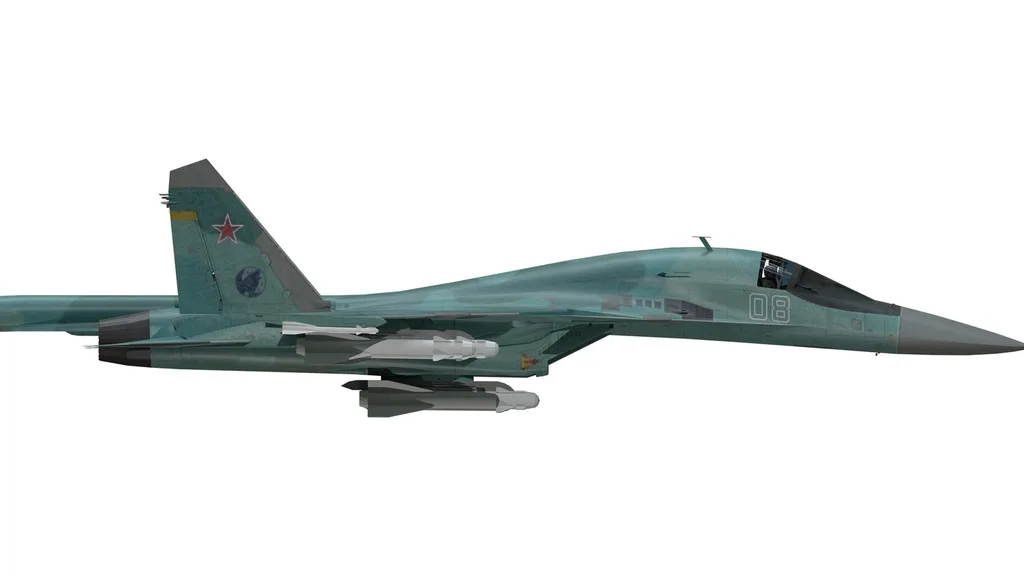
A New Era of Long-Range Sensing for India's Su-30MKI
The Indian Air Force is set to receive a significant upgrade with the development of a cutting-edge Long-Range Dual-Band Infrared Search and Track system for its Su-30MKI fighter jets. This revolutionary technology integrates three sensing technologies – infrared, laser, and TV sensors – into a single optics head, providing the Su-30MKI with a passive long-range target detection, identification, and tracking capability.
The system's design is characterized by a single-dome optics opening architecture, which accommodates all three sensors behind a common optical opening. This configuration allows for a more compact and integrated electro-optical sensing capability, making it an attractive option for the Su-30MKI. The system's infrared component provides the primary long-range passive detection capability, while the laser component provides range-finding capability through a Laser Range Finder (LRF).
A Complementary Visual Channel for Target Recognition
The addition of a TV sensor to the system provides a complementary visual channel for target recognition and identification, particularly under suitable daylight conditions. This capability will enable the Su-30MKI to detect and identify both airborne and ground-based targets, giving it an additional sensor capability beyond its radar and existing onboard systems.
AI-Assisted Search and Tracking
The IRST system is also designed to exchange information with the aircraft's avionics architecture, allowing detected targets to provide angular coordinates and speed information to the mission computer. Video information can be supplied to the aircraft's switching system, enabling the sensor to function as part of the Su-30MKI's broader sensor-fusion architecture.
A More Integrated Sensor-Fusion Approach
The system's ability to work in day and night conditions, as well as its capacity to function as a prime sensor, while allowing other onboard sensors to cue it or receive cueing from it, creates the possibility of a more integrated sensor-fusion approach. For example, the aircraft radar could provide an initial target cue, after which the IRST could be slewed toward the designated area to conduct passive detection and identification.
Rapid Processing of Large Amounts of Sensor Data
The IRST system's AI-assisted search and tracking capabilities are designed to distinguish genuine targets from background clutter, atmospheric effects, and other thermal signatures. This is particularly important, as modern IRST systems generate large amounts of sensor data that must be processed rapidly to be effective.
A Significant Enhancement to the Su-30MKI's Long-Range Sensing Architecture
Combining dual-band infrared detection, laser ranging, TV-based identification, digital data exchange, and AI-assisted search and tracking into a single sensor head could provide the Su-30MKI with a more compact and integrated electro-optical sensing capability. This upgrade has the potential to significantly enhance the Su-30MKI's long-range sensing architecture, making it a game-changer for the Indian Air Force.
Key Takeaways
- The Long-Range Dual-Band Infrared Search and Track system integrates three sensing technologies – infrared, laser, and TV sensors – into a single optics head.
- The system provides a passive long-range target detection, identification, and tracking capability, while reducing the need for multiple externally mounted sensor heads.
- The IRST system's AI-assisted search and tracking capabilities are designed to distinguish genuine targets from background clutter, atmospheric effects, and other thermal signatures.
- The system's ability to work in day and night conditions, as well as its capacity to function as a prime sensor, creates the possibility of a more integrated sensor-fusion approach.
- The upgrade has the potential to significantly enhance the Su-30MKI's long-range sensing architecture, making it a game-changer for the Indian Air Force.
Based on reporting from the original source. See our Copyright Policy for details.