Stealthy Partners: Can Israel's Ambitions Plug into India's AMCA?
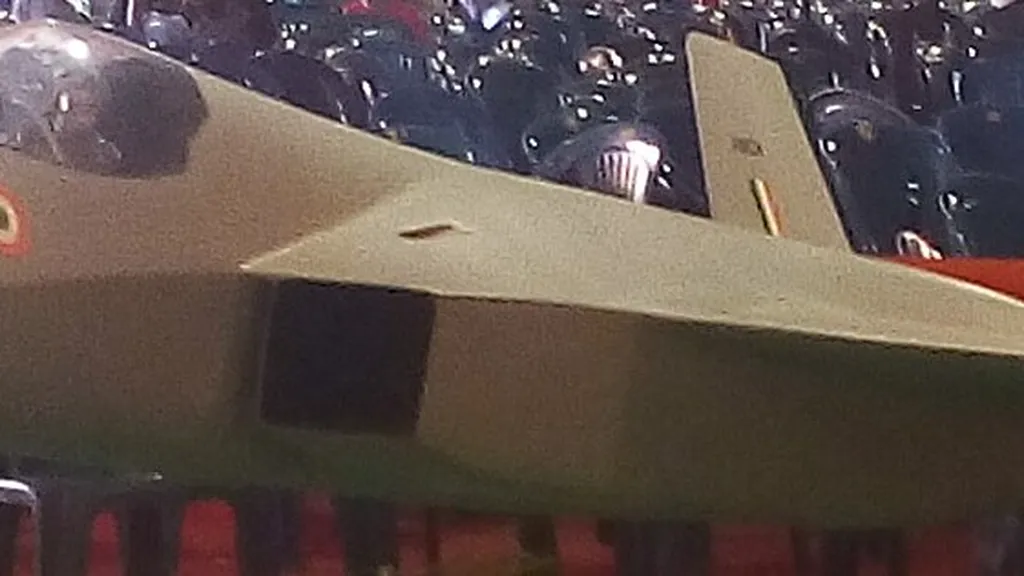
The Israeli Defence Ministry has been quietly working on a plan to develop a domestically produced stealth fighter, with a reported ten-year timeline. This move is significant, as it marks a departure from Israel's long-standing reliance on American platforms. The project aims to create a stealth jet alongside an unmanned combat aircraft, drawing on the capabilities of the F-35I Adir.
The revival of this project raises questions about whether India's own indigenous stealth fighter programme, the Advanced Medium Combat Aircraft, could be a natural fit for Israel's new ambition. While Israel's defence primes have mature capabilities in AESA radar systems and electronic warfare suites, built up over decades of operationalising American platforms, they lack the stealth airframe manufacturing line and low-observable testing infrastructure.
India and Israel have a successful defence relationship, with a joint venture producing precision-guided systems, and a history of technology sharing that few of India's other defence relationships can match outside of Russia and, increasingly, France. This relationship could potentially be a game-changer for Israel's stealth fighter project, as India could offer a large domestic production base, HAL's existing manufacturing infrastructure, and a genuine service requirement for aircraft in meaningful numbers.
However, there are several challenges to consider. Firstly, Israel's own stated need for international co-development partners due to a lack of industrial scale to build a fighter programme alone aligns with an India-shaped gap in a specific way. India could offer a large domestic production base, HAL's existing manufacturing infrastructure, and a genuine service requirement for aircraft in meaningful numbers, something Israel's comparatively small air force could never generate on its own.
Bringing Israeli radar, EW, and sensor fusion expertise into an arrangement with India would plug real, currently open gaps in AMCA's systems architecture, and diversifying AMCA's partner base beyond France would reduce the single-point political dependency that the Safran-GTRE engine negotiations have already demonstrated can be a slow and delicate process even between close partners.
However, there are also several challenges to consider. Introducing a new structural partner for the aircraft itself, rather than for a subsystem, risks reopening negotiations that are already politically delicate, at a moment when the CCS clearance for the existing engine partnership is reportedly close to finalisation. Additionally, there is an underappreciated technology-control problem, as much of Israel's most advanced sensor and electronic warfare capability, including systems derived from or integrated with the F-35I, sits under tight American export control precisely because it was built around or alongside US platforms and contains embedded US intellectual property.
In light of these challenges, the stronger option may be to invite Israeli firms into AMCA as subsystem partners, contributing EW suites, radar elements, and sensor fusion software, rather than as a co-development partner on the airframe itself. This approach captures genuinely mature Israeli capability where India's own systems still have gaps, without disturbing the CCS-cleared partner architecture already built around Safran and GTRE, and without India's broader West Asia balancing act, which spans Gulf states and Iran alongside its Israel relationship, absorbing the larger diplomatic weight that naming Israel as a structural partner on India's flagship stealth fighter would inevitably carry.
In conclusion, while the idea of Israel's stealth ambitions plugging into India's AMCA is an intriguing one, it is not without its challenges. However, with careful consideration and planning, this partnership could potentially be a game-changer for both countries, and one that is worth exploring further.
Based on reporting from the original source. See our Copyright Policy for details.