Southeast Asia's Naval Balance Shifts: Philippines Eyes Ambitious BrahMos Expansion
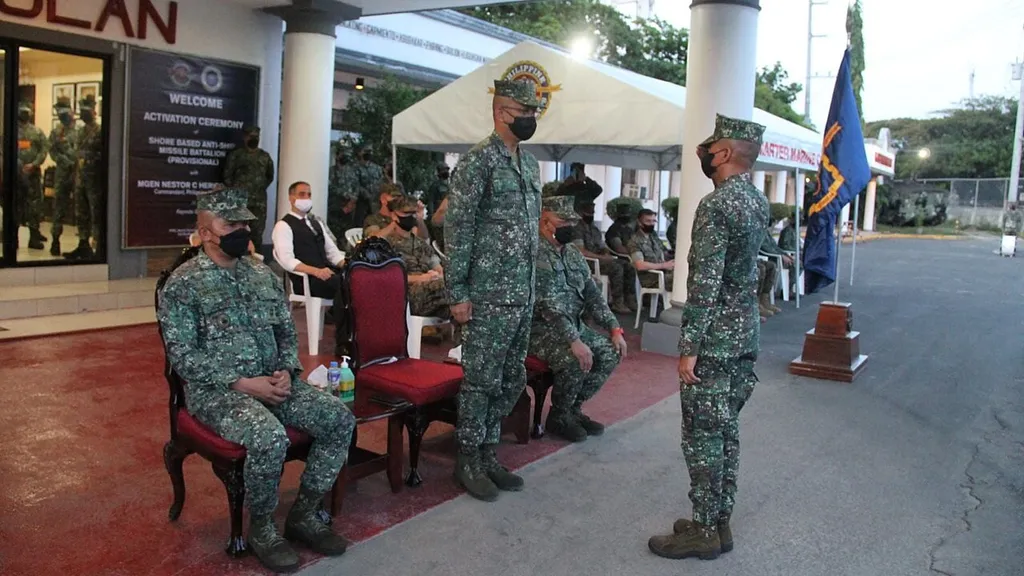
The Philippines' ambitious BrahMos expansion plans are set to reshape the naval balance in Southeast Asia. With the country's initial acquisition of three shore-based anti-ship missile batteries for the Philippine Marine Corps (PMC), the Philippines became the first export operator of the Indo-Russian supersonic missile. However, the acquisition is now set to extend far beyond the Marine Corps.
Under the Revised Armed Forces of the Philippines Modernization Program (Third Horizon 2023–2027), the Philippine Army initially planned to acquire two BrahMos batteries to serve as long-range general support artillery and coastal defence assets. However, discussions within the modernisation programme have reportedly considered increasing the Army's future acquisition to as many as nine coastal missile batteries.
This significant enhancement of the country's land-based maritime strike capability would allow the Philippine Army to deploy BrahMos systems across multiple islands and strategic coastal sectors, creating overlapping missile coverage over key maritime approaches. The BrahMos missile remains one of the world's fastest operational supersonic cruise missiles, capable of speeds approaching Mach 3 and engagement ranges extending beyond 290 km.
The expansion would not only strengthen the Armed Forces of the Philippines' ability to deter hostile naval movements and protect critical sea lanes but also deepen strategic defence ties between India and the Philippines. India's BrahMos Aerospace has developed the supersonic cruise missile system, and any follow-on Philippine order would represent another major success for its defence export ambitions.
A standard coastal defence battery typically includes mobile launchers, command-and-control vehicles, advanced fire-control systems, and mobile radar support, allowing rapid deployment and high survivability through shoot-and-scoot tactics. The Philippine Army's plans to acquire up to nine additional BrahMos coastal missile batteries would substantially increase the value of the BrahMos programme in Southeast Asia, reinforcing India's position as an emerging supplier of advanced missile systems.
The expansion would also have significant implications for the regional security dynamics, as the Philippines' enhanced maritime defence capabilities would provide a counterbalance to China's growing military presence in the South China Sea. As the Philippines continues to modernise its military capabilities, the country is likely to play a more prominent role in regional security affairs.
In conclusion, the Philippines' ambitious BrahMos expansion plans are set to reshape the naval balance in Southeast Asia. With the country's plans to acquire up to nine additional BrahMos coastal missile batteries, the Philippines is set to strengthen its anti-access and area-denial (A2/AD) capabilities in the West Philippine Sea, further solidifying its position in the region.
Based on reporting from the original source. See our Copyright Policy for details.