Russia's Shift in Strategy: From Exports to Long-Term Partnerships in India's Air Defence Ecosystem
India's pursuit of defence self-reliance has led to a significant shift in its air defence architecture. The country's indigenous long-range air defence programme, Project Kusha, has been designed to complement its existing missile shield. While some analysts have viewed Project Kusha as a potential challenger to Russia's S-400 Triumf system, Moscow's response suggests a different reality.
Russia is adapting its strategy to become a long-term technology partner in India's evolving air defence architecture. This shift reflects the changing nature of Indo-Russian defence cooperation. For decades, Russia's relationship with India was built around exporting complete military platforms. However, with India's push for defence self-reliance, Moscow is increasingly recognizing that future cooperation will depend less on selling finished systems and more on participating in India's indigenous programmes.
One of the clearest indicators of this transition has been Russia's willingness to discuss cooperation on next-generation S-500 technologies. Rather than promoting a direct sale of the S-500, which remains a highly strategic asset for Russia's own armed forces, Moscow has indicated its openness to exploring joint development and technology cooperation in areas relevant to India's future long-range air defence programmes.
Such cooperation could potentially include technologies associated with advanced target tracking, long-range interception, high-speed missile guidance, command-and-control architecture, and other enabling capabilities that support systems like Project Kusha and India's broader integrated air defence roadmap. For Russia, this represents a practical adjustment rather than a retreat.
India's layered air defence architecture has long been characterized by a multi-tiered approach. The country fields the S-400 alongside the indigenous Ballistic Missile Defence (BMD) programme developed by the Defence Research and Development Organisation. These systems provide protection against long-range aerial threats and ballistic missiles. Project Kusha is intended to strengthen the long-range segment of this architecture by introducing indigenous interceptors covering engagement envelopes reportedly extending from approximately 150 kilometres to around 350–400 kilometres, depending on the interceptor variant eventually fielded.
Below this layer, the Indian armed forces already operate Barak-8 Medium Range Surface-to-Air Missile (MRSAM) systems jointly developed with Israel, Akash and the forthcoming Akash-NG family, as well as Very Short Range Air Defence Systems (VSHORADS) designed to counter low-altitude threats. The result is an increasingly sophisticated multi-tiered shield in which different missile systems perform complementary rather than competing roles.
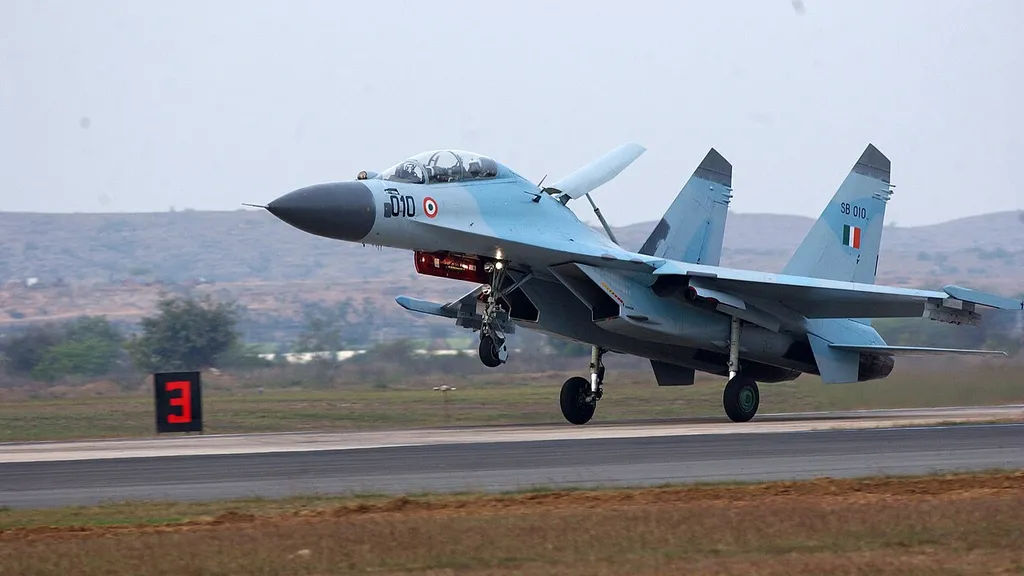
Russian analysts also recognize another important aspect of India's defence philosophy – its ability to integrate equipment originating from multiple countries into a common operational framework. The Indian Air Force has decades of experience combining Russian airframes with Israeli avionics, French sensors, British missiles, and indigenous mission systems. The Su-30MKI itself is perhaps the best-known example of this approach, incorporating technologies from several countries into a uniquely Indian configuration.
A similar philosophy is expected to guide future air defence integration. Indigenous AESA radars, command centres, and networking infrastructure developed for Project Kusha are likely to operate alongside Russian-origin S-400 batteries within the IACCS environment, allowing commanders to allocate targets across multiple interceptor types according to operational requirements.
For Moscow, this interoperability is preferable to complete replacement. Instead of losing India as a customer, Russia retains a role through sustainment, technical support, and possible future collaboration in advanced missile technologies while India assumes greater responsibility for indigenous system development.
The evolution also reflects broader geopolitical realities. International sanctions, changing supply chains, and increasing emphasis on domestic manufacturing have encouraged many countries to pursue greater self-reliance in defence production. Russia understands that India's strategic autonomy requires reducing dependence on any single foreign supplier, including Moscow itself.
By embracing collaborative development rather than insisting on exclusive exports, Russia can remain involved in India's long-term military modernisation while preserving one of its most valuable defence partnerships. This approach will not only ensure the continued relevance of Russia's air defence systems in India but also foster a more sustainable and equitable partnership between the two nations.
Based on reporting from the original source. See our Copyright Policy for details.