Revolutionizing India's Air Power: A New Era of Fighter Jets on the Horizon
A New Era of Fighter Jets on the Horizon
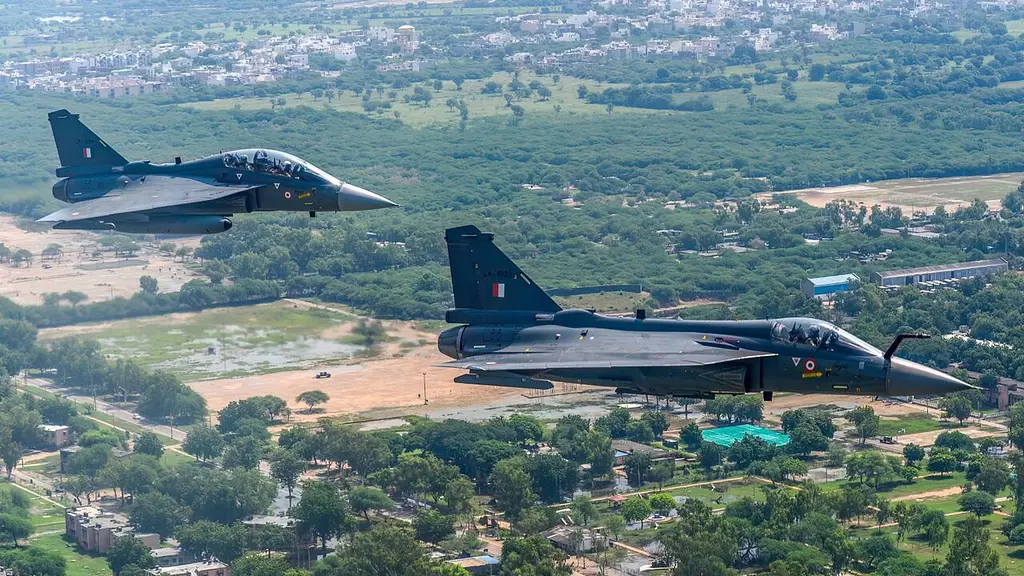
India's air power is on the cusp of a revolution, with the Indian Air Force set to undergo a dramatic transformation over the next two decades. The transformation will be driven by the acquisition of hundreds of new fighters, with the Tejas Mk2, Rafale, and AMCA Mk1 programmes at the forefront of this expansion.
A Fleet of Indigenous Fighters
The Tejas Mk2 is set to account for over 120 aircraft, making it a significant contributor to the Indian Air Force's fleet size. The proposed 114 Rafale acquisition will also remain a major pillar of the fleet, potentially followed by another 50 aircraft. The AMCA Mk1 will provide India with its first indigenous stealth fighter capability, while the AMCA Mk2 will offer enhanced electronic warfare capabilities.
A Fleet in Transition
By 2040-50, India's fighter fleet will begin transitioning towards sixth-generation and advanced fifth-generation capabilities. This will require the Indian Air Force to manage logistics, training, and maintenance across a complex fleet. However, if these projections materialise, India's air force could operate a highly diverse but increasingly capable fleet comprising Tejas Mk1A, Tejas Mk2, Rafale, Su-30MKI, AMCA Mk1, AMCA Mk2, and a future sixth-generation fighter.
The Key to Success
The key to success will be ensuring that production rates are high enough to replace retiring fighters faster than new aircraft enter service. If the Tejas Mk2, AMCA, and future sixth-generation programme progress simultaneously, India could finally begin reversing the long-standing fighter squadron deficit while building an increasingly indigenous combat-aircraft ecosystem.
A Bright Future
The future of India's air power looks bright, with a potential for a highly capable and diverse fleet. However, the challenge will be managing the complexities of such a transformation. The Indian Air Force will need to ensure that production rates are high enough to replace retiring fighters faster than new aircraft enter service. If this can be achieved, India's air force could finally begin reversing the long-standing fighter squadron deficit while building an increasingly indigenous combat-aircraft ecosystem.
Key Takeaways
- The Indian Air Force is set to undergo a dramatic transformation over the next two decades, with hundreds of new fighters joining its fleet.
- The Tejas Mk2, Rafale, and AMCA Mk1 programmes will drive the biggest expansion, with the Tejas Mk2 alone accounting for over 120 aircraft.
- The AMCA Mk1 will provide India with its first indigenous stealth fighter capability, while the AMCA Mk2 will offer enhanced electronic warfare capabilities.
- By 2040-50, India's fighter fleet will begin transitioning towards sixth-generation and advanced fifth-generation capabilities.
- The key to success will be ensuring that production rates are high enough to replace retiring fighters faster than new aircraft enter service.
Based on reporting from the original source. See our Copyright Policy for details.