Revolutionising Air Defence: India's Quest for a Portable, High-Tech Missile System
India Defence & Aerospace Indigenisation Summit 2026
Accelerating private defense manufacturing, UAV innovation, and strategic aerospace corridors.
Explore Strategic Intel →India's air defence modernisation programme has been gaining momentum, with the Defence Research and Development Organisation (DRDO) working on a revolutionary shoulder-fired missile system, dubbed SF-VSHORADS. This cutting-edge technology aims to bridge the operational gap left by ageing MANPADS, such as the Igla and Igla-1M, which have been in service since the 1980s.
The baseline VSHORADS, developed by DRDO's Research Centre Imarat in Hyderabad, is a fourth-generation man-portable air-defence system designed to counter low-altitude threats, including drones, helicopters, and fast-moving aircraft. The missile itself weighs approximately 20.5 kilograms and carries a dual-band imaging infrared seeker capable of engaging targets between 250 metres and 6 kilometres, at altitudes up to 3.5 kilometres, and travelling at speeds up to Mach 1.5.
However, the current system requires a tripod-mounted launcher and sighting unit, which brings the total deployed weight closer to 40 kilograms. This configuration is well-suited for static defensive positions along high-altitude picket lines but is less practical for infantry units that need to move quickly and engage on the move.
India Defence & Aerospace Indigenisation Summit 2026
Accelerating private defense manufacturing, UAV innovation, and strategic aerospace corridors.
Explore Strategic Intel →To address this issue, DRDO is focused on shrinking the system down to a true shoulder-launched form factor, targeting a weight reduction of 15-18 kilograms. This will require a redesigned, more compact rocket motor and a miniaturised seeker assembly. If successful, the resulting SF-VSHORADS will give Indian infantry a genuinely portable answer to low-flying aerial threats without sacrificing advanced guidance and target-discrimination capabilities.
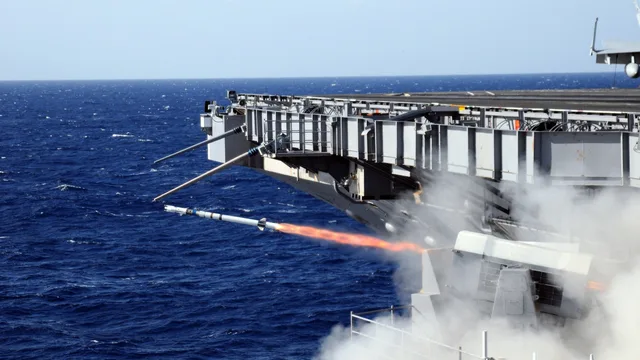
The development of SF-VSHORADS is a significant step forward in India's air defence modernisation programme. The system has already cleared a string of validation milestones, including three consecutive flight trials at the Integrated Test Range at Chandipur in February 2026. These trials demonstrated the missile's ability to intercept and destroy high-speed targets simulating enemy aircraft across a range of engagement scenarios.
The DRDO's attention has shifted to the harder engineering problem of shrinking the weapon down to a true shoulder-launched form factor. This involves repurposing the technologies and several subsystems developed for VSHORADS for a dedicated shoulder-fired indigenous air defence missile. The goal is to bring the missile's own weight down from around 21 kilograms to somewhere in the 15 to 18 kilogram range, placing it in the same class as established shoulder-fired systems such as the American Stinger and the Russian Verba.
Achieving this reduction will require significant technological advancements, including the development of a more compact rocket motor and a miniaturised seeker assembly. However, if DRDO succeeds, the resulting SF-VSHORADS will be a game-changer for India's air defence capabilities.
The SF-VSHORADS will provide Indian infantry with a genuinely portable answer to low-flying aerial threats, without sacrificing advanced guidance and target-discrimination capabilities. This will be a significant improvement over the current MANPADS inventory, which has been in service since the 1980s and is increasingly outmatched by modern drone swarms and low-signature aerial targets.
In conclusion, the development of SF-VSHORADS is a significant step forward in India's air defence modernisation programme. With its advanced guidance and target-discrimination capabilities, this cutting-edge technology is set to revolutionise the way India defends its skies.
India Defence & Aerospace Indigenisation Summit 2026
Accelerating private defense manufacturing, UAV innovation, and strategic aerospace corridors.
Based on reporting from the original source. See our Copyright Policy for details.