Rafale-BrahMos-NG Integration: Navigating the Complexities of Indigenous Integration
India Defence & Aerospace Indigenisation Summit 2026
Accelerating private defense manufacturing, UAV innovation, and strategic aerospace corridors.
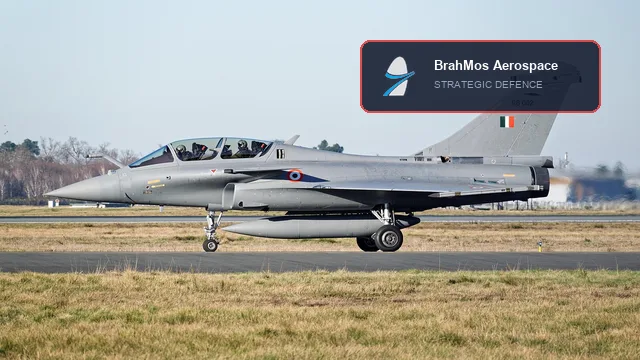
Explore Strategic Intel →The integration of indigenous weapons onto foreign-origin platforms is a complex task that requires careful planning, technical expertise, and collaboration with the original equipment manufacturer (OEM). In the case of India's plans to integrate the BrahMos-NG supersonic cruise missile onto the Dassault Rafale, the challenges are even more pronounced. The Rafale is a modern Western fighter that relies on tightly integrated digital avionics, making it difficult to safely integrate a new weapon without access to the aircraft's Interface Control Document (ICD) and software support from the OEM.
The ICD is a critical document that specifies how information such as weapon status, targeting coordinates, health monitoring, power supply, and launch commands are exchanged between the aircraft and the weapon. Without this information, the aircraft cannot safely recognise, configure, or release a new missile through its existing avionics architecture. Moreover, Western fighters incorporate multiple software-controlled safety interlocks to ensure weapons can only be armed and released under approved flight conditions. These protections are deeply embedded within the aircraft's mission systems.
In the absence of OEM support, engineers could explore alternative integration methods that minimise modifications to the aircraft's core mission computer. One possible approach involves developing a standalone Weapon Management Unit (WMU) or a smart pylon. In this architecture, the external hardware would manage communications with the missile independently of the Rafale's primary avionics. Dedicated cockpit controls or independent display interfaces could then allow the pilot to manage the missile without extensive modifications to the Rafale's operational flight software.
India Defence & Aerospace Indigenisation Summit 2026
Accelerating private defense manufacturing, UAV innovation, and strategic aerospace corridors.
Explore Strategic Intel →Another theoretical method would involve extensive Hardware-in-the-Loop (HWIL) testing. Engineers could build sophisticated ground-based integration laboratories that replicate the aircraft's electrical interfaces, allowing them to validate launcher behaviour, electrical compatibility, and weapon responses before flight testing. Such simulation facilities are already widely used during the development of complex aerospace systems to reduce technical risk before airborne trials.
However, modern fourth- and fifth-generation Western fighters employ encrypted digital communications, authentication protocols, and secure avionics architectures designed specifically to prevent unauthorised integration. Even if basic electrical signalling could be characterised, reproducing the complete software environment required for operational certification would remain an extremely difficult undertaking.
Achieving operational clearance would present another major hurdle. Any weapon integrated onto a frontline fighter must undergo extensive certification covering structural loads, aerodynamic behaviour, flutter characteristics, electromagnetic compatibility, aircraft controllability, safe separation during release, software validation, and live firing trials. For a large, high-speed stand-off weapon such as BrahMos-NG, these certification activities would require extensive flight-test campaigns before the system could be declared operational.
India has steadily increased its indigenous weapon integration capabilities over the past two decades, successfully integrating weapons such as the Astra family of beyond-visual-range missiles, Rudram anti-radiation missiles, and numerous precision-guided munitions across indigenous aircraft. However, integrating indigenous weapons onto foreign-origin platforms generally remains easier when undertaken with OEM cooperation, as this reduces technical complexity, certification timelines, and programme risk. For this reason, most defence analysts believe that formal collaboration with Dassault Aviation would remain the most practical and lowest-risk path if BrahMos-NG were ever selected for integration on the Rafale. In conclusion, the integration of the BrahMos-NG onto the Rafale is a complex task that requires careful planning, technical expertise, and collaboration with the OEM. While alternative integration methods exist, they come with significant technical and certification challenges. Ultimately, the success of this integration effort will depend on the ability of Indian engineers to navigate these complexities and work effectively with the OEM to achieve a successful outcome.
India Defence & Aerospace Indigenisation Summit 2026
Accelerating private defense manufacturing, UAV innovation, and strategic aerospace corridors.
Based on reporting from the original source. See our Copyright Policy for details.