Defense Bulletin
Pakistan's Drone Deal: Implications for India's Security Landscape
ADVERTISEMENT
SPONSORED
INDIGENOUS CNC SYSTEMS
Akriti Precision Systems — High-Precision Desktop CNC Milling
Made-in-India desktop CNC machines with composite superstructures, 15–25 µm repeatability & lifetime frame warranty. Built for aerospace, carbon fiber & precision prototyping.
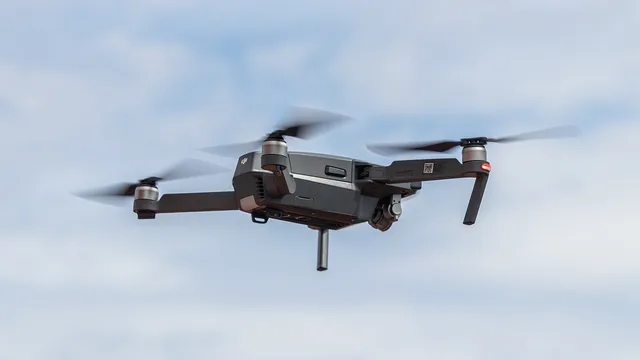
Explore CNC Systems →Pakistan's Drone Deal: Implications for India's Security Landscape\n\nPakistan's military has recently acquired a new array of unmanned technology, including tactical drones and counter-drone systems, from the United States. This deal, signed with Powerus, a US-based company, provides Pakistan with advanced unmanned aerial systems (UAS) that could give its units additional reconnaissance and tactical targeting capabilities.\n\nThe acquisition of US-made Matrix Fold drones and Guardian interceptors is significant, as it adds to India's evolving drone threat environment. Pakistan's growing interest in low-cost unmanned warfare and access to US systems could potentially give its units an edge in terms of reconnaissance, tactical targeting, and expendable drone operations.\n\nPowerus' Matrix Fold is a compact, configurable UAV that can be fitted with different mission payloads. The company describes it as a 10- or 12-inch hybrid platform with a 15-pound maximum take-off weight, up to 50 minutes of endurance, and a 12.5-mile data link.\n\nThe more interesting element from an Indian perspective is the Guardian interceptor. Powerus describes Guardian as a family of high-speed counter-UAS systems designed to engage hostile drones. Its published specifications include speeds of up to 290–340 km/h and a maximum range of 15 km, with Guardian-2 adding radar-assisted, semi-autonomous interception.\n\nWhile the immediate concern is not that Pakistan has suddenly acquired a strategic long-range strike capability, the significance lies in scale and operational adaptation. Pakistan has already demonstrated growing interest in FPV drones, loitering systems, and low-cost unmanned warfare. Access to commercially produced US systems could give its units additional options for reconnaissance, tactical targeting, and potentially expendable drone operations.\n\nPowerus entered into a licensing arrangement in June 2026 granting Paras Defence & Space Technologies exclusive rights to manufacture and commercialise Guardian interceptor products in India. This arrangement does not mean the Indian armed forces have selected Guardian for procurement, but it could potentially allow India to manufacture a counter-drone system from the same US technology family while Pakistan acquires Powerus unmanned systems.\n\nThe main issue for India will be the integration of Pakistan's new systems into its existing command-and-control, reconnaissance, and strike architecture. The more serious challenge would emerge if Islamabad moves from small-scale procurement towards local production, swarm employment, and integration with artillery and battlefield ISR networks.\n\nReuters reported that Powerus is exploring joint technology and potential manufacturing arrangements in Pakistan. This development could further complicate India's security landscape, as Pakistan's access to advanced unmanned technology could potentially give its units an edge in terms of reconnaissance, tactical targeting, and expendable drone operations.\n\nIn conclusion, Pakistan's drone deal with Powerus has significant implications for India's security landscape. The acquisition of US-made Matrix Fold drones and Guardian interceptors adds to India's evolving drone threat environment, and Pakistan's growing interest in low-cost unmanned warfare could potentially give its units additional reconnaissance and tactical targeting capabilities.\n\nAs India continues to monitor the situation, it is essential to consider the potential consequences of Pakistan's access to advanced unmanned technology and the implications for India's security and defense strategies.
ADVERTISEMENT
SPONSORED
AEROSPACE COMPOSITES
Nanoweave Composites — Precision Engineered Carbon Fiber
Empowering aerospace, UAV defense & robotics with high-performance carbon fiber sheets, custom drone frames & precision CNC composite machining.
Explore Carbon Fiber →
ADVERTISEMENT
DEFENSE CAD/CAM SOFTWARE
Discover Takshak CAM →
Takshak CAM — Feature-Recognition CAM You Own Outright
Import STEP solids, automatically detect machinable features & post collision-checked 3-axis and 4-axis G-code. Perpetual license with zero recurring subscriptions.
Based on reporting from the original source. See our Copyright Policy for details.