Naval Aviation's New Frontier: The Quest for Real-Time Pilot Health Monitoring
India Defence & Aerospace Indigenisation Summit 2026
Accelerating private defense manufacturing, UAV innovation, and strategic aerospace corridors.
Explore Strategic Intel →A New Era in Naval Aviation: The Need for Real-Time Pilot Health Monitoring
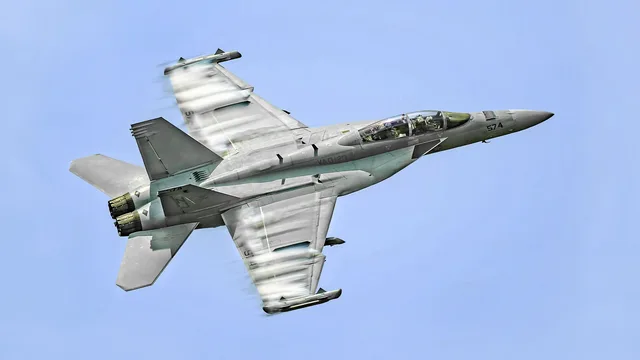
In the world of naval aviation, fighter pilots are pushed to their limits every time they take to the skies. The extreme conditions they face, including sustained acceleration, workload, fatigue, hypoxia, and other flight-related stresses, can take a toll on their physical and mental health. To mitigate this risk, the Indian Navy is seeking a cutting-edge in-flight health monitoring system that will continuously assess the physiological condition of aircrew during extended-duration flying.
The Importance of Real-Time Monitoring
The proposed system will provide real-time alerts when acute or critical deviations are detected, giving pilots and monitoring personnel an early warning system for medical or physiological emergencies. This is particularly important in modern naval aviation, where pilots can be exposed to demanding operating conditions during long-duration missions, carrier operations, and high-performance maneuvering. The system's ability to monitor vital physiological parameters non-invasively will enable medical personnel to identify potentially dangerous physiological changes while a pilot is airborne.
An Autonomous System for the Modern Era
The in-flight health monitoring system is designed to be self-reliant, with onboard power, data storage, and communications. This will allow it to function independently during flight, without relying entirely on the aircraft's existing systems. The system's autonomous architecture will enable it to preserve recorded data for subsequent aeromedical analysis, while also transmitting selected parameters and alerts in real-time.
India Defence & Aerospace Indigenisation Summit 2026
Accelerating private defense manufacturing, UAV innovation, and strategic aerospace corridors.
Explore Strategic Intel →The Future of Military Aviation: Human-Performance Monitoring
The Indian Navy's requirement for an indigenous in-flight health monitoring system reflects a broader shift towards human-performance monitoring in military aviation. By treating the pilot as an integral component of the aircraft's overall mission system, the Navy aims to enhance pilot safety, mission effectiveness, and operational readiness. The system's potential to support predictive health monitoring, identifying patterns associated with fatigue, stress, or impending incapacitation, is a significant development in this field.
Aeromedical Research: A Key Component of the System
The Navy's inclusion of aeromedical research in the requirement is a crucial aspect of the system's development. By analyzing accumulated physiological data, researchers can gain a deeper understanding of how fighter pilots respond to prolonged flight, workload, acceleration, and other environmental stresses. This knowledge can contribute to improved flight-safety protocols, pilot selection, training, and cockpit ergonomics.
Reducing Dependence on Foreign Technologies
An indigenous system will also reduce dependence on foreign medical-monitoring technologies, allowing the architecture to be adapted to India's specific fighter-aircraft and naval aviation requirements. This will enable the Navy to develop a system that meets its unique needs, while also reducing the risk of relying on foreign technologies.
Key Takeaways
- The Indian Navy is seeking an indigenous in-flight health monitoring system to continuously assess the physiological condition of aircrew during extended-duration flying.
- The system will provide real-time alerts when acute or critical deviations are detected, enabling medical personnel to identify potentially dangerous physiological changes.
- The system's autonomous architecture will enable it to function independently during flight, without relying entirely on the aircraft's existing systems.
- The system's potential to support predictive health monitoring, identifying patterns associated with fatigue, stress, or impending incapacitation, is a significant development in this field.
- The Navy's inclusion of aeromedical research in the requirement is a crucial aspect of the system's development, contributing to improved flight-safety protocols, pilot selection, training, and cockpit ergonomics.
India Defence & Aerospace Indigenisation Summit 2026
Accelerating private defense manufacturing, UAV innovation, and strategic aerospace corridors.
Based on reporting from the original source. See our Copyright Policy for details.