Morphing Machines Introduces India's First Domestically Taped‑Out Semiconductor
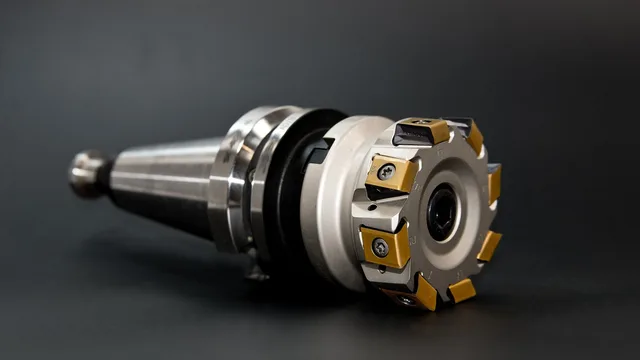
Akriti Precision Systems — High-Precision Desktop CNC Milling
Made-in-India desktop CNC machines with composite superstructures, 15–25 µm repeatability & lifetime frame warranty. Built for aerospace, carbon fiber & precision prototyping.
Explore CNC Systems →India has taken a decisive step toward semiconductor self‑reliance with the taped‑out release of MuDRA‑1, the inaugural chip designed entirely within the country by Morphing Machines. This achievement, unveiled at the Semicon India exhibition, represents the culmination of years‑long collaboration among research institutions, government agencies, and private investors.
Technical Overview
MuDRA‑1 is fabricated on a 28‑nanometer CMOS process and occupies a die area of approximately 5 mm². The chip integrates roughly 150 million transistors, delivering a peak performance of 3 tera‑operations per second while consuming less than 5 watts of power. Its architecture combines high‑speed analog front‑ends with digital signal processing cores, enabling applications in radar, communications, and electronic warfare. The design incorporates built‑in error correction and secure boot features, meeting the stringent requirements of modern defense platforms.
Detailed Specifications
The chip operates at a clock frequency of up to 2 GHz, supports a 64‑bit data bus, and includes dedicated hardware encryption engines for secure communications. Power management features enable dynamic voltage scaling, allowing the device to run at 1 W during peak load and drop to 0.2 W in idle mode. Memory interfaces incorporate LPDDR4 support, providing up to 25.6 GB/s bandwidth, while on‑chip SRAM offers 256 KB of low‑latency storage for critical real‑time processing.
Nanoweave Composites — Precision Engineered Carbon Fiber
Empowering aerospace, UAV defense & robotics with high-performance carbon fiber sheets, custom drone frames & precision CNC composite machining.
Explore Carbon Fiber →Ecosystem Support
The successful tape‑out was made possible by a robust ecosystem. The Ministry of Electronics and Information Technology, together with the India Semiconductor Mission, provided funding through the Design Linked Incentive scheme, while CDACINDIA contributed critical infrastructure and design tools. Academic expertise arrived from the Indian Institute of Science, which supplied research personnel and laboratory facilities. Private capital from venture funds and strategic investors further accelerated the project, allowing the startup to overcome the high non‑recurring engineering costs typical of fabless ventures.
Strategic Impact
Possessing a domestically taped‑out semiconductor places India on a more equal footing with traditional technology powers. MuDRA‑1 can be integrated into next‑generation fighter jets, missile guidance systems, and naval radar suites, reducing dependence on imported chips that are subject to export controls. This capability enhances indigenous defense production, shortens supply‑chain vulnerabilities, and aligns with the broader Make in India initiative. Moreover, the chip’s modest power envelope makes it suitable for unmanned aerial vehicles and remote sensing platforms, expanding the nation’s tactical flexibility.
Future Outlook
The launch of MuDRA‑1 signals the start of a longer roadmap for homegrown silicon. Morphing Machines has announced plans to develop successive generations of chips, targeting higher‑frequency RF transceivers and AI‑accelerated processors. Continued collaboration with global foundries, expanded participation from additional academic institutions, and increased domestic fab capacity will be essential to sustain momentum. As the semiconductor ecosystem matures, India is poised to become a net exporter of advanced defense‑grade chips, reinforcing its strategic autonomy.
In summary, the taped‑out MuDRA‑1 chip marks a watershed moment for India’s hard‑tech ambitions, demonstrating that a coordinated effort of government, academia, and industry can turn a visionary concept into a tangible, market‑ready product. The nation’s semiconductor future looks bright. This milestone paves the way for a new era of indigenous defense technology. It also boosts investor confidence in homegrown tech ventures.
Takshak CAM — Feature-Recognition CAM You Own Outright
Import STEP solids, automatically detect machinable features & post collision-checked 3-axis and 4-axis G-code. Perpetual license with zero recurring subscriptions.
Based on reporting from the original source. See our Copyright Policy for details.