Defense Bulletin
India's Xinjiang Air Corridor Gamble: Balancing Risk and Opportunity
ADVERTISEMENT
SPONSORED
INDIGENOUS CNC SYSTEMS
Akriti Precision Systems — High-Precision Desktop CNC Milling
Made-in-India desktop CNC machines with composite superstructures, 15–25 µm repeatability & lifetime frame warranty. Built for aerospace, carbon fiber & precision prototyping.
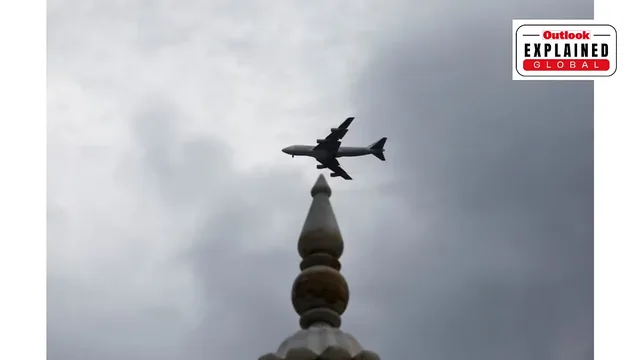
Explore CNC Systems →India's Xinjiang Air Corridor Gamble: Balancing Risk and Opportunity\n\nIn a bid to reduce flight times and costs, Indian officials have been negotiating with their Chinese counterparts to use the Hotan air corridor in Xinjiang. This proposed route would bypass Pakistan's closed airspace, allowing Indian airlines to connect directly to Central Asian airspace.\n\nThe detour currently in place via Muscat and the Arabian Sea adds 45 minutes to 2 hours to westbound flights to Europe and Central Asia, increasing fuel burn and operating costs. By using the Hotan route, Indian airlines could reduce this extra flying time and fuel costs.\n\nHowever, the proposed route poses significant risks. The high-altitude terrain of the Karakoram and Kunlun ranges presents a challenge, with peaks well above 20,000 ft. In the event of a loss of cabin pressure, planes must descend quickly, but this is not possible over this terrain. Standard passenger oxygen lasts only about 12 to 22 minutes, which may not be enough.\n\nIf an engine fails, the plane slowly loses height, which is also dangerous over this terrain. Each flight would need pre-planned escape routes, and some aircraft may require extra oxygen.\n\nThe route also crosses disputed land, with the Leh-Hotan line running over or near Aksai Chin, which China holds and India claims. Asking China to control Indian flights in this area could be seen as accepting China's control of that land, which is politically difficult for Delhi.\n\nDiversions would also be challenging, with backup airports in Hotan, Kashgar, and Urumqi in Xinjiang. This region is tightly controlled and sensitive, with few facilities. Passengers stuck there after a diversion would face visa, hotel, and security problems.\n\nThe Air India Magadan diversion in 2023 highlighted the complexities of this situation. There are no established air routes between Leh and Hotan, and Chinese airspace is heavily military-controlled, using metric altitudes and often restricting flights. Radio and radar coverage in remote areas is thin.\n\nDespite these challenges, Indian officials remain committed to exploring the Hotan air corridor. The potential benefits of reduced flight times and costs are significant, but the risks must be carefully managed. The Indian government will need to weigh the pros and cons of this proposal and make an informed decision about whether to proceed.\n\nUltimately, the success of this initiative will depend on the ability of Indian officials to navigate the complex geopolitical landscape of the region and find a solution that balances risk and opportunity.
ADVERTISEMENT
SPONSORED
AEROSPACE COMPOSITES
Nanoweave Composites — Precision Engineered Carbon Fiber
Empowering aerospace, UAV defense & robotics with high-performance carbon fiber sheets, custom drone frames & precision CNC composite machining.
Explore Carbon Fiber →
ADVERTISEMENT
DEFENSE CAD/CAM SOFTWARE
Discover Takshak CAM →
Takshak CAM — Feature-Recognition CAM You Own Outright
Import STEP solids, automatically detect machinable features & post collision-checked 3-axis and 4-axis G-code. Perpetual license with zero recurring subscriptions.
Based on reporting from the original source. See our Copyright Policy for details.