India's Trainer Dilemma: Tejas-Based or Purpose-Built for the IAF?
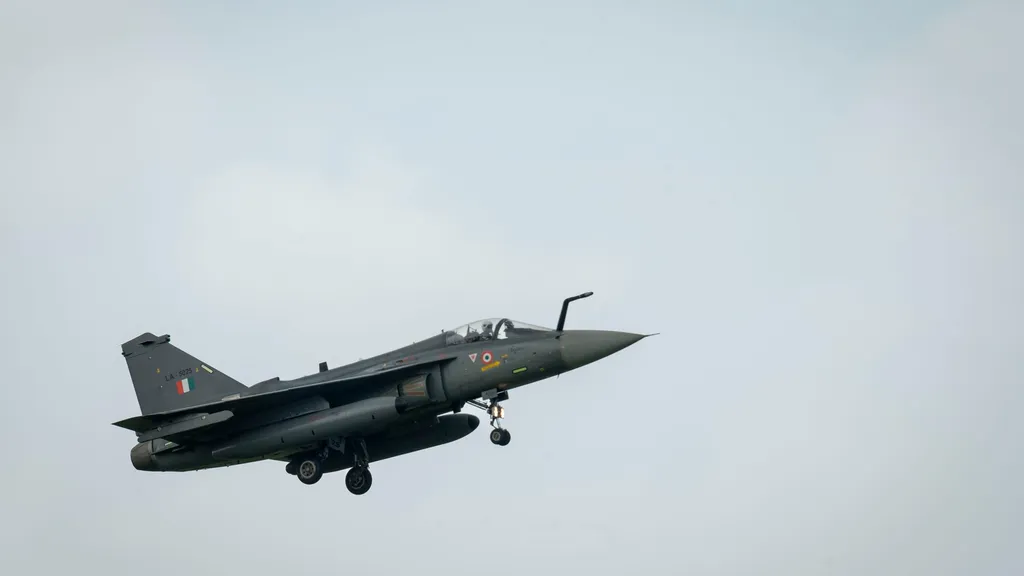
The Indian Air Force's requirement for 150 Stage-III jet trainers has set off a high-stakes competition between two contenders: the HAL HLFT-42 and a Tejas-derived twin-seat trainer. While the HLFT-42 boasts a clean-sheet design tailored for advanced jet training, the Tejas-based trainer offers a major commonality advantage, leveraging the existing Tejas ecosystem and shared logistics.
The choice between these two contenders ultimately comes down to the IAF's priorities. If pure Stage-III training performance is the top priority, the HLFT-42 has the conceptual advantage of being designed specifically for the mission. However, if the IAF prioritizes fleet commonality, industrial scale, logistics, potential wartime utility, and integration with India's expanding Tejas ecosystem, a Tejas-derived trainer could become a highly attractive alternative.
One of the strongest arguments for a Tejas-based Stage-III trainer is the underlying platform's existing development and production for the IAF. Unlike a clean-sheet aircraft, a trainer derived from the Tejas family could potentially share significant portions of its avionics architecture, cockpit systems, ground-support equipment, maintenance practices, components, and supply chain with India's frontline light fighter fleet. This commonality could become increasingly valuable if the IAF operates more than 300 Tejas-family aircraft, including Tejas Mk-1A and future Tejas Mk-II variants.
By establishing a pathway from basic training into a Tejas-family trainer and then directly into operational Tejas squadrons, the IAF could potentially reduce the logistical burden while creating economies of scale for India's aerospace industry. This could be particularly beneficial for HAL and its private-sector suppliers, who could see increased production volumes, improved economies of scale, and a larger installed base of Indian-made aircraft systems.
On the other hand, the HLFT-42 has an important advantage: it is being designed specifically around the advanced jet-training mission. A clean-sheet trainer can be optimized for student-instructor visibility, cockpit ergonomics, handling characteristics, training sortie requirements, fatigue life, operating cost, and emergency procedures. This is particularly important because simply converting a fighter into a trainer does not automatically produce an ideal training aircraft.
A Tejas-derived trainer would still require substantial engineering, flight testing, and certification to meet the IAF's Stage-III requirements. However, the potential benefits of a Tejas-based trainer cannot be overstated. By introducing pilots to manned-unmanned teaming (MUM-T) concepts, a Tejas-derived trainer could potentially become part of the same digital ecosystem as the IAF's networked combat operations involving fighters, unmanned combat aircraft, and loyal-wingman systems.
The 150-aircraft requirement is large enough to influence India's aerospace manufacturing ecosystem. A Tejas-based trainer could potentially utilize an existing industrial base rather than establishing an entirely separate manufacturing and support chain. This could strengthen India's ability to support Tejas-family aircraft throughout their lifecycle and create a common Tejas-family training and combat ecosystem.
In conclusion, the choice between the HAL HLFT-42 and a Tejas-derived twin-seat trainer ultimately depends on the IAF's priorities. While the HLFT-42 has the conceptual advantage of being designed specifically for the mission, a Tejas-derived trainer could become a highly attractive alternative if the IAF prioritizes fleet commonality, industrial scale, logistics, potential wartime utility, and integration with India's expanding Tejas ecosystem. The answer will shape the future of India's aerospace industry and the IAF's training capabilities.
Based on reporting from the original source. See our Copyright Policy for details.