India's Tejas Mk2 Edges Out Pakistan's JF-17 Block III in Beyond-Visual-Range Missile Capacity
India Defence & Aerospace Indigenisation Summit 2026
Accelerating private defense manufacturing, UAV innovation, and strategic aerospace corridors.
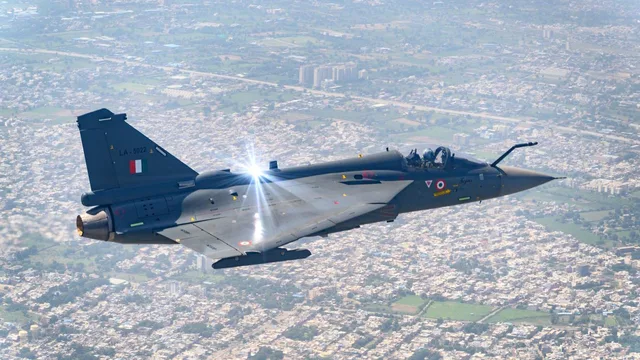
Explore Strategic Intel →The debate over the JF-17 Block III's capabilities continues, with some analysts claiming that the Pakistani fighter can counter India's Tejas Mk2. However, a closer examination of the two aircraft reveals a significant difference in beyond-visual-range (BVR) missile capacity.
The JF-17 Block III has been demonstrated carrying four PL-15 BVR missiles, which is a significant capability for a fighter of its class. However, the Tejas Mk2 boasts 11 weapon stations, giving it greater flexibility in configuring its loadout. This difference in capacity gives the Indian fighter a significant advantage in a high-intensity air war.
But what does this mean for the JF-17 Block III's chances of countering the Tejas Mk2? The answer lies not just in the number of missiles an aircraft can carry, but in the overall combat capacity of the fighter. The Tejas Mk2's larger airframe, more powerful engine, and greater payload capacity give it a clear potential capability advantage over the JF-17 Block III.
India Defence & Aerospace Indigenisation Summit 2026
Accelerating private defense manufacturing, UAV innovation, and strategic aerospace corridors.
Explore Strategic Intel →In a real conflict, the JF-17 Block III would operate as part of a wider Pakistani network involving J-10C fighters, airborne early-warning aircraft, ground-based sensors, and datalinks. India would similarly employ the Tejas Mk2 alongside Rafale, Su-30MKI, Tejas Mk1A, airborne early-warning platforms, and ground-based air-defence networks.
The question, therefore, is not whether a JF-17 Block III can shoot down a Tejas Mk2. It certainly can under the right tactical circumstances. The more meaningful question is whether the JF-17 Block III provides Pakistan with a platform possessing comparable overall combat capacity.
The Tejas Mk2's larger weapons capacity is only one part of the equation, but it is an important one. A fighter carrying a larger BVR missile load can potentially sustain a longer engagement and impose greater weapons pressure on an opposing formation. Combined with its larger airframe, more powerful engine, and greater payload capacity, this gives the Tejas Mk2 a clear potential capability advantage over the JF-17 Block III.
In conclusion, the JF-17 Block III is a capable and cost-effective 4.5-generation platform, but it is not a one-for-one counter to the Tejas Mk2. The Indian fighter's greater BVR missile capacity, larger airframe, and more powerful engine give it a significant advantage in a high-intensity air war. While the JF-17 Block III is a credible BVR platform, it is ultimately outmatched by the Tejas Mk2's capabilities.
India Defence & Aerospace Indigenisation Summit 2026
Accelerating private defense manufacturing, UAV innovation, and strategic aerospace corridors.
Based on reporting from the original source. See our Copyright Policy for details.