India's Stealth Fighter Programme Puts Precision Metrology to the Test
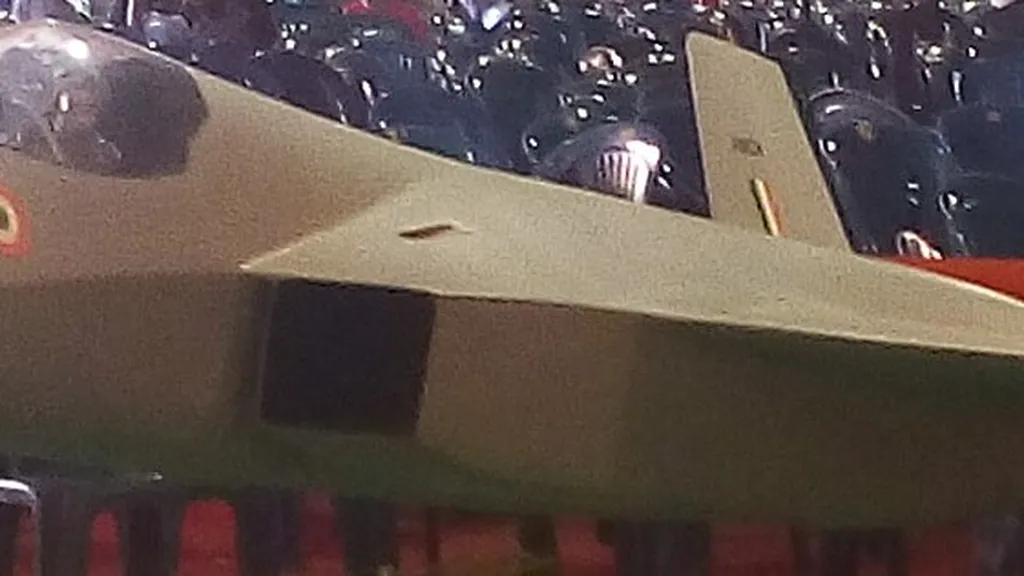
The pursuit of stealth technology in India's indigenous fighter programme has long been a topic of interest, with the Advanced Medium Combat Aircraft (AMCA) being a prime example of this endeavour. One of the key challenges in achieving stealth capabilities lies in the realm of manufacturing tolerances, where even the slightest deviation can significantly impact the radar signature of the aircraft.
The Aeronautical Development Agency (ADA) has recently issued a tender for an advanced optical blue light 3D scanner, a precision metrology equipment designed to verify whether physical components match their digital Computer-Aided Design (CAD) models. This is a crucial factor in stealth design, as the scanner's ability to capture a dense three-dimensional point cloud allows engineers to highlight any deviations from the intended shape.
Stealth shaping is a complex process that requires maintaining precise surface contours and tightly controlled gaps at panel edges. Any unplanned step, gap, or warp in the skin can act as a discontinuity, scattering radar energy back toward a receiver rather than deflecting it away as the design intends. The optical blue light scanner is specifically designed to address this issue, as it can capture a full surface geometry in seconds, rather than the extended cycle times required by traditional Coordinate Measuring Machines (CMMs).
CMMs have been the primary method of quality control in aerospace for decades, but they have real limitations when applied to the large, complex, curved surfaces that define a modern stealth airframe. Contact probing is slow, samples only a limited number of discrete points, and struggles with the thin composite skin panels and intricate curvature that low-observable aircraft depend on for their radar performance.
In contrast, optical blue light scanning takes a fundamentally different approach, projecting a structured pattern of high-intensity blue fringe light across the surface and using stereo cameras to triangulate the resulting distortion into a dense three-dimensional point cloud. This approach is preferred in aerospace manufacturing due to its narrower wavelength band, which delivers sharper triangulation accuracy and performs more reliably on metallic, dark composite, and glossy surfaces.
The ADA's procurement of the advanced optical blue light 3D scanner is part of a larger effort to build out an Industry 4.0-style quality and digital engineering infrastructure around its stealth fighter programme. This includes investments in fibre-optic structural sensing to monitor stress and vibration during flight testing, HUMS software upgrades to track structural fatigue, and reverse-engineering and CAD-modelling contracts to build accurate digital baselines for components and legacy platforms alike.
The success of India's indigenous fighter programme is not solely dependent on structural strength or aerodynamic performance, but also on its ability to maintain tight manufacturing tolerances. The procurement of the advanced optical blue light 3D scanner is a direct enabler of whether the AMCA's stealth characteristics survive the transition from digital design to physical airframe.
The importance of precision measurement infrastructure in stealth fighter programmes cannot be overstated. The ability to verify whether physical components match their digital CAD models is critical in ensuring that the radar signature of the aircraft remains within acceptable limits. The ADA's procurement of the advanced optical blue light 3D scanner is a significant step in this direction, and its impact will be felt throughout the AMCA programme.
As the ADA continues to push the boundaries of stealth technology in India, it is clear that precision metrology will play a vital role in the success of this endeavour. The procurement of the advanced optical blue light 3D scanner is a testament to the agency's commitment to delivering cutting-edge capabilities to the Indian military, and its impact will be felt for years to come.
Based on reporting from the original source. See our Copyright Policy for details.