India's Stealth Fighter Conundrum: Can One Company Handle the Nation's Most Strategic Programs?
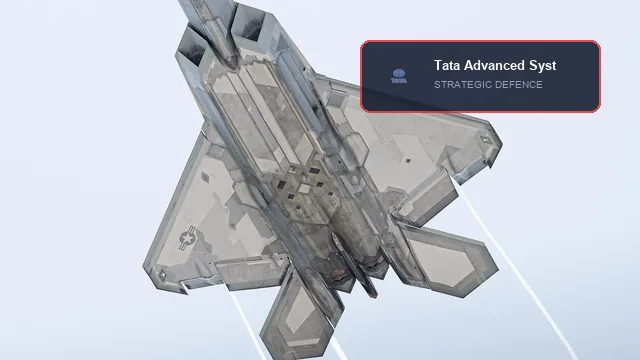
India's Ministry of Defence is facing a strategic dilemma regarding the country's most consequential fighter programmes. Tata Advanced Systems Limited (TASL) is at the centre of this controversy, as the company deepens its footprint in the Rafale programme while simultaneously competing to build India's indigenous fifth-generation stealth fighter, the Advanced Medium Combat Aircraft (AMCA).
TASL's experience in building complete Rafale fuselage sections in Hyderabad provides a strong argument for concentrating both programmes under the company. The same systems-integration discipline, structural-assembly rigour, and quality-certification infrastructure that AMCA demands are already in place for Rafale production. This could potentially reduce duplication of effort and costs by amortising tooling, workforce training, and supplier ecosystem across two fighter platforms.
However, three factors complicate this logic. The first is sheer capacity. Running Rafale fuselage production at a planned rate of up to two complete units a month, alongside a potential final assembly role integrating complete aircraft, while simultaneously building five AMCA prototypes toward a first-flight target around 2029, represents an extraordinary volume of simultaneous, high-precision, low-margin-for-error aerospace work for one company's defence division to carry at once, even for an organisation the scale of Tata.
The second is concentration risk. Much of the past year's defence-industrial policy shift has been explicitly designed to prevent a repeat of the single-vendor dependency that characterised Hindustan Aeronautics Limited's decades-long monopoly on fighter production. Handing India's two most strategically significant fighter programmes, Rafale's Indian manufacturing base and AMCA's prototype development, to the same private group would risk recreating that exact structural vulnerability in a different form, only this time in the private sector rather than the public one.
The third is the integrity of the AMCA selection process itself. The competition was deliberately structured to create commercial tension between three credible private bidders, with the Aeronautical Development Agency expected to choose based on demonstrated capability and commercial terms. If a company's unrelated success in a separate government-to-government fighter deal is allowed to create a halo effect around its AMCA candidacy, that risks distorting a selection process meant to reward the strongest standalone bid, rather than the biggest existing footprint in fighter manufacturing.
The pattern emerging from the Rafale programme itself offers a clue to how the ministry is likely to approach this. The final assembly line question has already produced a geographically split narrative, with Nagpur's Dassault Reliance Aerospace Limited facility and Hyderabad's Tata-linked ecosystem both cited in different reports as contenders, reflecting a stated government preference for distributing aerospace manufacturing capability across regions rather than concentrating it in one location or one company. A similar instinct is likely to apply to AMCA.
Even if TASL ultimately wins the prototype contract, the more probable structure would involve Tata operating within a wider supplier network rather than vertical, Tata-only control, mirroring how its AMCA competitors have already built in partners such as BEL, Dynamatic, BEML, and Data Patterns. A scenario in which TASL sweeps both Rafale's Indian manufacturing base and the AMCA prototype contract outright remains possible, but would likely draw scrutiny precisely because it concentrates two of India's most sensitive fighter programmes under a single private conglomerate.
Strategic Dilemma
The Ministry of Defence is facing a strategic dilemma regarding India's most consequential fighter programmes. Tata Advanced Systems Limited is at the centre of this controversy, as the company deepens its footprint in the Rafale programme while simultaneously competing to build India's indigenous fifth-generation stealth fighter, the Advanced Medium Combat Aircraft (AMCA).
Capability Transfer
TASL's experience in building complete Rafale fuselage sections in Hyderabad provides a strong argument for concentrating both programmes under the company. The same systems-integration discipline, structural-assembly rigour, and quality-certification infrastructure that AMCA demands are already in place for Rafale production.
Capacity and Concentration Risk
However, three factors complicate this logic. The first is sheer capacity. Running Rafale fuselage production at a planned rate of up to two complete units a month, alongside a potential final assembly role integrating complete aircraft, while simultaneously building five AMCA prototypes toward a first-flight target around 2029, represents an extraordinary volume of simultaneous, high-precision, low-margin-for-error aerospace work for one company's defence division to carry at once, even for an organisation the scale of Tata.
Integrity of the AMCA Selection Process
The third is the integrity of the AMCA selection process itself. The competition was deliberately structured to create commercial tension between three credible private bidders, with the Aeronautical Development Agency expected to choose based on demonstrated capability and commercial terms.
Probable Structure
Even if TASL ultimately wins the prototype contract, the more probable structure would involve Tata operating within a wider supplier network rather than vertical, Tata-only control, mirroring how its AMCA competitors have already built in partners such as BEL, Dynamatic, BEML, and Data Patterns.
Key Takeaways
- The Ministry of Defence is facing a strategic dilemma regarding India's most consequential fighter programmes.
- Tata Advanced Systems Limited is at the centre of this controversy, as the company deepens its footprint in the Rafale programme while simultaneously competing to build India's indigenous fifth-generation stealth fighter, the Advanced Medium Combat Aircraft (AMCA).
- The company's experience in building complete Rafale fuselage sections in Hyderabad provides a strong argument for concentrating both programmes under the company.
- However, three factors complicate this logic: sheer capacity, concentration risk, and the integrity of the AMCA selection process.
- A scenario in which TASL sweeps both Rafale's Indian manufacturing base and the AMCA prototype contract outright remains possible, but would likely draw scrutiny precisely because it concentrates two of India's most sensitive fighter programmes under a single private conglomerate.
Based on reporting from the original source. See our Copyright Policy for details.