Defense Bulletin
India's Sixth-Generation Fighter Ambitions: A Strategic Shift
ADVERTISEMENT
SPONSORED
INDIGENOUS CNC SYSTEMS
Akriti Precision Systems — High-Precision Desktop CNC Milling
Made-in-India desktop CNC machines with composite superstructures, 15–25 µm repeatability & lifetime frame warranty. Built for aerospace, carbon fiber & precision prototyping.
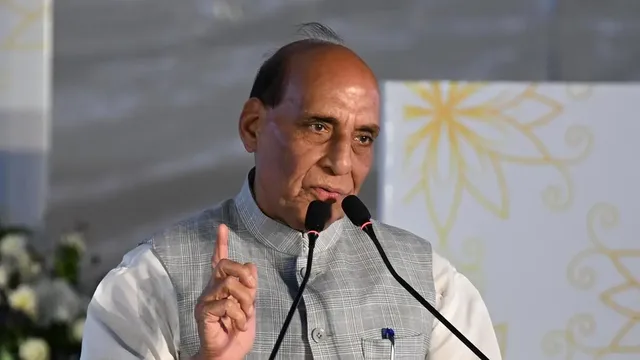
Explore CNC Systems →India's Sixth-Generation Fighter Ambitions: A Strategic Shift\n\nIndia's Defence Minister Rajnath Singh has confirmed the country's participation in the UK-led Global Combat Air Programme (GCAP), a sixth-generation fighter initiative that also includes Italy and Japan. This move marks a significant shift in India's defence strategy, as the country seeks to leverage cutting-edge technology to enhance its military capabilities.\n\nAccording to sources, India's participation in GCAP will be on a parallel path to its own Advanced Medium Combat Aircraft (AMCA) programme, with the Ministry of Defence stating that sixth-gen fighter participation will not derail the AMCA's development timeline. This suggests that India is looking to complement its existing programmes with the latest advancements in sixth-generation fighter technology.\n\nThe GCAP is a UK-led initiative that aims to develop a sixth-generation fighter aircraft, leveraging technologies such as increased levels of stealth, combat networks, artificial intelligence, unmanned teams, and more. India's participation in the programme as a dialogue partner grants New Delhi a consultative role, but not a development role.\n\nIndia's interest in a sixth-gen fighter is not limited to GCAP, however. The country is also seeking to engage France on the Future Combat Air System (FCAS), the Franco-German-Spanish sixth-generation fighter project. The Ministry of Defence has informed Parliament that it has begun the process to 'co-join' the sixth-gen fighter programme led by France.\n\nThis move is seen as a strategic shift in India's defence policy, with the country looking to leverage partnerships and collaborations to enhance its military capabilities. The extent to which these technologies would be available to India is likely to be dictated according to whichever of the two sixth-gen initiatives India joins, and the level of partnerships it agrees to.\n\nSingh's remarks at the NDTV Defence Summit were made in the context of India's growing interest in sixth-generation fighters, which are expected to play a key role in future battlefields. The development of these aircraft will require significant investments in research and development, as well as partnerships with international players.\n\nAs India continues to navigate its defence strategy, it is clear that the country is committed to leveraging cutting-edge technology to enhance its military capabilities. The participation in GCAP and FCAS initiatives marks a significant step in this direction, and it will be interesting to see how India's sixth-generation fighter ambitions unfold in the coming years.\n\nIn conclusion, India's participation in the UK-led Global Combat Air Programme and its engagement with France on the Future Combat Air System mark a significant shift in the country's defence strategy, with a focus on leveraging cutting-edge technology to enhance its military capabilities. This strategic shift is likely to have far-reaching implications for India's defence policy and its role in the global defence landscape.
ADVERTISEMENT
SPONSORED
AEROSPACE COMPOSITES
Nanoweave Composites — Precision Engineered Carbon Fiber
Empowering aerospace, UAV defense & robotics with high-performance carbon fiber sheets, custom drone frames & precision CNC composite machining.
Explore Carbon Fiber →
ADVERTISEMENT
DEFENSE CAD/CAM SOFTWARE
Discover Takshak CAM →
Takshak CAM — Feature-Recognition CAM You Own Outright
Import STEP solids, automatically detect machinable features & post collision-checked 3-axis and 4-axis G-code. Perpetual license with zero recurring subscriptions.
Based on reporting from the original source. See our Copyright Policy for details.