India's S-400 Air Defence Capabilities: A Game-Changer in Modern Warfare?
Akriti Precision Systems — High-Precision Desktop CNC Milling
Made-in-India desktop CNC machines with composite superstructures, 15–25 µm repeatability & lifetime frame warranty. Built for aerospace, carbon fiber & precision prototyping.
Explore CNC Systems →India's S-400 Air Defence Capabilities: A Game-Changer in Modern Warfare?
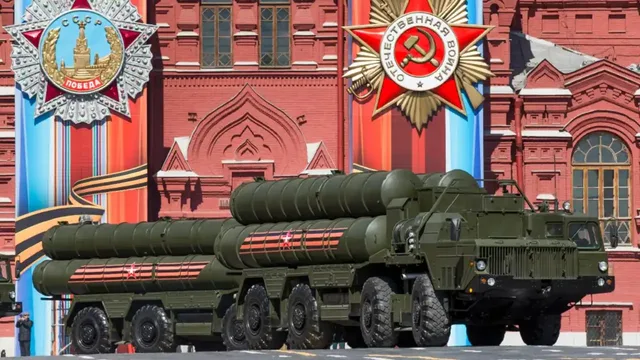
The Indian Air Force's (IAF) use of the S-400 surface-to-air missile (SAM) system during Operation Sindoor has sparked interest in the military's air defence capabilities. The system's reported engagement of Pakistani aircraft at a distance of approximately 300 km has raised questions about the IAF's tactics and the role of airborne early-warning aircraft in providing targeting data.
The S-400 system is a long-range SAM system developed by Russia, known for its ability to engage targets beyond the radar horizon. The system's effectiveness in engaging Ukrainian MiG-29s in 2023, with 10 destroyed in one day and 24 in a week, has been reported by Russian sources. However, these figures have not been independently verified.
The S-400's ability to engage targets beyond the radar horizon is made possible by the use of external sensor information and concealed launchers. Airborne early-warning aircraft, such as the A-50U, provide targeting data to the S-400 system, enabling it to engage targets that would otherwise be undetectable by ground-based radar.
Nanoweave Composites — Precision Engineered Carbon Fiber
Empowering aerospace, UAV defense & robotics with high-performance carbon fiber sheets, custom drone frames & precision CNC composite machining.
Explore Carbon Fiber →The Earth's curvature limits the detection range of ground-based radars against low-altitude aircraft. An airborne radar, however, operates from a greater altitude and can detect aircraft that remain below the radar horizon of a ground-based system. This creates a sensor-to-shooter chain, where an airborne sensor detects and tracks the target, and the information is passed through the air-defence network to the S-400 system.
The IAF's use of the S-400 system during Operation Sindoor has been confirmed by Air Chief Marshal AP Singh, who stated that the system had destroyed at least five Pakistani fighter aircraft and one large aircraft, which was an ELINT or AEW&C platform engaged at approximately 300 km. The Chief of Defence Staff later confirmed that India's network of sensors and radars, together with IAF SAM and counter-UAS units and Army Air Defence, operated through the Integrated Air Command and Control System (IACCS) during the operation.
While the possibility of the IAF using airborne radar to provide targeting data for the 300-km S-400 engagement is technically credible, the evidence currently available does not allow for a conclusive conclusion. The exact sensor-to-shooter architecture used by the S-400 during Operation Sindoor remains classified.
The S-400 system's ability to engage targets beyond the radar horizon has significant implications for modern warfare. The system's effectiveness in engaging low-altitude aircraft, which are often difficult to detect by ground-based radar, makes it a valuable asset for air defence. The IAF's use of the S-400 system during Operation Sindoor demonstrates the military's commitment to staying ahead of the curve in terms of air defence capabilities.
In conclusion, the Indian Air Force's use of the S-400 surface-to-air missile system during Operation Sindoor has highlighted the military's air defence capabilities and the importance of airborne early-warning aircraft in providing targeting data. The system's ability to engage targets beyond the radar horizon has significant implications for modern warfare, and its effectiveness in engaging low-altitude aircraft makes it a valuable asset for air defence.
Takshak CAM — Feature-Recognition CAM You Own Outright
Import STEP solids, automatically detect machinable features & post collision-checked 3-axis and 4-axis G-code. Perpetual license with zero recurring subscriptions.
Based on reporting from the original source. See our Copyright Policy for details.