India's Rafale Missile Strategy: A Cost-Effective Edge in the Skies
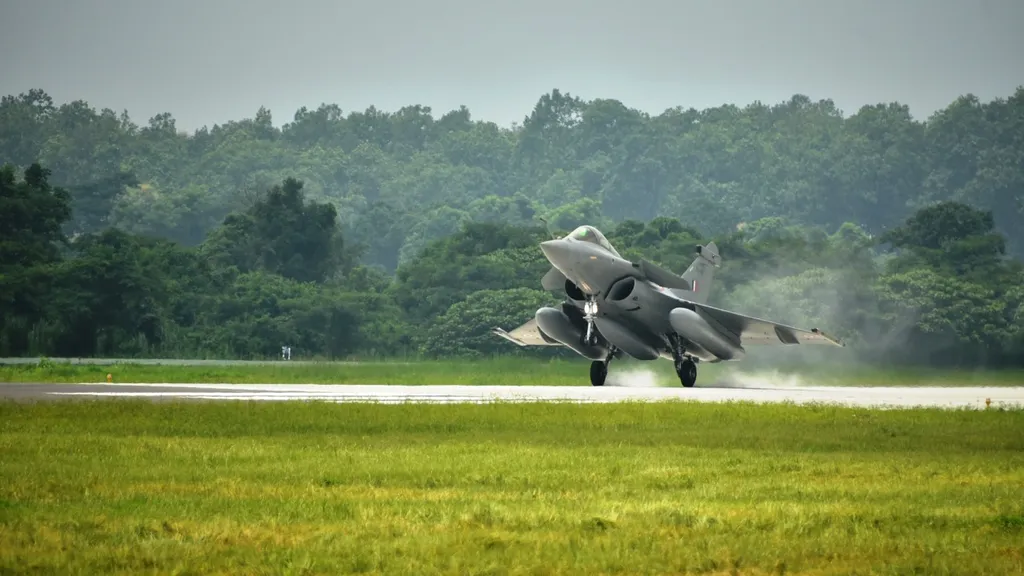
India's Rafale fleet is set to receive a significant boost with the integration of the Astra missile family. This indigenous missile system offers a cost-effective edge in the skies, allowing the Indian Air Force to build deeper inventories at a lower cost. By producing Astra domestically, India retains ownership of the software architecture, enabling more flexible and responsive weapons development.
The Astra family is developed by the Defence Research and Development Organisation (DRDO) and produced by Bharat Dynamics Limited. This indigenous missile ecosystem provides significant advantages over imported missiles like the Meteor. With Astra, India can modify algorithms, improve electronic warfare resistance, update threat databases, and introduce new capabilities without waiting for external approval processes.
One of the key benefits of Astra is its ability to simplify logistics, inventory management, and maintenance planning. By integrating Astra across multiple fighter platforms, including the Su-30MKI, Tejas Mk1A, and Tejas Mk2, the Indian Air Force can reduce the complexity of maintaining separate missile inventories tied to individual aircraft types. This common missile ecosystem enables a more streamlined approach to logistics and inventory management, ultimately reducing costs and improving operational readiness.
The integration of Astra also provides a strategic buffer against supply chain disruptions, production bottlenecks, and geopolitical considerations. By producing Astra domestically, India can expand manufacturing capacity to meet wartime requirements, reducing the risk of critical shortages and ensuring that missile availability is determined primarily by India's own industrial capability.
The Astra family is not just a replacement for imported missiles like the Meteor, but rather a complementary system that offers a unique set of capabilities. While Meteor will continue to serve as a premium long-range weapon for missions where its unique capabilities provide maximum value, Astra can emerge as the primary operational missile carried in larger numbers across a wider range of platforms.
In conclusion, the integration of the Astra missile family into India's Rafale fleet is a strategic move that offers a cost-effective edge in the skies. By producing Astra domestically, India can build deeper inventories at a lower cost, while retaining ownership of the software architecture. This enables more flexible and responsive weapons development, simplifying logistics, inventory management, and maintenance planning. Ultimately, the Astra missile family provides a strategic buffer against supply chain disruptions and geopolitical considerations, ensuring that missile availability is determined primarily by India's own industrial capability.
Based on reporting from the original source. See our Copyright Policy for details.