India's Push for Indigenous Lithium-Ion Battery Technology in Submarines
Akriti Precision Systems — High-Precision Desktop CNC Milling
Made-in-India desktop CNC machines with composite superstructures, 15–25 µm repeatability & lifetime frame warranty. Built for aerospace, carbon fiber & precision prototyping.
Explore CNC Systems →India's Push for Indigenous Lithium-Ion Battery Technology in Submarines
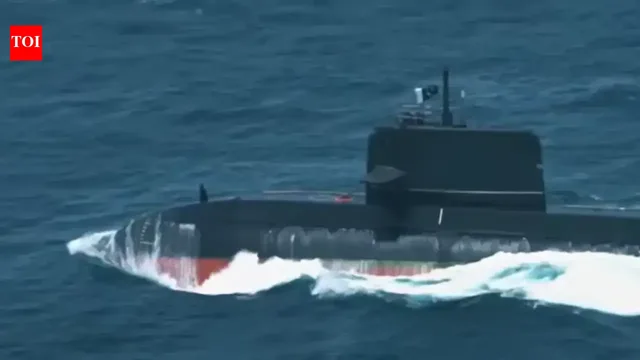
MDL, a leading shipbuilder in India, has recently initiated a technology-development effort for an indigenous lithium-ion battery and battery management system (BMS) for its submarines. This move is part of the company's broader strategy to develop its own domestic technology, moving beyond foreign-supplied battery modules and systems.
The requirement for an indigenous lithium-ion battery stems from the importance of battery technology in conventional (air-independent) submarines. These vessels typically use lead-acid batteries for storing power for underwater operations. However, lithium-ion batteries can provide higher energy density and capacity, and potentially lower maintenance needs than traditional lead-acid batteries.
Submarines have particularly stringent requirements in terms of thermal management, safety, and reliability, as well as the mechanics of the battery itself, including resistance to shocks and vibrations, and battery management. MDL's push for an indigenous battery and BMS suggests that the company is aiming to go beyond relying on foreign-supplied battery modules and systems and develop its own domestic technology around this key subsystem.
Nanoweave Composites — Precision Engineered Carbon Fiber
Empowering aerospace, UAV defense & robotics with high-performance carbon fiber sheets, custom drone frames & precision CNC composite machining.
Explore Carbon Fiber →Project-75, as stated, entails building six next-generation conventional submarines in India under a joint venture with a foreign technology partner. MDL and its partner, the German thyssenkrupp Marine Systems (TKMS), are discussing the terms of the collaboration. TKMS has stated its intention to have the six submarines designed in Germany and built in India under the TKMS-MDL joint venture.
MDL has previously stated its expectation that the P75I collaboration would feature extensive technology transfer and indigenisation, with local content in the submarines expected to exceed 60%. Thus, the lithium-ion battery initiative fits within the company's broader push for localisation of the submarine industry.
TKMS has previously stated its intention to equip its own Type 214NG submarines with lithium-ion batteries, utilising its proprietary battery technology, which it states offers higher capacity and longer cycle life than conventional lead-acid batteries. Indian Navy's P75I programme is TKMS's foreign partner, with MDL now seeking to acquire an indigenous lithium-ion battery technology for its submarines.
The details of the P75I submarines, including their battery systems, will ultimately be determined through contract negotiations, technological evaluations, qualification requirements, and technology transfer commitments. An indigenous lithium battery could be utilised in the upgrades to the Kalvari-class submarines or the later P75I submarines. Similarly, the battery technology could potentially see applicability in other submarine projects, including the proposed Project-76, but that would be a separate matter for consideration at a future date.
The development of an indigenous lithium-ion battery technology for submarines is a significant step towards reducing India's dependence on foreign technology and enhancing the country's self-reliance in the defence sector. This initiative aligns with the government's 'Make in India' policy, which aims to promote domestic manufacturing and reduce imports.
The successful development of an indigenous lithium-ion battery technology for submarines will not only enhance the country's defence capabilities but also create new opportunities for domestic industry players. It will also pave the way for the development of other advanced technologies, such as advanced propulsion systems and sensors, which are critical for the development of next-generation submarines.
In conclusion, MDL's push for an indigenous lithium-ion battery technology for its submarines is a significant development in the country's defence sector. This initiative has the potential to reduce India's dependence on foreign technology, enhance the country's self-reliance, and create new opportunities for domestic industry players.
Takshak CAM — Feature-Recognition CAM You Own Outright
Import STEP solids, automatically detect machinable features & post collision-checked 3-axis and 4-axis G-code. Perpetual license with zero recurring subscriptions.
Based on reporting from the original source. See our Copyright Policy for details.