India's Next-Gen Radar Programme Takes Shape: A Leap Forward for the Su-30MKI
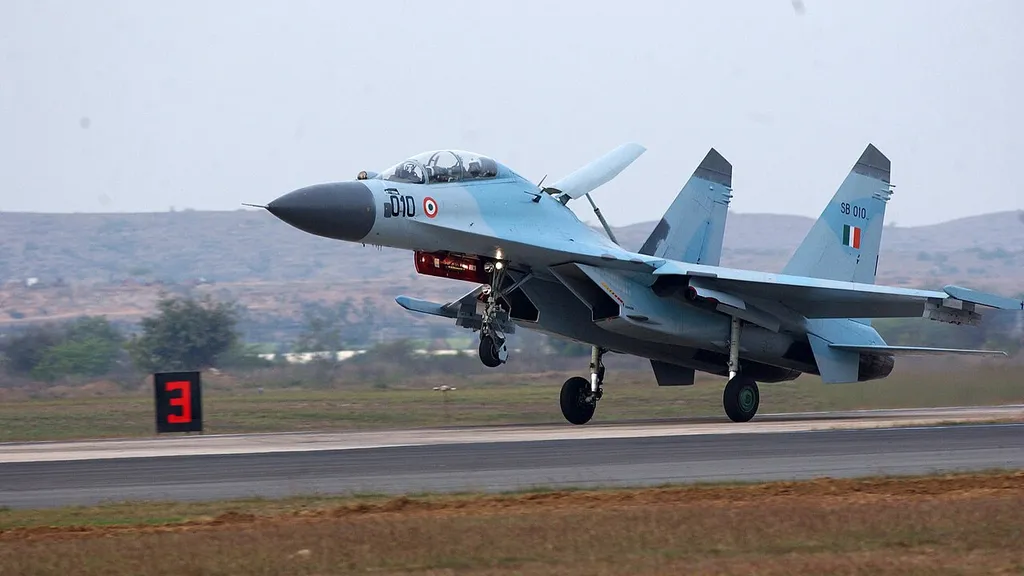
The Indian Air Force's Su-30MKI fleet is set to receive a major upgrade with the development of the Virupaksha AESA radar programme. Astra Microwave Products, a key player in the programme, has announced that its portion of the project is on track to be completed within the next few months. The company's Active Antenna Array Unit, a crucial component of the radar system, is expected to be finished by year-end, paving the way for the entire radar system to be completed.
The Virupaksha AESA radar is being developed by DRDO's Electronics and Radar Development Establishment in Bengaluru to replace the ageing Russian-origin N011M Bars passive array radar currently fitted on the Su-30MKI fleet. This upgrade is a significant step towards elevating the Su-30MKI to a 4.5-generation standard, with the programme expected to cost in the range of ₹60,000-65,000 crore for an initial batch of 84 aircraft.
Astra Microwave's contribution to the programme centres on the radar's Active Antenna Array Unit, which houses approximately 2,400 Gallium Nitride-based Transmit/Receive modules. GaN technology offers meaningfully better power output, thermal efficiency, and resistance to electronic jamming compared to the Gallium Arsenide-based systems used in earlier-generation AESA radars. This improvement in technology will enable the Virupaksha radar to offer a detection range of 300-400 kilometres against conventional fighter-sized targets and over 200 kilometres against low-observable or stealthier threats.
The company's near-term progress on the AAAU has already translated into contract momentum, with Astra Microwave recently securing a domestic work order valued at ₹2,205.23 crore from Hindustan Aeronautics Limited. Management expects further order inflows tied to the Super Sukhoi upgrade pipeline as the Virupaksha programme matures from development into production.
The next steps in the programme involve integration onto test platforms followed by flight trials, a process that will need to validate the radar's performance across the full range of conditions the Su-30MKI is expected to operate in before DRDO clears it for series production. Only after that validation sequence concludes would mass production begin, initially targeting the first batch of 84 Su-30MKI aircraft under the Super Sukhoi programme, before any expansion to cover a larger share of the roughly 260-strong Su-30MKI fleet that the Indian Air Force currently operates.
For Astra Microwave, the Virupaksha programme represents a significant step up the value chain, from a company historically known for components and subsystem manufacturing toward becoming a systems-level player with in-house radar IP. This shift is central to the company's broader growth strategy, which includes a stated ambition to reach $1 billion in annual revenue with healthy operating margins over the coming years.
Whether the 'by year-end' timeline for full radar completion holds will depend on how smoothly the remaining integration work, along with DRDO's own contributions to the programme, proceeds over the next few months. However, the company's public commentary suggests the AAAU workstream, historically one of the more technically demanding pieces of any AESA radar programme, is no longer the pacing item it once was.
The Indian Air Force's Su-30MKI fleet is set to receive a major boost in detection range, but can the Virupaksha AESA radar programme meet its ambitious deadline? Only time will tell, but one thing is certain - the Virupaksha programme represents a significant step forward for the Indian Air Force and the country's aerospace industry as a whole.
Based on reporting from the original source. See our Copyright Policy for details.