India's Hypersonic Dilemma: The Uncertain Future of BrahMos-2
Akriti Precision Systems — High-Precision Desktop CNC Milling
Made-in-India desktop CNC machines with composite superstructures, 15–25 µm repeatability & lifetime frame warranty. Built for aerospace, carbon fiber & precision prototyping.
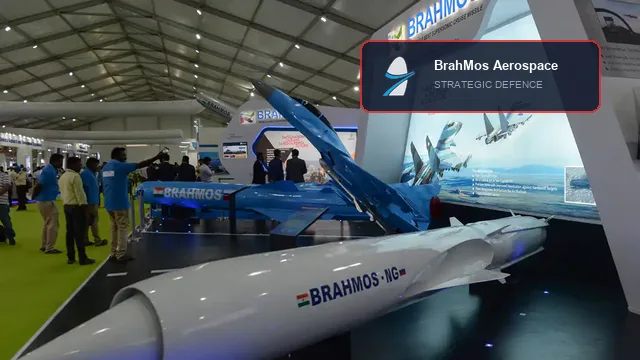
Explore CNC Systems →The BrahMos-2: A Hypersonic Missile in Limbo
The development of the BrahMos-2, a hypersonic scramjet-powered missile, has been stalled for nearly two decades due to a combination of financial, technical, and strategic concerns. The missile, which was intended to be the highlight of Indo-Russian defense cooperation, has yet to carry out its first flight, and its future remains uncertain.
The primary reason for the delay is the high cost of the BrahMos-2, estimated at $12.5 million per unit, nearly three times the price of the BrahMos-1. This has raised concerns about the missile's viability and the dependence on Russian scramjet technology. The services establishment has expressed skepticism about the price, citing the fact that the BrahMos-1 has already demonstrated its ability to penetrate layered air defenses during Operation Sindoor in May 2025.
The issue of technology transfer is another major concern. The BrahMos-2 has always been based on the scramjet engine, with the technology to be taken from Russia's 3M22 Zircon, or Tsirkon, one of the most advanced hypersonic cruise missiles globally. However, Moscow has been unwilling to grant full transfer of the scramjet technology, and is reported to be asking for a high price for the engines it does provide.
Nanoweave Composites — Precision Engineered Carbon Fiber
Empowering aerospace, UAV defense & robotics with high-performance carbon fiber sheets, custom drone frames & precision CNC composite machining.
Explore Carbon Fiber →This has led India to take the route of developing technologies domestically. The DRDO has been gradually improving its scramjet technology, having conducted a combustor test lasting more than 1,000 seconds in April 2025 and carrying out a trial of a full-scale, actively cooled scramjet combustor for 20 minutes at a site in Hyderabad in May 2026. As part of initiatives such as Project Vishnu, the emphasis is on hypersonic designs which are affordable so that they can be produced in large numbers, incorporating active cooling and a modular design.
The break in activity is a clear indication of a more mature Indian strategy, one that takes into account cost-per-kill and inventory depth, rather than simply relying on speed. At present, the hypersonic BrahMos remains in the planning stage, awaiting the time when both price and technology finally become viable.
The partnership between India and Russia is not coming to an end, but the BrahMos-2 has been put on the backburner. The services establishment is not enthusiastic about the expected per-unit cost, and the DRDO is working on developing technologies domestically. The future of the BrahMos-2 remains uncertain, but one thing is clear: India will not compromise on its strategic interests.
Technical Specifications
| Parameter | BrahMos-1 | BrahMos-2
| --- | --- | ---
| Speed | Mach 2.8 | Mach 7-8
| Range | 290 km | 1,500 km
| Cost | $3-4.5 million | $12.5 million
Strategic Analysis
The development of the BrahMos-2 has been stalled due to a combination of financial, technical, and strategic concerns. The high cost of the missile, estimated at $12.5 million per unit, has raised concerns about its viability and the dependence on Russian scramjet technology. The services establishment has expressed skepticism about the price, citing the fact that the BrahMos-1 has already demonstrated its ability to penetrate layered air defenses during Operation Sindoor in May 2025.
The issue of technology transfer is another major concern. The BrahMos-2 has always been based on the scramjet engine, with the technology to be taken from Russia's 3M22 Zircon, or Tsirkon, one of the most advanced hypersonic cruise missiles globally. However, Moscow has been unwilling to grant full transfer of the scramjet technology, and is reported to be asking for a high price for the engines it does provide.
This has led India to take the route of developing technologies domestically. The DRDO has been gradually improving its scramjet technology, having conducted a combustor test lasting more than 1,000 seconds in April 2025 and carrying out a trial of a full-scale, actively cooled scramjet combustor for 20 minutes at a site in Hyderabad in May 2026. As part of initiatives such as Project Vishnu, the emphasis is on hypersonic designs which are affordable so that they can be produced in large numbers, incorporating active cooling and a modular design.
Conclusion
The future of the BrahMos-2 remains uncertain, but one thing is clear: India will not compromise on its strategic interests. The partnership between India and Russia is not coming to an end, but the BrahMos-2 has been put on the backburner. The services establishment is not enthusiastic about the expected per-unit cost, and the DRDO is working on developing technologies domestically. The development of the BrahMos-2 will continue to be stalled until both price and technology finally become viable.
Takshak CAM — Feature-Recognition CAM You Own Outright
Import STEP solids, automatically detect machinable features & post collision-checked 3-axis and 4-axis G-code. Perpetual license with zero recurring subscriptions.
Based on reporting from the original source. See our Copyright Policy for details.