India's Homegrown Satellite EOS-05: A Game-Changer for Domestic Space Security Capabilities
Akriti Precision Systems — High-Precision Desktop CNC Milling
Made-in-India desktop CNC machines with composite superstructures, 15–25 µm repeatability & lifetime frame warranty. Built for aerospace, carbon fiber & precision prototyping.
Explore CNC Systems →Strengthening India-EU Space Ties: A New Era of Cooperation
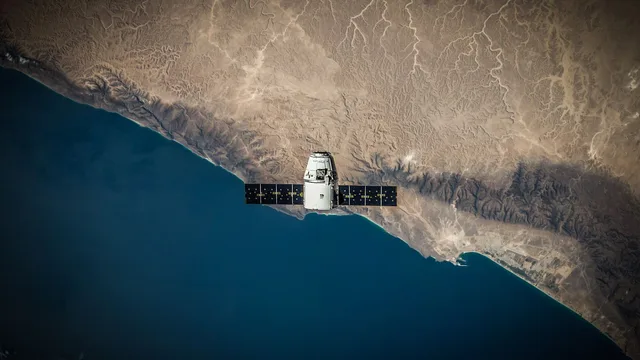
In recent years, India and the European Union have been strengthening their ties in the space sector, with both sides standing to gain from this burgeoning partnership. The launch of India's EOS-05 imaging satellite, designed to operate from a unique orbit synchronized with the Earth, has marked a significant milestone in this journey. This cutting-edge satellite, positioned at an altitude of nearly 36,000 kilometers, offers a game-changing capability to monitor a vast region, including cyclones, floods, fires, agriculture, and coastal areas, for extended periods.
For India, having its own satellites, domestic launch systems, and the ability to schedule its own observations is crucial for maintaining technological sovereignty. By relying less on foreign providers, India can gain a better understanding of its territory, borders, and the Indian Ocean, thereby enhancing its national security and development prospects. The EOS-05 satellite's unique orbit allows it to keep a larger region under observation and return to the same area more frequently, making it an invaluable asset for disaster management and environmental monitoring.
The EU, on the other hand, has a well-established space architecture that combines several Sentinel satellites to observe land, oceans, and the atmosphere. Europe's space ecosystem is diversified and capable of combining radar, optical imaging, meteorology, and atmospheric measurements. In contrast, India is moving towards a more concentrated model, aimed at ensuring that critical capabilities are available domestically. This complementary approach can be beneficial, as neither side needs to copy the other. India is focused on developing launchers, Earth observation, navigation, crewed missions, and a future space station, while Europe seeks to preserve its industrial autonomy and strategic assets.
Nanoweave Composites — Precision Engineered Carbon Fiber
Empowering aerospace, UAV defense & robotics with high-performance carbon fiber sheets, custom drone frames & precision CNC composite machining.
Explore Carbon Fiber →The EU and India have been actively exploring cooperation opportunities in the space sector. In December 2024, India successfully launched the European Proba-3 solar observation mission aboard a PSLV-XL rocket, marking a significant milestone in their bilateral space cooperation. The European Space Agency (ESA) and the Indian Space Research Organisation (ISRO) have also expanded their cooperation in human and robotic exploration, astronaut training, space operations, and interoperability. A recent exchange of letters signed in Paris has extended their cooperation framework until January 8, 2032, adding space weather and the sustainability of outer space activities to their joint agenda.
One of the most immediate areas for deepening the relationship is disaster management. The EOS-05 satellite can provide persistent observation over South Asia and the Indian Ocean, while the EU can complement these images with radar, emergency mapping, multispectral information, and processing capabilities. This collaborative approach can significantly shorten response times during rapidly developing events such as cyclones or floods. Moreover, modern economies depend on space for navigation, telecommunications, meteorology, logistics, and defence, making space surveillance, communications, and security a critical area for cooperation.
As the number of satellites increases, so does the need to monitor objects in orbit, avoid collisions, and protect critical infrastructure. The agenda between Brussels and New Delhi already includes cooperation on these critical issues. By working together, India and the EU can create a more robust and sustainable space ecosystem, one that benefits both sides and contributes to global peace and prosperity.
Key Takeaways
- India's launch of EOS-05 has marked a significant milestone in its space sector, offering a game-changing capability for disaster management and environmental monitoring.
- The EU and India are strengthening their ties in the space sector, with a focus on cooperation in areas such as disaster management, space surveillance, communications, and security.
- The complementary approach of India and the EU can be beneficial, as neither side needs to copy the other, and both can learn from each other's strengths and weaknesses.
- The agenda between Brussels and New Delhi includes cooperation on space weather, the sustainability of outer space activities, and the development of a future space station.
- By working together, India and the EU can create a more robust and sustainable space ecosystem, one that benefits both sides and contributes to global peace and prosperity.
Takshak CAM — Feature-Recognition CAM You Own Outright
Import STEP solids, automatically detect machinable features & post collision-checked 3-axis and 4-axis G-code. Perpetual license with zero recurring subscriptions.
Based on reporting from the original source. See our Copyright Policy for details.