India's Fighter Jet Engine Revolution: A Leap Towards Self-Reliance?
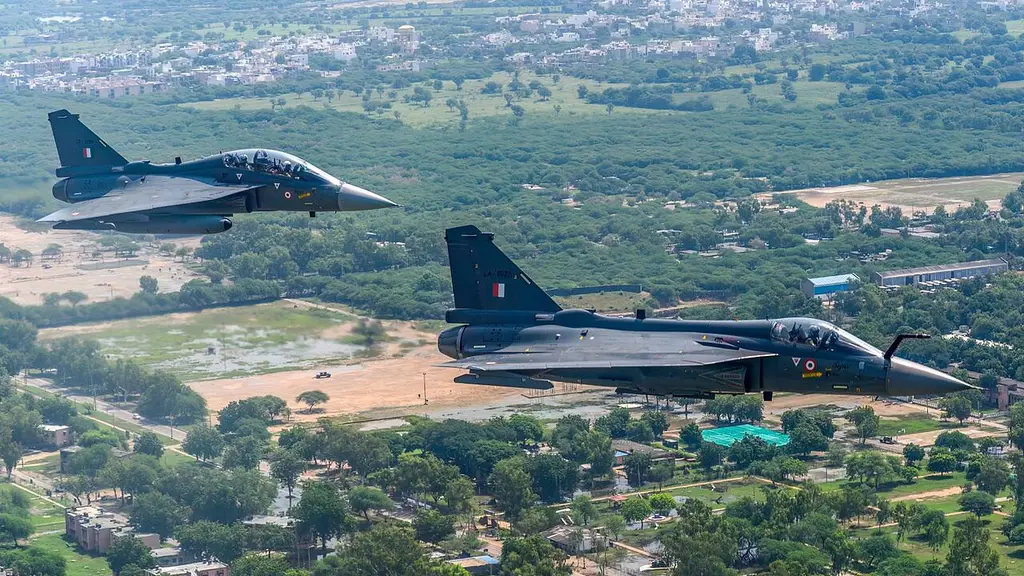
As India's Independence Day approaches, the nation's defence community is abuzz with excitement over a potential major announcement from Prime Minister Narendra Modi. At the heart of the speculation is the Kaveri 2.0 programme, a cutting-edge project aimed at developing a next-generation core engine that could revolutionize the country's aerospace capabilities.
The Kaveri 2.0 programme is a significant step towards India's long-held goal of self-reliance in fighter jet engines. The proposed engine, designed to match or exceed the performance of the General Electric F404-IN20 engines currently powering the Tejas Mk1A fleet, has the potential to make India a major player in the world of fighter jet engines.
The project's ambitious targets include a dry thrust of approximately 55-60 kN and wet thrust of 90-100 kN with afterburner, making it a significant improvement over the original Kaveri programme. The new engine will incorporate advanced technologies such as single-crystal turbine blades, titanium blisks, improved materials, and modern full-authority digital engine control systems.
While the Kaveri 2.0 programme has been gaining momentum in recent months, with visibility provided by Doordarshan and amplification by the official Bharatiya Janata Party (BJP) handle on X, formal programme sanction, funding, and detailed timelines have not yet been publicly confirmed. Defence analysts note that earlier Kaveri efforts faced technical hurdles in the hot section, weight control, and reliability, making success with Kaveri 2.0 a significant milestone.
The practical application of the Kaveri 2.0 engine is envisioned as re-engining Tejas Mk1A aircraft during their mid-life upgrade cycle in the 2030s. This would allow the Indian Air Force to gradually transition portions of the fleet to a domestic engine, improving long-term sustainment and insulating operations from external supply disruptions.
The announcement of the Kaveri 2.0 programme has also sparked interest in the broader context of India's defence ambitions. The country's determination to master critical aero-engine technologies has been sharpened by recent media coverage and social-media promotion. An official announcement would signal continued prioritisation of self-reliance in fighter propulsion and give fresh momentum to a programme long viewed as essential for the long-term health of the Tejas fleet and broader indigenous combat aircraft ambitions.
As the nation prepares to celebrate its Independence Day, the anticipation is palpable. Will Prime Minister Modi make the announcement on August 15? Only time will tell. But one thing is certain – the Kaveri 2.0 programme has the potential to make India a major player in the world of fighter jet engines, and its success would be a significant step towards self-reliance in defence manufacturing.
The Kaveri 2.0 Programme: A Leap Towards Self-Reliance
The Kaveri 2.0 programme is a significant step towards India's long-held goal of self-reliance in fighter jet engines. The proposed engine, designed to match or exceed the performance of the General Electric F404-IN20 engines currently powering the Tejas Mk1A fleet, has the potential to make India a major player in the world of fighter jet engines.
The Challenges Ahead
While the Kaveri 2.0 programme has been gaining momentum in recent months, formal programme sanction, funding, and detailed timelines have not yet been publicly confirmed. Defence analysts note that earlier Kaveri efforts faced technical hurdles in the hot section, weight control, and reliability, making success with Kaveri 2.0 a significant milestone.
The Practical Application
The practical application of the Kaveri 2.0 engine is envisioned as re-engining Tejas Mk1A aircraft during their mid-life upgrade cycle in the 2030s. This would allow the Indian Air Force to gradually transition portions of the fleet to a domestic engine, improving long-term sustainment and insulating operations from external supply disruptions.
The Broader Context
The announcement of the Kaveri 2.0 programme has also sparked interest in the broader context of India's defence ambitions. The country's determination to master critical aero-engine technologies has been sharpened by recent media coverage and social-media promotion. An official announcement would signal continued prioritisation of self-reliance in fighter propulsion and give fresh momentum to a programme long viewed as essential for the long-term health of the Tejas fleet and broader indigenous combat aircraft ambitions.
Key Takeaways
- The Kaveri 2.0 programme has the potential to make India a major player in the world of fighter jet engines.
- The programme's ambitious targets include a dry thrust of approximately 55-60 kN and wet thrust of 90-100 kN with afterburner.
- The new engine will incorporate advanced technologies such as single-crystal turbine blades, titanium blisks, improved materials, and modern full-authority digital engine control systems.
- Formal programme sanction, funding, and detailed timelines have not yet been publicly confirmed.
- Success with Kaveri 2.0 would be a significant step towards self-reliance in defence manufacturing and would give fresh momentum to a programme long viewed as essential for the long-term health of the Tejas fleet and broader indigenous combat aircraft ambitions.
Based on reporting from the original source. See our Copyright Policy for details.