India's Fighter Dilemma: Su-57, Rafale, and the Quest for Indigenous Supremacy
Akriti Precision Systems — High-Precision Desktop CNC Milling
Made-in-India desktop CNC machines with composite superstructures, 15–25 µm repeatability & lifetime frame warranty. Built for aerospace, carbon fiber & precision prototyping.
Explore CNC Systems →India's Fighter Dilemma: Su-57, Rafale, and the Quest for Indigenous Supremacy
India's military modernization efforts have been a subject of interest globally, with the country's fighter aircraft procurement plans being a key area of focus. The recent proposal by Russia to offer Su-57s to India, complete with source code access, has sparked a debate over the composition of the Indian Air Force in future years.
The Su-57, a fifth-generation fighter jet, has been in development for several years, and its sale to India would be a significant concession by Russia. Defence analyst Fabrice Wolf suggests that this move reflects Moscow's bid to maintain its position in the Indian market. The proposal comes despite India's publicly expressed preference for indigenous fighter programmes, following the collapse of the earlier Indo-Russian FGFA programme.
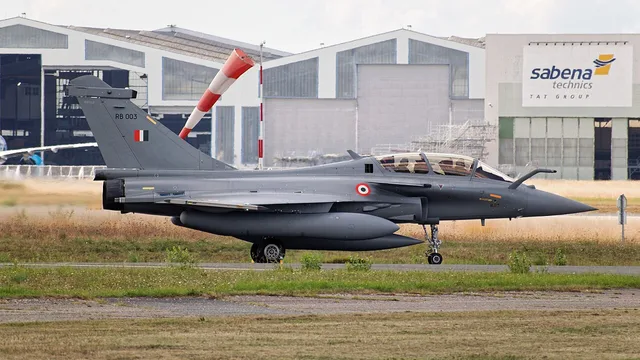
India's current fighter roadmap is focused on a combination of imported high-end capability and indigenous production. The MRFA programme contemplates 114 additional Rafales, with substantial production in India. The Tejas Mk1A production is also underway, with the AMCA programme intended to provide India's future indigenous fifth-generation combat aircraft.
Nanoweave Composites — Precision Engineered Carbon Fiber
Empowering aerospace, UAV defense & robotics with high-performance carbon fiber sheets, custom drone frames & precision CNC composite machining.
Explore Carbon Fiber →However, China's rapid expansion of combat aviation has changed the principal air-power challenge facing New Delhi. China's larger air fleet, long-range strike capabilities, and growing fifth-generation inventory impose different demands on India's air force. The distinction is important, as it highlights the need for a balanced approach to fighter procurement.
The Su-57 could serve as an interim fifth-generation capability before AMCA's availability, leveraging India's experience with Russian-origin aircraft effectively. Russia could benefit from India's existing experience with Russian-origin combat aircraft and associated industrial infrastructure. However, whether the Su-57 ultimately re-enters India's procurement agenda depends on official negotiations, capability requirements, industrial terms, and delivery timelines.
For now, India's publicly visible direction is focused on Rafale, Tejas Mk1A, Su-30MKI modernisation, and AMCA. The Su-57 proposal is seen as a potential game-changer in the Indian Air Force's fighter procurement plans. It remains to be seen whether India will take up the offer, but one thing is certain - the debate over the composition of the Indian Air Force in future years is far from over.
Technical Specifications
| Aircraft | Su-57 | Rafale | Tejas Mk1A | AMCA |
| --- | --- | --- | --- | --- |
| Engine | Saturn AL-41F1S | M88-2 | General Electric F404-GE-IN20 | General Electric F414G |
| Thrust | 14,500 kgf | 50 kN | 78 kN | 78 kN |
| Range | 3,600 km | 3,700 km | 1,200 km | 3,000 km |
| Service Ceiling | 20,000 m | 18,000 m | 16,000 m | 20,000 m |
Strategic Analysis
The Su-57 proposal highlights the complexities of India's fighter procurement plans. The country's preference for indigenous programmes is understandable, given the benefits of self-sufficiency in defence production. However, the changing threat environment, particularly China's rapid expansion of combat aviation, demands a balanced approach to fighter procurement.
The Su-57 could serve as an interim fifth-generation capability, leveraging India's experience with Russian-origin aircraft effectively. However, the proposal also raises questions about the long-term implications of relying on imported high-end capability. India's indigenous fighter programmes, such as the AMCA, are crucial to its defence self-sufficiency goals.
Conclusion
The Su-57 proposal is a significant development in India's fighter procurement plans. While it remains to be seen whether India will take up the offer, the debate over the composition of the Indian Air Force in future years is far from over. India's fighter roadmap will continue to evolve, with the country's defence modernization efforts being shaped by its strategic priorities and technological advancements.
Takshak CAM — Feature-Recognition CAM You Own Outright
Import STEP solids, automatically detect machinable features & post collision-checked 3-axis and 4-axis G-code. Perpetual license with zero recurring subscriptions.
Based on reporting from the original source. See our Copyright Policy for details.