India's Fighter Development Strategy: A Convergence of Experience and Innovation
A Convergence of Experience and Innovation
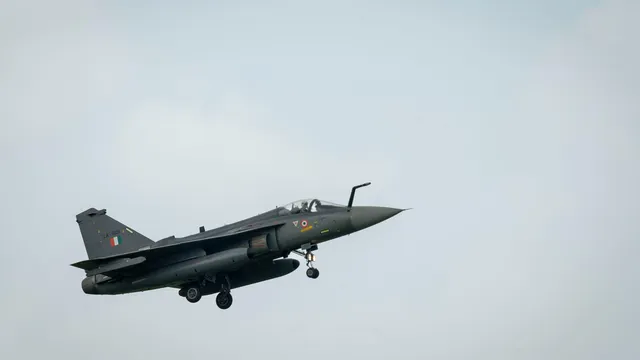
India's fighter development strategy is undergoing a significant shift, with the Aeronautical Development Agency (ADA) pushing the boundaries of fighter development by combining pilot inceptor hardware and flight simulation development units for the Tejas Mk1 with the Advanced Medium Combat Aircraft's (AMCA) weapon integration console framework. This strategic pairing leverages the accumulated operational experience of the Tejas Mk1 to inform the design of the AMCA's control architecture, driving design convergence across its fighter portfolio and reducing development time and cost.
The Value of Experience
The Tejas Mk1 programme brings a wealth of operational flight data to this tender, with over 10,000 incident-free sorties logged since entering service. This data is invaluable in refining control response curves and tactile feedback characteristics, which are critical in ensuring a seamless pilot transition between different aircraft generations. By leveraging this experience, ADA is able to drive design convergence across its fighter portfolio, reducing development time and cost while enhancing pilot transition.
Design Convergence
The tender fits into a broader pattern of design convergence that ADA has been pursuing across its current fighter portfolio. Recent reporting has confirmed that the Twin Engine Deck-Based Fighter, the LCA Mk2, and the AMCA are all being built around a shared cockpit philosophy, anchored by a large panoramic wide-area display and a Hands-On Throttle And Stick configuration with a side-stick controller. This commonality strategy reduces development time and cost, but its real value lies in pilot transition: an Indian Air Force pilot moving from a 4.5-generation Tejas cockpit into a fifth-generation stealth environment encounters control logic and interface conventions that are already familiar, cutting down the retraining burden that has historically slowed conversion onto new fighter types.
Integrated Systems Capability
Bundling LCA Mk1 simulation hardware with AMCA console framework development under one tender is a practical extension of that same logic, ensuring the two workstreams are engineered in parallel by teams working from a shared design philosophy rather than in isolated silos that might otherwise produce subtly incompatible control conventions. This approach also signals a shift towards integrated systems capability, rewarding vendors with the capacity to support cockpit and mission-systems work for India's next-gen fighters, including the LCA Mk2 and the TEDBF.
Project-Management Logic
There is also a project-management logic at work. Historically, simulation software, control hardware and console integration for India's fighter programmes have often been contracted out separately, each to different specialised vendors with limited visibility into how their individual work packages needed to interoperate downstream. Bundling pilot inceptor, simulation and weapon console work into a single coordinated tender pushes ADA's private-sector and MSME partners toward more integrated collaborative development pipelines, where a vendor or consortium bidding on this package has to demonstrate competence across the full human-machine interface chain rather than a single narrow slice of it.
A Shift Towards Integrated Systems Capability
For India's broader defence technology ecosystem, that consolidation matters beyond this one tender. It signals to domestic simulation and avionics companies that ADA is increasingly structuring procurements to reward integrated systems capability, a shift that, if sustained, could meaningfully deepen the pool of Indian vendors capable of supporting cockpit and mission-systems work not just for the AMCA but for the wider generation of indigenous fighters, including the LCA Mk2 and TEDBF, that will follow it into development over the coming decade.
Key Takeaways
- The ADA's fighter development strategy is undergoing a significant shift, with a focus on design convergence and integrated systems capability.
- The Tejas Mk1 programme brings a wealth of operational flight data to this tender, with over 10,000 incident-free sorties logged since entering service.
- The tender fits into a broader pattern of design convergence that ADA has been pursuing across its current fighter portfolio, with a shared cockpit philosophy and commonality strategy.
- Bundling LCA Mk1 simulation hardware with AMCA console framework development under one tender is a practical extension of that same logic, ensuring the two workstreams are engineered in parallel by teams working from a shared design philosophy.
- The approach signals a shift towards integrated systems capability, rewarding vendors with the capacity to support cockpit and mission-systems work for India's next-gen fighters, including the LCA Mk2 and the TEDBF.
Based on reporting from the original source. See our Copyright Policy for details.