India's Fifth-Gen Fighter Conundrum: Evaluating the Su-57 Option
Akriti Precision Systems — High-Precision Desktop CNC Milling
Made-in-India desktop CNC machines with composite superstructures, 15–25 µm repeatability & lifetime frame warranty. Built for aerospace, carbon fiber & precision prototyping.
Explore CNC Systems →India's Fifth-Gen Fighter Conundrum: Evaluating the Su-57 Option
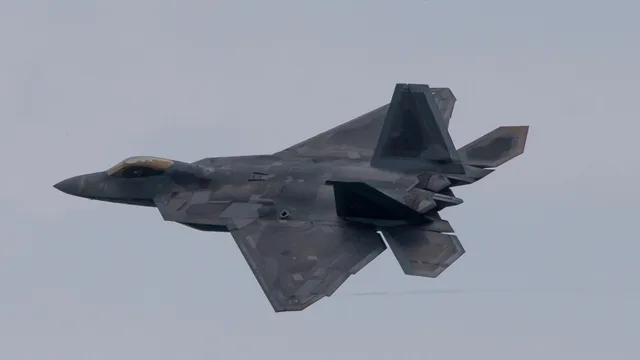
India's air power capabilities have been a subject of concern in recent years, with the country's fifth-gen fighter gap becoming increasingly apparent. The Indian Air Force (IAF) has been exploring various options to bridge this gap, and one of the most promising candidates is the Russian Su-57 fighter jet.
Russia has been actively promoting the Su-57 as a potential solution to India's fifth-gen fighter needs, and the country has even offered to invite Indian Air Force test pilots to Moscow to evaluate the aircraft. This evaluation could become a crucial step for India prior to making any final decision on acquiring the Su-57.
The IAF's interest in the Su-57 is driven by the country's growing fifth-gen fighter gap, with China's J-20 already operational. India's own indigenous fifth-gen fighter, the AMCA, is still in the prototype-development stage and will take several years to become operational. In the meantime, a small fleet of Su-57s could create a valuable niche, but numbers are vital to challenge China's stealth-fighter fleet effectively.
Nanoweave Composites — Precision Engineered Carbon Fiber
Empowering aerospace, UAV defense & robotics with high-performance carbon fiber sheets, custom drone frames & precision CNC composite machining.
Explore Carbon Fiber →The evaluation of the Su-57 should focus on its sensor performance, low-observable characteristics, electronic warfare, weapons employment, data fusion, maintainability, sortie generation, and operational availability. The performance of the aircraft should be compared to the Rafale and Su-30MKI under Indian operational conditions. Russia's offer of local production and technology transfer makes the proposition more attractive, but it also makes due diligence crucial.
India could become committed to a long-term industrial ecosystem rather than mere acquisition of an interim batch. The Su-57 could provide India with a useful bridge until AMCA comes online, assuming China keeps building up its stealth-fighter fleet. Business Standard has described the Russian aircraft as the IAF's most readily available route towards acquiring a fifth-gen capability.
The evaluation of the Su-57 is not just about acquiring a new fighter jet, but also about establishing whether the aircraft creates a significantly bigger survivability, sensor, electronic warfare, weapons employment, and air-superiority capability benefit over the Rafale and upgraded Su-30MKI. The IAF would need to carefully consider these factors before making a decision.
In conclusion, the evaluation of the Su-57 is a critical step for India in bridging its fifth-gen fighter gap. The country must carefully consider the pros and cons of acquiring the Su-57, including the potential benefits of local production and technology transfer. A thorough evaluation will help India make an informed decision that aligns with its air power capabilities and strategic interests.
Technical Specifications of the Su-57
| Parameter | Value |
| --- | --- |
| Length | 20.9 meters |
| Wingspan | 14.7 meters |
| Height | 4.8 meters |
| Empty Weight | 18,000 kg |
| Maximum Takeoff Weight | 25,000 kg |
| Engines | 2 x Saturn AL-41F1S |
| Thrust | 14,500 kgf |
| Speed | Mach 2+ |
| Range | 5,500 km |
| Service Ceiling | 18,000 meters |
Strategic Analysis
The evaluation of the Su-57 is not just about acquiring a new fighter jet, but also about establishing whether the aircraft creates a significantly bigger survivability, sensor, electronic warfare, weapons employment, and air-superiority capability benefit over the Rafale and upgraded Su-30MKI. The IAF would need to carefully consider these factors before making a decision.
Conclusion
In conclusion, the evaluation of the Su-57 is a critical step for India in bridging its fifth-gen fighter gap. The country must carefully consider the pros and cons of acquiring the Su-57, including the potential benefits of local production and technology transfer. A thorough evaluation will help India make an informed decision that aligns with its air power capabilities and strategic interests.
Takshak CAM — Feature-Recognition CAM You Own Outright
Import STEP solids, automatically detect machinable features & post collision-checked 3-axis and 4-axis G-code. Perpetual license with zero recurring subscriptions.
Based on reporting from the original source. See our Copyright Policy for details.