India's Energy Diplomacy Proves Resilient Amid Geopolitical Crises and Supply Chain Disruptions
Akriti Precision Systems — High-Precision Desktop CNC Milling
Made-in-India desktop CNC machines with composite superstructures, 15–25 µm repeatability & lifetime frame warranty. Built for aerospace, carbon fiber & precision prototyping.
Explore CNC Systems →India's Energy Diplomacy Proves Resilient Amid Global Crises
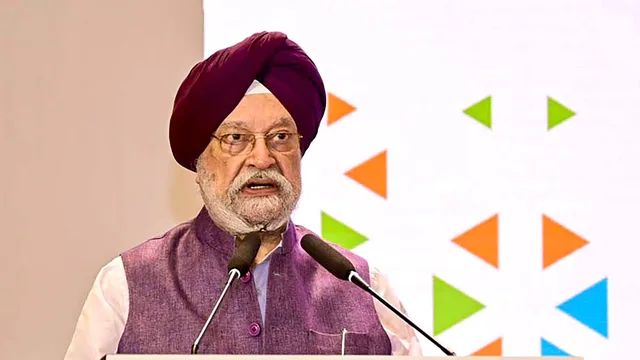
In a remarkable display of energy diplomacy, India has successfully navigated the recent supply-chain disruptions and maintained steady energy imports despite the ongoing geopolitical crises, according to Petroleum and Natural Gas Minister Hardeep Singh Puri. The minister made this assertion while addressing members of the Merchants’ Chamber of Commerce and Industry, highlighting the country's ability to adapt and thrive in the face of global uncertainties.
The minister emphasized that energy security is no longer just about securing supplies; it also involves navigating conflicts, chokepoints, volatile prices, and sudden disruptions while keeping the country and its economy on the move. He attributed India's success to the energy sector's preparedness, which had diversified crude sourcing from 27 to 41 countries over the past decade. This strategic move has enabled the country to reduce its dependence on a few major suppliers, making it more resilient to global disruptions.
India's energy sector has also made significant investments in building strategic reserves, with a total capacity of 5.33 million metric tons. The country's refining capacity has increased from 215 million metric tons per annum (MMTPA) to 267 MMTPA, while the number of fuel outlets has expanded from about 52,000 to over 100,000. Additionally, the number of LPG import terminals has risen from 11 to 22, further enhancing the country's energy infrastructure.
Nanoweave Composites — Precision Engineered Carbon Fiber
Empowering aerospace, UAV defense & robotics with high-performance carbon fiber sheets, custom drone frames & precision CNC composite machining.
Explore Carbon Fiber →As a result of these efforts, India has been able to maintain a stable supply of energy, even as many parts of the world faced energy emergencies and price shocks. The country's petrol pumps have remained supplied, cylinders have continued to reach households, and retail fuel prices have remained contained. This achievement is a testament to the success of India's energy diplomacy under the leadership of Prime Minister Narendra Modi.
The minister also highlighted the potential of West Bengal's energy sector, which is rapidly expanding its infrastructure with a slew of projects worth Rs 17,600 crore. The state's Haldia refinery has grown from 2.5 MMTPA in 1975 to 8 MMTPA, processing 8.5 million metric tons in FY 2025-26. The 2018 oil discovery in Ashoknagar has now entered commercial production, with ONGC's first crude consignment reaching Haldia in August 2026, following nearly Rs 1,000 crore of investment. These developments are strengthening West Bengal's role in India's energy map and driving industry, investment, jobs, and regional connectivity.
The minister's remarks come at a time when the world is grappling with the challenges of geopolitical uncertainty. The theme of the event, "India's Energy Security: Navigating Geopolitical Uncertainty," is particularly apt for a discussion with stakeholders, given the ongoing crises the world is facing. India's success in maintaining energy security despite these challenges serves as a model for other countries to follow, and its energy diplomacy is likely to play a key role in shaping the global energy landscape in the years to come.
Key Takeaways
- India has successfully navigated the recent supply-chain disruptions and maintained steady energy imports despite the ongoing geopolitical crises.
- The country's energy sector has diversified crude sourcing from 27 to 41 countries, built 5.33 million metric tons of strategic reserves, and increased refining capacity from 215 MMTPA to 267 MMTPA.
- West Bengal's energy sector is rapidly expanding its infrastructure with projects worth Rs 17,600 crore, driving industry, investment, jobs, and regional connectivity.
Takshak CAM — Feature-Recognition CAM You Own Outright
Import STEP solids, automatically detect machinable features & post collision-checked 3-axis and 4-axis G-code. Perpetual license with zero recurring subscriptions.
Based on reporting from the original source. See our Copyright Policy for details.