India's Defence Industrial Ecosystem Takes Flight: The IAF's Groundbreaking Indigenisation Initiative
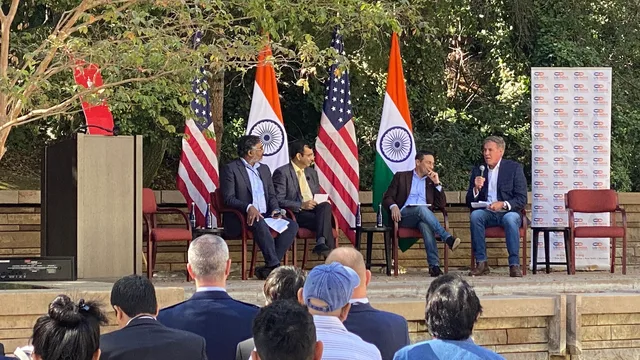
India Defence & Aerospace Indigenisation Summit 2026
Accelerating private defense manufacturing, UAV innovation, and strategic aerospace corridors.
Explore Strategic Intel →The Indian Air Force (IAF) has embarked on a groundbreaking initiative to indigenise 97% of its frequently required fighter spares, marking a significant shift in how the force sustains its combat fleet. This move not only saves the IAF approximately ₹582 crore in foreign exchange over the past five years but also strengthens its ability to maintain aircraft during periods of supply-chain disruption.
The IAF's Maintenance Command has taken the lead in this effort, indigenising around 62,300 different spares, including batteries, escape-system explosives, pilot parachutes, fighter tyres, power carts, and other essential components required for fighter aircraft and other operational platforms. These components are critical to ensuring aircraft serviceability and speed of return to operational duty.
Among the components successfully localised are 76 types of escape-air explosives used in fighter ejection seats, 207 power carts, eight types of pilot parachutes, and a hydraulic booster pump for the Su-30MKI fleet. These components may appear relatively small compared to engines, radars, or missiles, but their availability can directly influence aircraft serviceability and the speed at which a fighter can return to operational duty.
India Defence & Aerospace Indigenisation Summit 2026
Accelerating private defense manufacturing, UAV innovation, and strategic aerospace corridors.
Explore Strategic Intel →The IAF has also established a 3D-printing facility that has been operational since 2022, providing an additional method of addressing urgent and on-demand requirements. Additive manufacturing can be particularly valuable for components that are difficult to procure in small quantities or have long lead times from overseas manufacturers.
The initiative has become increasingly important due to the IAF's mixed fleet, which includes Russian-origin Su-30MKIs and MiG-29s, French Mirage-2000s and Rafales, and transport aircraft and helicopters sourced from multiple foreign suppliers. Maintaining such a diverse fleet traditionally creates a complicated logistics chain involving different manufacturers, countries, and supply networks.
The Russia-Ukraine conflict exposed the vulnerability of dependence on overseas defence supply chains, particularly for Russian-origin platforms. Disruptions affecting aero-engines, avionics, specialist weapons, and overhaul components demonstrated that even when an aircraft is operationally available, its readiness can eventually be constrained by the availability of relatively small components.
India's push towards spare-parts indigenisation has significance beyond saving foreign exchange. It is increasingly becoming an operational readiness and wartime sustainability measure. In a prolonged conflict, the ability to manufacture replacement components domestically could determine how long aircraft can maintain high sortie rates after stocks of imported spares begin to run down.
The IAF's efforts are part of a broader trend in Indian military modernisation, which is focusing not only on acquiring new platforms but also on building the domestic industrial ecosystem required to sustain them. The ultimate objective is clear: foreign-origin fighters may continue flying for decades, but their ability to remain combat-ready should increasingly depend on India's own industrial capacity rather than the availability of overseas supply chains.
As the IAF continues to push the boundaries of indigenisation, it is clear that India's defence industrial ecosystem is taking flight. The country's ability to manufacture replacement components domestically will be crucial in determining the long-term sustainability of its combat fleet. With the IAF at the forefront of this initiative, India is poised to take a significant leap forward in its quest for self-sufficiency in defence production.
A New Era of Self-Sufficiency
The IAF's indigenisation initiative marks a significant shift in the country's approach to defence production. By localising critical components, the IAF is not only saving foreign exchange but also ensuring operational readiness and wartime sustainability.
The Road to Self-Sufficiency
The IAF's efforts are part of a broader trend in Indian military modernisation, which is focusing on building the domestic industrial ecosystem required to sustain its combat fleet. The ultimate objective is clear: foreign-origin fighters should increasingly depend on India's own industrial capacity rather than overseas supply chains.
The Russia-Ukraine Conflict: A Wake-Up Call
The Russia-Ukraine conflict exposed the vulnerability of dependence on overseas defence supply chains, particularly for Russian-origin platforms. Disruptions affecting aero-engines, avionics, specialist weapons, and overhaul components demonstrated the importance of indigenisation.
The Future of Defence Production in India
As the IAF continues to push the boundaries of indigenisation, it is clear that India's defence industrial ecosystem is taking flight. The country's ability to manufacture replacement components domestically will be crucial in determining the long-term sustainability of its combat fleet.
Key Takeaways
- The IAF has indigenised 97% of its frequently required fighter spares, saving approximately ₹582 crore in foreign exchange over the past five years.
- The IAF's Maintenance Command has indigenised around 62,300 different spares, including batteries, escape-system explosives, pilot parachutes, fighter tyres, power carts, and other essential components required for fighter aircraft and other operational platforms.
- The IAF has established a 3D-printing facility that has been operational since 2022, providing an additional method of addressing urgent and on-demand requirements.
- India's push towards spare-parts indigenisation has significance beyond saving foreign exchange; it is increasingly becoming an operational readiness and wartime sustainability measure.
- The IAF's efforts are part of a broader trend in Indian military modernisation, which is focusing on building the domestic industrial ecosystem required to sustain its combat fleet.
India Defence & Aerospace Indigenisation Summit 2026
Accelerating private defense manufacturing, UAV innovation, and strategic aerospace corridors.
Based on reporting from the original source. See our Copyright Policy for details.