India's Defence Establishment Faces Criticism as KAAN Fighter's Reliability Raises Concerns Abroad
Akriti Precision Systems — High-Precision Desktop CNC Milling
Made-in-India desktop CNC machines with composite superstructures, 15–25 µm repeatability & lifetime frame warranty. Built for aerospace, carbon fiber & precision prototyping.
Explore CNC Systems →Turkey's Fighter Programme: A Reflection of India's Own Defence Progress
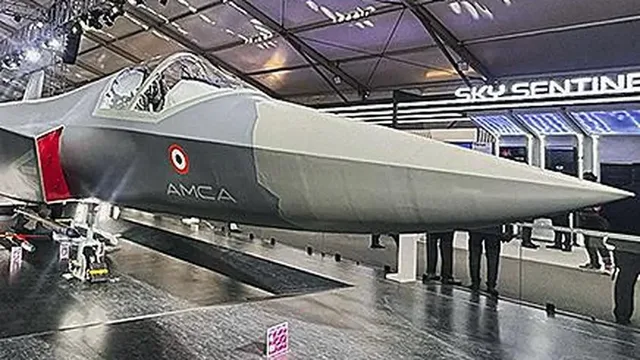
The recent developments in Turkey's KAAN fifth-generation fighter programme have sparked a flurry of interest in the defence circles, with many drawing comparisons to India's own indigenous stealth aircraft, the Advanced Medium Combat Aircraft (AMCA). While Turkey's programme has made significant strides, with prototype flight-testing underway, India's defence establishment remains cautious about the prospects of KAAN.
One of the primary concerns is the reliance on US-made engines, specifically the General Electric F110, which raises questions about the aircraft's operational maturity and reliability. India's own AMCA programme, which has been on paper since 2010, has faced similar criticism, but the reality is that both programmes have progressed in parallel, with AMCA now entering the prototype flight-testing phase.
The comparison between Turkey's HÜRJET advanced jet trainer and India's Tejas Mk2 programme is another area of contention. While HÜRJET has made impressive strides in flight-testing, it is essential to note that it is an advanced jet trainer with a light-attack role, whereas Tejas Mk2 is a multirole combat aircraft with different mission systems and flight-test requirements. Similarly, the ranking of Turkey's domestically-developed ATMACA missile as superior to India's BrahMos anti-ship cruise missile is an editorial opinion, not an objective assessment of either missile's strengths and weaknesses.
Nanoweave Composites — Precision Engineered Carbon Fiber
Empowering aerospace, UAV defense & robotics with high-performance carbon fiber sheets, custom drone frames & precision CNC composite machining.
Explore Carbon Fiber →The fact remains that both KAAN and AMCA are still in the development phase, with significant testing, systems integration, and production hurdles to overcome before they can be considered viable fifth-generation fighter aircraft. Turkey's defence media outlets have been quick to highlight the progress of KAAN, but it is essential to maintain a nuanced perspective and not get carried away by the hype.
The development of a fifth-generation fighter aircraft is a complex and challenging task, requiring significant investment, expertise, and resources. India's defence establishment is well aware of the challenges involved in developing a stealth aircraft, and the AMCA programme is no exception. While Turkey's KAAN programme may be progressing rapidly, it is essential to remember that the eventual success of any aircraft programme will be determined by its ability to transform its design into a viable aircraft and build an industrial ecosystem around it.
In conclusion, while Turkey's KAAN programme is an impressive achievement, it is essential to maintain a balanced perspective and not get carried away by the hype. India's defence establishment remains cautious about the prospects of KAAN, and the focus should be on the development of its own indigenous stealth aircraft, the AMCA.
Key Takeaways
- The development of a fifth-generation fighter aircraft is a complex and challenging task, requiring significant investment, expertise, and resources.
- India's AMCA programme has progressed in parallel with Turkey's KAAN programme, with both now entering the prototype flight-testing phase.
- The comparison between Turkey's HÜRJET and India's Tejas Mk2 programme is not entirely fair, as HÜRJET is an advanced jet trainer with a light-attack role, whereas Tejas Mk2 is a multirole combat aircraft.
- The ranking of Turkey's ATMACA missile as superior to India's BrahMos anti-ship cruise missile is an editorial opinion, not an objective assessment of either missile's strengths and weaknesses.
Takshak CAM — Feature-Recognition CAM You Own Outright
Import STEP solids, automatically detect machinable features & post collision-checked 3-axis and 4-axis G-code. Perpetual license with zero recurring subscriptions.
Based on reporting from the original source. See our Copyright Policy for details.