India's Astra Mk1 Upgrade: A Leap Forward in Beyond-Visual-Range Capabilities
India's Astra Mk1 Upgrade: A Leap Forward in Beyond-Visual-Range Capabilities
In a significant development, India's indigenous Astra Mk1 beyond-visual-range air-to-air missile is undergoing a major optimization program, aimed at substantially expanding its engagement envelope. Industry sources indicate that the ultimate target may be closer to 170 kilometers rather than the previously discussed 160-kilometer mark. This ambitious goal reflects the Defence Research and Development Laboratory's (DRDL) strategy of incrementally improving existing missile systems while simultaneously developing next-generation variants.
The Astra Mk1 upgrade is a testament to India's commitment to indigenous defense capabilities. By maximizing the performance potential of a missile that has already entered operational service with the Indian Air Force, the country is poised to significantly enhance its air-to-air combat capabilities. The upgrade is being pursued without fundamentally altering the missile's existing propulsion architecture, which is a significant advantage.
Astra Mk1 utilizes a single-pulse solid rocket motor, unlike the Astra Mk2, which is being designed around a more advanced dual-pulse propulsion system. Instead of relying on a new motor configuration, engineers are focusing on extracting additional performance through aerodynamic refinements, flight profile optimization, and advances in propellant chemistry. Modern missile design increasingly relies not only on propulsion but also on sophisticated trajectory management to maximize energy efficiency throughout the engagement.
By optimizing flight paths to exploit higher-altitude portions of the atmosphere where air density is significantly lower, the missile can conserve energy and maintain greater speed over longer distances. This approach offers significant advantages, including minimized integration risks, shorter development timelines, and the ability to leverage existing production infrastructure. For the Indian Air Force, this means enhanced capability can potentially be fielded more rapidly and cost-effectively than developing an entirely new missile variant.
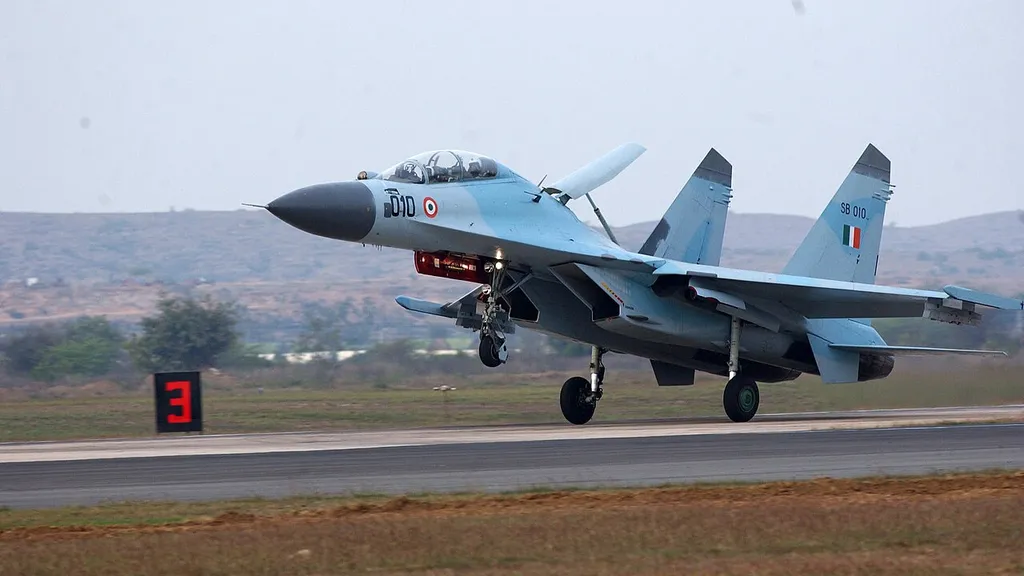
The upgrade also comes at a time when beyond-visual-range air combat is increasingly defined by missile range, seeker performance, electronic counter-countermeasures, and network-centric targeting. Extending Astra Mk1's engagement envelope would provide Indian fighter aircraft with greater tactical flexibility while complementing the capabilities of future Astra variants.
The Astra missile family is emerging as a cornerstone of India's indigenous air-to-air weapons ecosystem. While Astra Mk1 forms the current operational backbone, Astra Mk2 is expected to introduce dual-pulse propulsion and engagement ranges around 200 kilometers, while the SFDR-powered Astra Mk3 aims to push beyond 300 kilometers. An Astra Mk1 capable of approaching 170 kilometers would therefore narrow the capability gap between the current missile and its future successors.
The Astra Mk1 upgrade is a significant step forward in India's indigenous air-to-air capabilities. With the country's commitment to indigenous defense capabilities, the Astra missile family is poised to play a major role in shaping the future of beyond-visual-range air combat. As the Indian Air Force continues to modernize its fighter fleet, the Astra Mk1 upgrade will provide a critical capability boost, enabling pilots to engage targets at longer ranges and with greater precision.
A Leap Forward in Aerodynamics
The Astra Mk1 upgrade is a testament to India's commitment to indigenous defense capabilities. By maximizing the performance potential of a missile that has already entered operational service with the Indian Air Force, the country is poised to significantly enhance its air-to-air combat capabilities.
Optimizing Flight Profiles
By optimizing flight paths to exploit higher-altitude portions of the atmosphere where air density is significantly lower, the missile can conserve energy and maintain greater speed over longer distances.
A New Era in Beyond-Visual-Range Combat
The Astra Mk1 upgrade is a significant step forward in India's indigenous air-to-air capabilities. With the country's commitment to indigenous defense capabilities, the Astra missile family is poised to play a major role in shaping the future of beyond-visual-range air combat.
Key Takeaways
- The Astra Mk1 upgrade aims to expand the missile's engagement envelope to a staggering 170 kilometers.
- The upgrade is being pursued without fundamentally altering the missile's existing propulsion architecture.
- The Astra missile family is emerging as a cornerstone of India's indigenous air-to-air weapons ecosystem.
- The upgrade will provide Indian fighter aircraft with greater tactical flexibility and complement the capabilities of future Astra variants.
- The Astra Mk1 upgrade is a significant step forward in India's indigenous air-to-air capabilities, enabling pilots to engage targets at longer ranges and with greater precision.
Based on reporting from the original source. See our Copyright Policy for details.