India's Aerospace Revolution: Can the AMCA Programme Redefine Pakistan's Air Power Strategy?
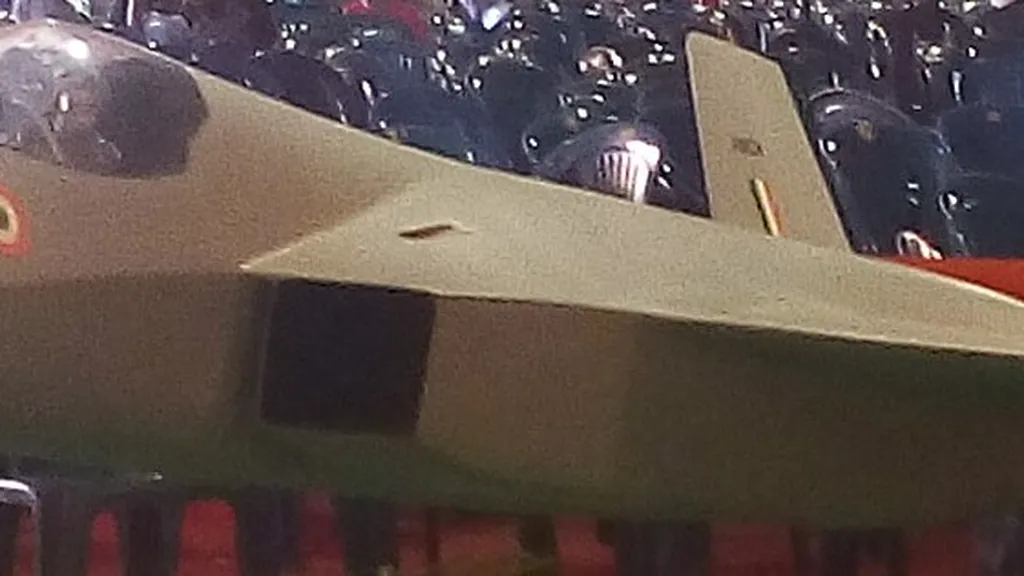
India's Aerospace Revolution: Can the AMCA Programme Redefine Pakistan's Air Power Strategy?
India's decision to adopt an industry partnership model for the Advanced Medium Combat Aircraft (AMCA) programme marks a significant turning point in the country's defence manufacturing strategy. By opening the programme to private-sector participation, India aims to distribute manufacturing responsibilities across a broader industrial base, leveraging the capabilities of companies such as Tata Advanced Systems, Larsen & Toubro, and Bharat Forge.
For years, Pakistan's defence analysts have argued that India's indigenous fighter programmes were hindered by bureaucratic procedures, production bottlenecks, and limited manufacturing capacity. However, the evolving AMCA production strategy has altered this assessment. By partnering with private industry, India is poised to create a robust aerospace industrial ecosystem capable of supporting future generations of military aircraft.
The AMCA programme's strategic shift has significant implications for Pakistan's air power strategy. A larger network of aerospace manufacturers has the potential to accelerate production, diversify supply chains, and reduce dependence on a single manufacturing organisation. This, in turn, could strengthen India's ability to sustain long-term military production during periods of heightened operational demand.
Pakistan's own long-term planning has been influenced by India's aerospace revolution. As India advances the AMCA programme, Islamabad has continued exploring options for acquiring fifth-generation aircraft to maintain technological parity. Chinese fifth-generation fighters, including the export-oriented J-35, have attracted sustained interest within Pakistan's strategic community, although official details regarding procurement timelines remain limited.
Pakistan has also expressed interest in Turkey's KAAN fifth-generation fighter programme, reflecting Islamabad's broader effort to diversify defence partnerships while developing access to next-generation combat aviation technologies. However, maintaining parallel interest in both programmes presents significant financial challenges, including procurement costs, infrastructure, maintenance, and long-term lifecycle support.
Despite acknowledging India's industrial ambitions, Pakistani commentators continue to identify potential challenges facing the AMCA programme. One frequently cited issue is engine dependence, with the initial AMCA Mk1 expected to use the American GE F414 engine. Delays affecting previous GE engine deliveries for the Tejas Mk1A programme have reinforced concerns among regional observers regarding supply-chain reliability and dependence on foreign propulsion technology.
Another area of discussion concerns the practical challenges of expanding private aerospace manufacturing. While companies such as Tata Advanced Systems and Larsen & Toubro possess substantial engineering capabilities, establishing complete fifth-generation fighter production infrastructure requires years of investment in specialised tooling, quality assurance systems, advanced composites manufacturing, stealth material processing, precision machining, and highly skilled human resources.
Building such capabilities cannot be accomplished overnight. Even with strong government support, aerospace manufacturing demands rigorous certification standards and long development cycles. Pakistani commentators therefore argue that although private participation may accelerate progress, it is unlikely to eliminate every technical or industrial challenge associated with a programme as complex as the AMCA.
India's broader trajectory, however, appears increasingly clear. Over the past decade, New Delhi has systematically expanded private-sector participation across defence manufacturing through initiatives linked to the Atmanirbhar Bharat programme. Private companies are now involved in missile production, radar manufacturing, electronic warfare systems, aerospace structures, drones, artillery systems, naval platforms, and space technologies. The AMCA represents a logical extension of this policy into one of the most technologically demanding segments of military aviation.
If India succeeds in establishing a competitive aerospace manufacturing ecosystem capable of designing, producing, and sustaining advanced combat aircraft domestically, it would strengthen the country's long-term strategic autonomy while reducing vulnerability to external supply disruptions. This, in turn, could redefine Pakistan's air power strategy, forcing Islamabad to reassess its own defence manufacturing priorities and partnerships in the face of a rapidly evolving regional security landscape.
India's Aerospace Industrial Ecosystem: A Game-Changer for Defence Manufacturing
The AMCA Programme: A Turning Point in India's Defence Strategy
Pakistan's Air Power Strategy: A Response to India's Aerospace Revolution
The Future of Defence Manufacturing: Private Sector Participation and Indigenous Technology Development
Key Takeaways
- India's adoption of an industry partnership model for the AMCA programme marks a significant turning point in the country's defence manufacturing strategy.
- The AMCA programme's strategic shift has significant implications for Pakistan's air power strategy, potentially accelerating production, diversifying supply chains, and reducing dependence on a single manufacturing organisation.
- Pakistan's own long-term planning has been influenced by India's aerospace revolution, with Islamabad continuing to explore options for acquiring fifth-generation aircraft to maintain technological parity.
Based on reporting from the original source. See our Copyright Policy for details.