India's Aerospace Ambitions Get a Boost: Rolls-Royce Partnership Sparks Hope for Indigenous Engine Development
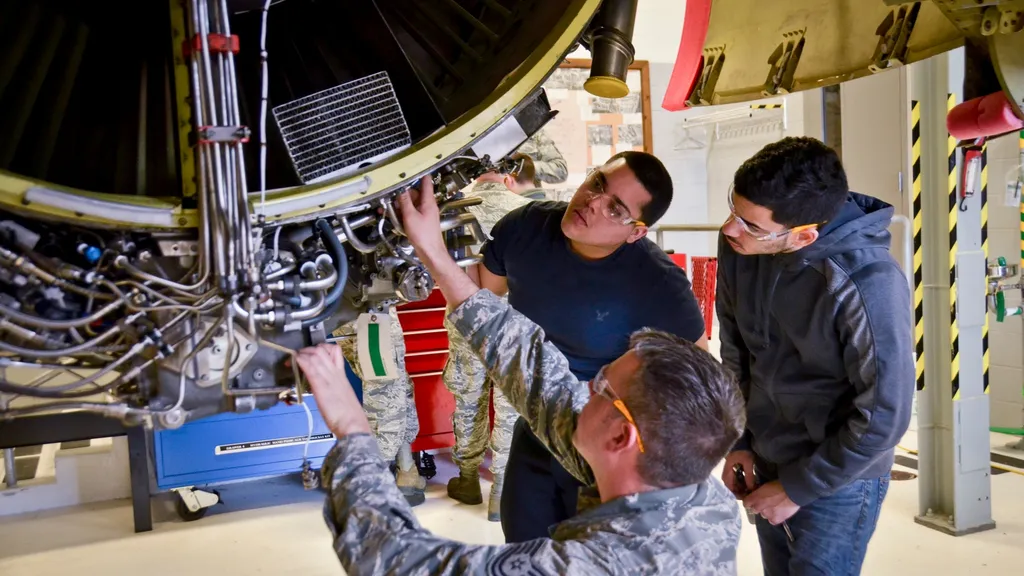
India's Aerospace Ambitions Get a Boost: Rolls-Royce Partnership Sparks Hope for Indigenous Engine Development
The announcement of a strategic partnership between Reliance Infrastructure and Rolls-Royce to develop an advanced fighter aircraft engine for India's next-generation Advanced Medium Combat Aircraft programme has sent shockwaves through the defence community. For years, India has struggled to develop a high-performance engine capable of powering its indigenous combat aircraft. The proposed partnership brings together the expertise of one of the world's leading aero-engine manufacturers with India's growing private sector capabilities, sparking hope that the country may finally be able to achieve genuine engine sovereignty.
The partnership is a significant development for India's aerospace ambitions, particularly in light of the country's long-standing efforts to build an indigenous combat aircraft engine capability. Defence analysts have welcomed the announcement, with some expressing an unusually high level of optimism about India's prospects of eventually developing and producing a domestically controlled fighter engine. One reaction summed up the sentiment: "This partnership has the potential to be a game-changer for India's aerospace industry. By combining the expertise of Rolls-Royce with the capabilities of Reliance Infrastructure, we may finally be able to overcome the technical and funding hurdles that have held us back for so long."
The proposed partnership brings together decades of Rolls-Royce expertise in designing, developing, testing, and manufacturing high-performance military aero-engines with India's growing private sector capabilities. Rolls-Royce has a reputation for delivering high-performance engines that meet the most stringent military requirements. The company's experience in developing and manufacturing engines for some of the world's most advanced military aircraft is unparalleled. In contrast, India's indigenous aerospace industry has struggled to develop a high-performance engine capable of powering its combat aircraft.
The proposed partnership is not without its challenges, however. Developing a new fighter engine is a multi-year effort requiring sustained funding, rigorous testing infrastructure, specialised materials, and extensive flight qualification. The real measure of the partnership will be whether it progresses from an announced intent to a funded development programme and eventually a production-ready engine. If successfully executed, the programme could have implications extending well beyond the AMCA itself. A domestically produced high-thrust engine could support future Indian combat aircraft programmes and reduce dependence on foreign propulsion suppliers.
The partnership also comes at a time when India is increasingly seeking greater private-sector participation in strategic defence technologies. A domestic industrial partner working alongside a major global engine manufacturer could potentially create a wider ecosystem involving Indian suppliers, precision manufacturing companies, materials specialists, and research institutions. This would not only provide a boost to India's indigenous aerospace industry but also create new opportunities for private sector growth and development.
In conclusion, the proposed partnership between Reliance Infrastructure and Rolls-Royce to develop an advanced fighter aircraft engine for India's next-generation Advanced Medium Combat Aircraft programme has the potential to be a game-changer for India's aerospace ambitions. While the challenges ahead are significant, the partnership brings together the expertise of one of the world's leading aero-engine manufacturers with India's growing private sector capabilities, sparking hope that the country may finally be able to achieve genuine engine sovereignty. The real test begins now, as the partnership must overcome significant technical and funding hurdles to succeed. If successfully executed, the programme could have far-reaching implications for India's combat aircraft programmes and reduce dependence on foreign propulsion suppliers. With this partnership, India may finally be able to break free from its reliance on foreign engines and develop its own high-performance fighter aircraft engine.
Based on reporting from the original source. See our Copyright Policy for details.