India's Aerospace Ambitions: A Tale of Two Engine Proposals
India Defence & Aerospace Indigenisation Summit 2026
Accelerating private defense manufacturing, UAV innovation, and strategic aerospace corridors.
Explore Strategic Intel →India's aerospace ambitions have been a subject of interest for several years, with the country's military modernisation efforts gaining momentum. One of the most critical components of this modernisation is the development of an indigenous 120-kN-class turbofan engine for the Advanced Medium Combat Aircraft (AMCA). The engine is expected to play a crucial role in determining India's future fighter-engine industry backbone and its path to aerospace sovereignty.
The competition for the engine's development has emerged as a high-stakes battle between two international contenders, France's Safran and Britain's Rolls-Royce. While both proposals appear aimed at broadly the same requirement - a high-thrust afterburning turbofan capable of powering the future AMCA Mk2 - the underlying industrial models, technology-transfer arrangements, and approaches to India's long-term engine sovereignty are substantially different.
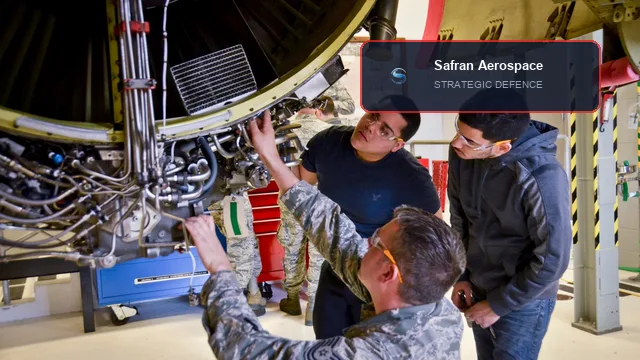
Safran's proposal is centred on a partnership with the Gas Turbine Research Establishment (GTRE), India's government-run military propulsion organisation. This approach has an important advantage for India, as it builds on the country's existing propulsion infrastructure. GTRE has decades of experience in military gas-turbine development and would remain closely involved in the programme. Safran also brings experience from advanced fighter-engine programmes and an established aerospace relationship with India through platforms such as the Rafale.
India Defence & Aerospace Indigenisation Summit 2026
Accelerating private defense manufacturing, UAV innovation, and strategic aerospace corridors.
Explore Strategic Intel →On the other hand, Rolls-Royce is pursuing a somewhat different model through its proposed partnership with Reliance Industries. The British company has publicly outlined an ambition to create a sovereign Indian combat-engine capability covering design, development, manufacturing, testing, production, and through-life support. This makes the Rolls-Royce proposal more than simply an offer to manufacture a foreign-designed engine in India. The British company has positioned the proposal around an end-to-end Indian capability, with reports indicating that full intellectual-property rights are part of its pitch.
The choice between these two proposals will have far-reaching implications for India's aerospace sovereignty. The ability to modify the engine, develop future variants, manufacture critical components, and independently support the powerplant throughout its service life would significantly strengthen India's aerospace sovereignty. New Delhi's objective is increasingly to move beyond licensed production toward genuine design authority.
Development timelines are another important consideration. Rolls-Royce has publicly proposed an ambitious schedule involving an engine core around 2030, flight testing around 2034, and production around 2036, subject to the programme moving ahead on the proposed timeline. Safran's roadmap is also intended to support India's future AMCA requirements, although precise development milestones remain subject to negotiations.
The competition should also be viewed in the context of AMCA's development sequence. The initial AMCA aircraft are expected to use the GE F414, while the indigenous high-thrust engine is primarily intended for the later AMCA Mk2 and potentially other future Indian combat aircraft. This provides India with some additional time to mature the indigenous powerplant, but delays could ultimately constrain the transition to the higher-performance version.
Ultimately, the decision will be determined by a range of factors, including technology-transfer depth, intellectual-property ownership, development risk, production timelines, export freedom, critical-component manufacturing, and India's ability to independently upgrade the engine over several decades. The choice will shape India's aerospace future and determine its place in the global aerospace landscape.
A Tale of Two Proposals
The Safran and Rolls-Royce proposals represent two different strategic pathways. Safran offers continuity through GTRE and an established India-France aerospace relationship, while Rolls-Royce is proposing a new industrial ecosystem built around private-sector participation and sovereign engine development.
Industrial Models and Technology Transfer
The underlying industrial models, technology-transfer arrangements, and approaches to India's long-term engine sovereignty are substantially different. Safran's proposal is centred on a partnership with GTRE, while Rolls-Royce is pursuing a private sector led industrial ecosystem.
Development Timelines and Sovereignty
Development timelines are another important consideration. Rolls-Royce has publicly proposed an ambitious schedule, while Safran's roadmap is also intended to support India's future AMCA requirements.
India's Aerospace Ambitions
The choice between these two proposals will have far-reaching implications for India's aerospace sovereignty. The ability to modify the engine, develop future variants, manufacture critical components, and independently support the powerplant throughout its service life would significantly strengthen India's aerospace sovereignty.
Key Takeaways
- The Safran and Rolls-Royce proposals represent two different strategic pathways for India's future fighter-engine industry backbone.
- The choice between these two proposals will have far-reaching implications for India's aerospace sovereignty.
- The ability to modify the engine, develop future variants, manufacture critical components, and independently support the powerplant throughout its service life would significantly strengthen India's aerospace sovereignty.
India Defence & Aerospace Indigenisation Summit 2026
Accelerating private defense manufacturing, UAV innovation, and strategic aerospace corridors.
Based on reporting from the original source. See our Copyright Policy for details.